
- 0
- 3,078 words
If you have ever asked yourself what is a bad beat in poker, chances are you already know the feeling, even if you did not know the name for it. It is that horrible moment when you hold a monster hand, you have played it perfectly, the money goes in while you are a huge favourite, and then the last card falls and you lose anyway. Your stomach drops, the table goes quiet, and your brain refuses to believe what just happened.
I still remember my first one. I had pocket aces, the best starting hand in the game, and I was all in against a player who had chased a flush draw he should never have chased. I was already counting the chips in my head. Then the river came, his flush arrived, and my aces were worth nothing. I sat there staring at the board, convinced the dealer had made a mistake. He had not. That is the game, and that is what this guide is about: what a bad beat means, the maths behind it, how it differs from a cooler and a suck-out, and how to survive one without wrecking your bankroll or your head.
Table of Contents
What Is a Bad Beat in Poker? The Simple Definition
For me, what is a bad beat in poker comes down to one simple idea: a very strong hand loses to a hand that was a big statistical underdog when the money went in. The key word there is strong: losing with a weak hand, or losing a coin flip, is not a bad beat. A bad beat happens when you were a heavy favourite, usually something like 80 percent or better, and your opponent caught the one or two cards that could save them.
The classic shape of it is this: you have the best hand on the flop or the turn, your opponent has a draw, you bet, they call, and the river delivers exactly the card they needed. The odds were against them the whole way, and they got there anyway.
A bad beat is not the same as being outplayed. If someone reads you perfectly and bluffs you off the best hand, that hurts too, but it is a different kind of pain. A bad beat is about the cards, not your decisions. You made the right play. The deck disagreed with you.
A Real Example: My Aces Cracked on the River
Let me give you the hand I mentioned in the intro, because a concrete example makes this much easier to understand. We were playing a low-stakes cash game, five of us at the table, and I looked down at two red aces. I raised, one player called, and the flop came down ace of spades, seven of hearts, two of diamonds. I had top set, and I was in heaven.
My opponent checked, I bet, and he called. The turn was the nine of clubs, so I bet again, bigger this time, and he called again. At that point I had him on a pair or a draw, and either way I was a huge favourite. The river was the three of hearts. He turned over the king and queen of hearts: he had flopped a flush draw, chased it with only one card to come, and the river gave him the flush.
People ask me what is a bad beat in poker, and I always start with that hand, because it has every ingredient. I had the best hand from the flop onwards and I bet it correctly. He called with a draw that was roughly a one-in-five shot on the river, and the one-in-five shot came in.
The Maths Behind It: How Unlikely Is Unlikely?
Poker players love to argue about whether a hand was a real bad beat or just an unlucky loss, and the maths is the only honest way to settle that argument. When I worked out what is a bad beat in poker in pure maths terms, everything clicked: a bad beat is not a feeling. It is a number. It is about how big a favourite you were when the money went in.
Here are the numbers that matter most. Pocket aces against pocket kings before the flop is about an 81 percent favourite. If you flop a set and your opponent has a flush draw with one card to come, they have about a 20 percent chance of hitting it on the river. An open-ended straight draw on the flop completes roughly 32 percent of the time. And the famous one-outer, where only a single card in the whole deck can save your opponent, is about a 2 percent chance on the river.
Those percentages explain why the pain feels so unfair. Being an 80 percent favourite means you expect to win four times out of five, and your brain treats that as almost certain. But almost certain is not certain. One time in five, you lose, and over hundreds of sessions that will happen again and again. That does not mean the game is rigged or you are cursed. It means the maths is working exactly as it should.
Think in the long run: get your money in as an 80 percent favourite a hundred times, and you will win about eighty of those pots and lose about twenty. The twenty losses will feel terrible, and you will remember every one of them. The eighty wins will feel normal, and you will forget most of them. That is why bad beats feel so much more common than they really are.
Bad Beat vs Cooler: What Is the Difference?
This is the question I get asked most often, and the answer matters, because mixing up a bad beat and a cooler will mess up how you think about your game. A cooler is a hand where two players both have very strong hands and there is almost no way either of them could have avoided losing a big pot, like pocket aces against pocket kings before the flop. Both players are right to get the money in, and one of them has to lose.
The difference comes down to the odds when the money went in. In a cooler, the loser had a genuinely strong hand that was always going to lose to an even stronger hand. In a bad beat, the loser had the best hand and lost it to a draw that got lucky on a later street. Kings against queens before the flop is a cooler: both players hold a premium pair, and the hand was decided before the flop, not by a miracle card on the river.
When I talk through what is a bad beat in poker with newer players, I use a simple rule of thumb: if the losing hand was ahead and then got overtaken by a card on the turn or the river, that is a bad beat. If both hands were already made and the weaker one simply ran into the stronger one, that is a cooler. And if you want to know how the money gets in during the big events where these hands happen, it helps to understand poker tournaments first.
Bad Beat vs Suck-Out: Same Pain, Different Story
A suck-out is closely related to a bad beat, and plenty of players use the two words as if they mean the same thing. They do not. A suck-out is the act itself: a player who was behind catches the card they needed on the turn or the river and wins a pot they were losing. A bad beat is the experience of being on the receiving end of that, usually with a very strong hand.
In practice, every bad beat involves a suck-out, but not every suck-out is a bad beat. If you have top pair and your opponent catches a slightly better pair on the river, that is a suck-out, but most players would not call it a proper bad beat, because your hand was not that strong to begin with. The term is usually reserved for the dramatic ones: a set losing to a flush, or a full house losing to four of a kind.
The word itself comes from the idea that the losing player was “beaten badly” by the cards, not by the opponent. Honestly, the vocabulary matters far less than your response: whether you call it a bad beat, a suck-out, or just a brutal river, what matters is what you do next.
Famous Televised Bad Beats (and What They Taught Me)
Television poker has given us some of the most famous bad beats ever seen, and watching the pros handle them has taught me more than any strategy book. I will not pretend I remember every card word for word, but the stories are well known, and the lessons are real.
The most famous one I know is from the World Series of Poker, when a player holding pocket aces ran into a set of aces on the flop and still lost: the board gave one of them four of a kind. There is no lesson about playing better there, only a lesson about accepting that poker can be cruel in ways that have nothing to do with skill.
Another famous hand saw a player flop a full house, aces full of kings, and lose to four of a kind on the river, after playing the hand perfectly. What struck me was his reaction: no shouting, no thrown cards, just a quiet shake of the head as he stood up. That is what professionalism looks like.
There are famous cash game hands too, where a set of kings lost to a runner-runner straight, and where a flopped straight flush draw lost to a higher straight flush. The pattern is always the same: a huge favourite, a miracle card, and a player who has to decide whether to lose his temper or keep his dignity. If you want a fuller definition, the glossary entry on Poker.org lays it out cleanly.
Bad Beat Jackpots: A Brief Word
You will sometimes hear players ask what is a bad beat in poker when a jackpot is mentioned, so it is worth knowing what these promotions are. Some poker rooms run a promotion where, if a very strong hand loses to an even stronger one, usually four of a kind or better, a jackpot is paid out. The losing player gets the biggest share, the winner gets a smaller share, and everyone else at the table gets a little something too.
The key point is that a jackpot is a promotion, not a rule of poker. Most games do not have one, and you should never play a hand differently because a jackpot might be available. It exists to soften the blow and keep players at the table. But it does not change what a bad beat is, or how you should play. Think of it as a consolation prize, not a strategy.
The Psychology: Why a Bad Beat Hurts More Than a Normal Loss
Here is the part nobody talks about enough. A bad beat does not just cost you chips. When you lose a hand you played badly, you can learn from it. When you lose a hand you played perfectly, there is nothing to learn, and that is what makes it so maddening. Your brain wants a reason, and the only reason is that the cards fell badly.
Psychologists call this loss aversion, and poker players live with it every session: losing feels about twice as painful as winning feels good, and losing unfairly feels worse still. It helps to remember that what is a bad beat in poker is, at its core, a maths problem, not a personal attack. You did everything right and still lost, which triggers a sense of injustice, and injustice is one of the strongest emotions there is.
Bad beats also stick in the memory far longer than wins do. I can describe my worst one in detail, down to the suits of the cards, and it happened years ago. I could not tell you the details of most of the big pots I have won. That is normal, and it is also dangerous, because it makes you believe bad beats happen far more often than they do. Keep a record if you can.
Tilt: How One Bad Beat Can Wreck Your Whole Session
Tilt is the real enemy, and a bad beat is its favourite weapon. Tilt is what happens when the emotion of a bad beat takes over your decisions: you play hands you should fold, raise with weak cards because you want your money back, and call bets you know you should not call, because some part of you believes the game owes you one.
I have done all of this. After my aces were cracked that night, I played terribly for another hour. I chased draws I had no business chasing and called a big raise with a hand I would normally throw away without a second thought. By the end of the night, I had lost three times what the bad beat itself had cost me. The real cost of what is a bad beat in poker is rarely the pot itself. It is the tilt that follows.
The scary thing about tilt is that it rarely announces itself. You do not think, “I am on tilt now.” You think, “I am going to win it back,” and by the time you realise what has happened, the damage is done. The best players I know are the ones who recognise tilt early and stop it before it spreads.
How to Recover and Protect Your Bankroll
So what do you actually do after a bad beat? Here is what works for me.
First, take a break. Stand up, walk away from the table, get some air, get a drink of water. Even five minutes is enough to let the worst of the emotion drain out of you. If you are playing online, close the table for ten minutes. The game will still be there when you come back, and you will play it better.
Second, say it out loud, at least to yourself: I played it right. The result of one hand does not change whether your decision was correct. You got your money in as a big favourite, and if you make that play a hundred times, you will come out ahead. If you remember one thing from this guide, let it be this: what is a bad beat in poker is not a verdict on your skill.
Third, check your bankroll rules before you play another hand. Before you ever sit down, decide how much you are willing to lose in a session and what your stop-loss is. My rule is simple: if I lose a set amount, or if I catch myself playing hands I know I should fold, I stop for the day. No exceptions, no “one more hand.” The rule is there for the moments when your judgement is at its worst.
Fourth, review the hand later, when you are calm. Go through it street by street and ask yourself one honest question: was there a decision I could have made differently? Most of the time, the answer will be no, and that is genuinely comforting. Either way, you have turned a painful hand into a useful lesson.
Fifth, keep your stakes sensible. A bad beat at stakes you can afford is a story you will laugh about later. A bad beat at stakes you cannot afford is a disaster. Never play with money you need for rent or bills. That is not a poker rule. That is a life rule.
Frequently Asked Questions
What is a bad beat in poker in one sentence?
A bad beat is when a very strong hand, usually a heavy favourite of 80 percent or better, loses to a statistically unlikely draw that catches the card it needs on the turn or the river.
Is a bad beat the same as a cooler?
No. A cooler is when two strong hands run into each other and one has to lose, like kings against aces, while a bad beat is when the best hand gets overtaken by a lucky draw on a later street.
How often do bad beats happen?
More often than you think, and less often than it feels like. If you play regularly, you will take several every month, because an 80 percent favourite still loses about one time in five.
Do bad beat jackpots change how I should play?
No. A bad beat jackpot is just a promotion some poker rooms run, and it should never change your decisions at the table. Treat any jackpot as a pleasant surprise.
How do I stop tilting after a bad beat?
Take a short break away from the table, remind yourself your decision was correct even though the result was bad, and stick to the stop-loss you set before the session. If you cannot think clearly, end the session and come back another day.
I am not going to pretend bad beats get easier with time, because they do not, not really. What gets easier is the recovery. The first time it happens to you, it ruins your night. The fiftieth time, it ruins about five minutes. That is the real skill in poker, and it has nothing to do with the cards: it is the ability to make the right decision, watch it lose, and then make the right decision again on the next hand. If you can do that, you will win in the long run.
Gamble responsibly. 18+ only.
Author

hamzayounus355@gmail.com
Related Posts
What Is a Push in Blackjack? Tie Rules, Examples and Strategy, Explained
- 0
- 2,994 words
The first time I ever saw a push, I thought the dealer had made a mistake. I was sitting at a small...
Read out all
What Is a 3 Bet in Poker? Meaning, Sizing and Strategy, Explained
- 0
- 2,970 words
The first time someone re-raised me before the flop, I had no idea what had just happened. I was playing a friendly...
Read out all
What Is a Poker Kicker? Rules, Examples and Strategy, Explained
- 0
- 3,085 words
What Is a Poker Kicker? Rules, Examples and Strategy, Explained The first time I lost a pot I was sure I had...
Read out all
What Is a Craps Horn Bet? Payouts, Odds and Rules, Explained
- 0
- 3,036 words
What Is a Craps Horn Bet? Payouts, Odds and Rules, Explained The first time I heard someone at a craps table shout...
Read out all
How to Play Online Poker for Real Money: A Beginner’s Guide, Explained
- 0
- 3,123 words
How to Play Online Poker for Real Money: A Beginner’s Guide, Explained I still remember the night I first typed how to...
Read out all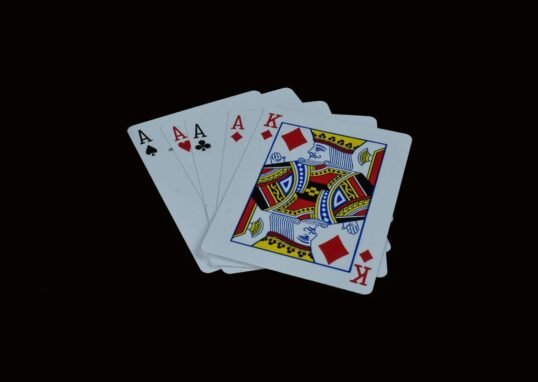
How to Play 5 Card Draw Poker: Rules, Draws and Strategy, Explained
- 1
- 3,088 words
How to Play 5 Card Draw Poker: Rules, Draws and Strategy, Explained The first time someone asked me how to play 5...
Read out all