
- 0
- 2,808 words
How to Play Spanish 21: The Rules, the Bonuses, and the Traps
I will be honest with you: the first time someone tried to explain how to play spanish 21 to me, I thought they were describing blackjack with a typo. It sounded like a marketing gimmick, and I almost walked past the table – which would have been a mistake, because Spanish 21 turned out to be one of the most interesting table games I have ever sat down at. This is everything I have learned about it from actual sessions, explained the way I would explain it to a friend over coffee.
Learning how to play spanish 21 is worth your time even if you already know blackjack, because the differences run deeper than they look. The short version: special 48-card decks with the tens removed, a player 21 that always wins no matter what the dealer has, and bonus payouts for specific hands that regular blackjack never offers. The long version – the rules, the strategy changes, the house edge, and the mistakes that cost beginners money – is what the rest of this article covers.
Table of Contents
How to Play Spanish 21: The Basics
The flow of a hand will feel instantly familiar if you have ever played blackjack. You place your bet, the dealer gives you two cards face up and takes one card face up plus a hole card for themselves, and then you decide what to do with your hand: hit, stand, double down, split pairs, or surrender. The dealer then plays out their hand by fixed rules – hit on 16, stand or hit on soft 17 depending on the table – and the closest hand to 21 without going over wins. So far, so blackjack.
That is where the comfort ends and the interesting stuff begins. In Spanish 21, the deck is missing every ten-spot card (though jacks, queens, and kings stay), a player total of 21 beats everything including a dealer blackjack, and doubling is far more flexible than anything you are used to. The game usually runs on six or eight of these 48-card decks shuffled together, and the betting layout looks like a blackjack table with a few extra circles for side bets. If you can play a hand of blackjack, you can play your first hand of Spanish 21 within a minute – but playing it well requires unlearning a few blackjack instincts, and that is exactly what I am going to walk you through.
The 48-Card Spanish Deck: No Tens, and Why That Changes Everything
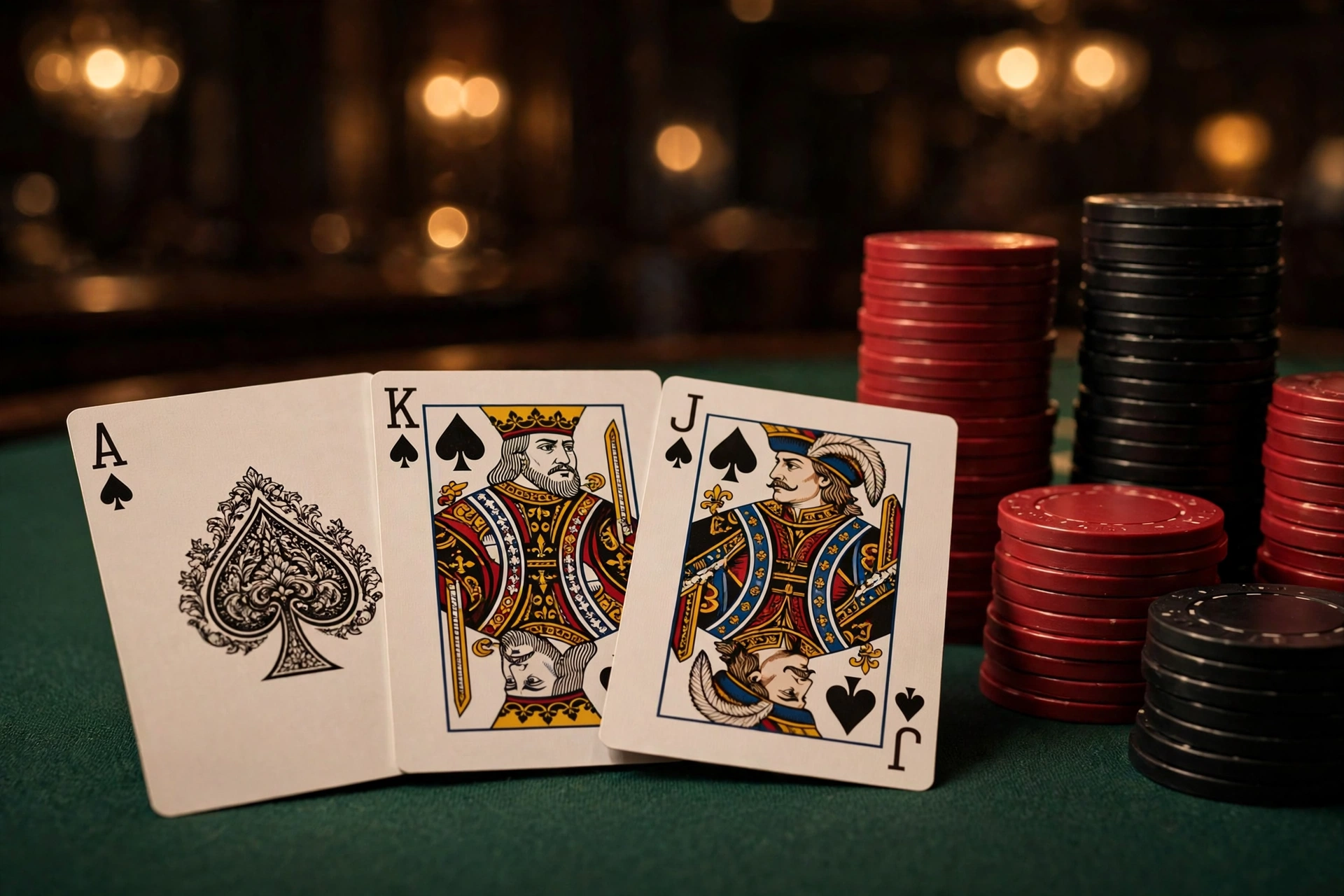
Here is the one fact that shapes the entire game: a Spanish deck is a normal 52-card deck with all four tens pulled out, leaving 48 cards – aces through nines plus the jacks, queens, and kings, which still count as ten points each. So the face cards stay; only the pip tens are gone. My first reaction was that this is a raw deal for the player, and mathematically it is: removing ten-point cards hurts your chances of making blackjack and strong hands, and helps the dealer finish hands without busting.
But fewer ten-point cards also means fewer busts for you: when you hit a stiff hand like 14 or 15, the next card is less likely to sink you, which changes the math on a lot of close decisions. That is why Spanish 21 strategy tells you to hit in spots where blackjack strategy says stand – the deck composition literally makes hitting safer. The casinos compensate you for the missing tens with unusually generous rules and bonus payouts, and whether that compensation is enough is a question we will come back to with the house edge.
The Table Layout and the Bets You Actually Place
A Spanish 21 table looks like a blackjack table that grew a couple of extra betting circles. You have your main betting box, and most tables also offer a side bet called Match the Dealer – you win if either of your first two cards matches the dealer’s up card in rank, with bigger payouts for suited matches. My honest opinion on that side bet comes later; for now just know it is optional.
The felt also shows the bonus paytable – what a five-card 21 pays, what a suited 7-7-7 pays, the super bonus details. Reading the felt is part of learning how to play spanish 21 properly, because these payouts are the whole reason to choose this game over blackjack and the exact numbers vary between casinos. Table minimums are often friendly; I have seen Spanish 21 at lower minimums than the blackjack tables in the same pit. Minimums, maximums, and whether the dealer hits or stands on soft 17 should all be printed on the felt – check all three before your chips touch the table.
Card Values and the Flow of a Hand
Card values work exactly like blackjack: aces count as 1 or 11, face cards count as 10, everything else at face value. A natural – an ace plus a jack, queen, or king on your first two cards – pays 3 to 2. And here is the first player-friendly twist: your blackjack beats the dealer’s blackjack. In regular blackjack that is a push; in Spanish 21 your natural is an automatic winner even when the dealer also has one. The first time that happened to me I argued with the dealer, because it felt like a mistake. It was not.
The flow goes like this. Everyone places bets, the dealer deals two cards to each player face up and deals themselves one up card and one hole card. Starting from the dealer’s left, each player plays out their hand: hit to take another card, stand to keep the total, double down to double the bet and take exactly one more card (with one big difference we will get to), split pairs into separate hands, or surrender. Once every player is done, the dealer reveals the hole card and plays by fixed rules. Player totals of 21 win immediately – even against a dealer 21 or dealer blackjack – and then the payouts are settled. That is the hand flow you repeat every round once you know how to play spanish 21, and the “21 always wins” rule is the single most important sentence in this article.
Bonus Payouts: The 7-7-7s, the 6-7-8s, and the Multi-Card 21s
This is the fun part, and the reason Spanish 21 tables have a different energy. Certain hands pay bonuses on top of the normal win, and they hit often enough that you will see them in a session: a 21 made with five cards pays 3 to 2, a six-card 21 pays 2 to 1, and a 21 with seven or more cards pays 3 to 1. That ugly little hand where you keep drawing small cards and sweating – the one you would hate in blackjack – is a potential bonus hand here.
Then there are the special combinations: a 6-7-8 or 7-7-7 in mixed suits pays 3 to 2, in the same suit 2 to 1, and in all spades 3 to 1. The crown jewel is the super bonus – a suited 7-7-7 when the dealer shows a seven pays $1,000 on bets of $5 to $24 and $5,000 on bets of $25 or more, plus a $50 envy bonus for every other player at the table. One critical detail: the card-count bonuses do not pay if you doubled down, so there is real tension in doubling a hand that might become a bonus hand.
The Player-Friendly Rules That Offset the Missing Tens
In exchange for your tens, the casinos hand you a rulebook that reads like an apology letter. Late surrender is allowed – give up your hand and lose only half your bet, even after the dealer checks for blackjack. You can double down on any number of cards, not just your first two, so a three-card 11 is still doublable. You can double after splitting, re-split aces, and at most tables hit and even double after splitting aces – almost unheard of in regular blackjack.
Then there is the double down rescue, my favorite rule in any casino game: double down, draw a terrible card, and you can surrender the hand while forfeiting only your original bet, getting the double portion back. It makes aggressive doubling far less scary. Some tables also allow redoubling – doubling your double, up to three times total. Surrender whenever, double whenever, split aces again and again, and your 21 can never lose. These rules are not decoration; they are why the game survives without tens.
Basic Strategy Changes: What Blackjack Players Get Wrong
Here is where I see blackjack players bleed money: they sit down and play their trusty blackjack basic strategy, and it costs them. The missing tens change the correct play in a lot of borderline spots, so you need the Spanish 21 strategy, not the blackjack one. For the full mathematically derived charts, the Wizard of Odds Spanish 21 page publishes complete basic strategy tables for both dealer-stands and dealer-hits games – the gold standard I check my own play against.
The headline adjustments, the ones that will feel wrong the first dozen times: you hit more stiff hands than in blackjack because the deck has fewer bust cards in it. With three or more cards, you even hit a soft 17 against a dealer ace – yes, really, and the math backs it up by a meaningful margin. You double down far more aggressively, including on hands with three or more cards, because the double down rescue rule caps your downside. You surrender more often, especially weak hands against strong dealer up cards, because late surrender is always available. And you re-split pairs (including aces) more liberally than blackjack ever taught you. My practical advice for learning how to play spanish 21 correctly: study the chart for your table’s exact rules before you play, keep a strategy card with you if the casino allows it, and never improvise with blackjack instincts. Every “obvious” blackjack play you fall back on is a small donation to the house.
The House Edge, Honestly Explained
Okay, the moment of truth. With perfect basic strategy, the house edge is about 0.40% when the dealer stands on soft 17, about 0.42% when the dealer hits soft 17 but redoubling is allowed, and about 0.76% when the dealer hits soft 17 without redoubling. Those numbers come from the Wizard of Odds analysis, and they make Spanish 21 one of the best table games in the casino – genuinely competitive with the best blackjack rule sets anywhere. The player-friendly rules fully compensate for the missing tens, and then some.
Now the honest part. That 0.40% assumes perfect strategy on a favorable table, and almost nobody plays perfect strategy – the average player gives back well over 1% extra through mistakes, wiping out the game’s advantage over blackjack completely. The edge also depends heavily on table rules, so it is worth understanding how the soft 17 rule actually affects your odds before you pick a table. And the bonus payouts, fun as they are, are priced into that edge – they do not make the game profitable. That is the honest math behind how to play spanish 21 well: it is an excellent game to play, not an excellent game to beat. Play it because the rules are fun and the edge is small, not because you found a loophole. There is no loophole.
Where Spanish 21 Is Offered: Online vs Land-Based
In land-based casinos, Spanish 21 is a staple of the American table-game pit – all over Las Vegas and Atlantic City, often at friendlier minimums than the blackjack tables – and it goes by the name Pontoon in Australia and Malaysia with some regional rule differences. If you have ever walked a casino floor and seen a blackjack-looking table with an unusually cheerful crowd, there is a decent chance it was Spanish 21.
Online, the game is widely available from the major table-game providers – Betsoft, for example, offers it under the name Pirate 21 with the standard American rules. If you are still learning how to play spanish 21, online versions are a great low-pressure classroom: you can play slowly and keep a chart open. One thing to watch: some software versions quietly drop player-friendly rules like redoubling or drawing to split aces, which pushes the edge up, so check the rules page before you play instead of assuming it matches the Las Vegas version.
Common Mistakes I See Beginners Make
After watching a lot of Spanish 21 tables, the same errors keep showing up, and I have made most of them myself. The biggest one is playing blackjack strategy instead of Spanish 21 strategy – standing on hands you should hit, failing to double three-card totals, never surrendering. Anyone learning how to play spanish 21 should drill this first, because it is the costliest leak. The second mistake is doubling a hand that is one card away from a bonus payout and watching the bonus evaporate, since bonuses do not pay after doubling.
Third: the Match the Dealer side bet. It looks harmless, but the house edge sits around 3% – roughly seven times the edge of the main game played well. You are stapling one of the worst bets in the casino to one of the best. Fourth: insurance, an even worse idea here than in blackjack, because the missing tens make a dealer blackjack less likely while the payout stays the same. And fifth: forgetting that your 21 always wins – I have watched players groan when the dealer flips a blackjack against their 21, not realizing they had already won.
My Honest Verdict on Spanish 21
So, is Spanish 21 worth learning? From where I sit: yes, genuinely. It keeps everything I like about blackjack – the decisions, the pace, the feeling that my choices matter – and adds bonus payouts that make ordinary hands exciting plus a rulebook that treats the player with unusual respect. The house edge with good rules is among the lowest of any table game, and the game rewards study in a way slots and roulette never will.
The caveats are the ones I give for every casino game. The edge is small but it is still the house’s, the bonuses are entertainment rather than profit, and the game only treats you fairly if you learn its actual strategy instead of coasting on blackjack habits. Learn how to play spanish 21 properly – the real strategy chart, the table rules, the spots where it differs – and it will give you some of the best-value hours a casino offers. Walk up to it cold, and it will quietly take your money while smiling at you with bonus payouts.
Is Spanish 21 better than regular blackjack?
It can be. With favorable rules — dealer stands on soft 17 or redoubling allowed — Spanish 21 carries a house edge around 0.40%, which beats most blackjack tables you will actually find on a casino floor. But that edge assumes you learn Spanish 21 basic strategy; play it with blackjack strategy and you give the advantage right back.
Why are there no tens in a Spanish 21 deck?
The missing tens are the game’s defining twist: each 48-card Spanish deck is a standard deck with the four tens removed, while jacks, queens, and kings stay and still count as ten. It shifts the probabilities against the player, which is exactly why the game compensates with bonus payouts and unusually player-friendly rules.
Can I use a regular blackjack strategy chart for Spanish 21?
No, and this is the costliest beginner mistake. The missing tens change the correct play in many spots — you hit more often, double on multi-card hands, and surrender more liberally. Use a chart built specifically for Spanish 21 under your table’s exact rules, not a blackjack chart.
What is the Super Bonus in Spanish 21?
The Super Bonus pays when you hold a suited 7-7-7 and the dealer’s up card is a seven: $1,000 on bets of $5 to $24, and $5,000 on bets of $25 or more, plus a $50 envy bonus for every other player at the table. It is extremely rare — roughly one in 600,000 hands — so treat it as a lottery ticket, not a plan.
Where can I play Spanish 21 online?
Most major online casinos with a solid table-game library offer it, sometimes under alternate names like Pirate 21. Rules can vary between software providers — some versions drop features like redoubling — so always check the game’s rules page before playing rather than assuming it matches the Las Vegas version.
Gamble responsibly. 18+ only.
Author

hamzayounus355@gmail.com
Related Posts
Blackjack Hand Signals: How to Talk to the Dealer Without Saying a Word
- 0
- 3,759 words
The first time I learned about blackjack hand signals, it wasn’t from a book or a website — it was from a...
Read out all
How Do Casinos Make Money? The Real Math Behind the Glitter
- 0
- 2,747 words
For years I kept asking myself one question: how do casinos make money when players win jackpots every single night? It started...
Read out all
Why Do Casinos Pump Oxygen? The Myth Everyone Believes
- 0
- 2,665 words
The first time I heard it, I was sitting at a blackjack table at 2 a.m., wired and wide awake, and the...
Read out all
Can Casinos Refuse to Pay Out Winnings? Honest Answer
- 0
- 2,197 words
Can Casinos Refuse to Pay Out Winnings? The Honest Answer Picture this: you hit a jackpot, the machine flashes, the attendant walks...
Read out all
What Is a Casino Whale? Inside the High-Roller World
- 0
- 3,097 words
What Is a Casino Whale? Inside the High-Roller World So what is a casino whale? The first time I heard the term,...
Read out all
How Do Casino Comps Work? The Math Behind the Free Stuff
- 0
- 3,468 words
How Do Casino Comps Work? The Math Behind the Free Stuff So how do casino comps work? I will be honest with...
Read out all