
- 0
- 2,747 words
For years I kept asking myself one question: how do casinos make money when players win jackpots every single night? It started on a trip to Malta, where I watched a guy at the roulette table hit a straight-up number — 35 to 1, a payout of several thousand euros from a single spin. The table erupted. People were buying him drinks. And sitting there, watching the dealer calmly count out that mountain of chips, I wondered how this business survives paying out like that, every single night, on hundreds of tables and thousands of machines?
That question stuck with me for years. And the answer turned out to be much simpler — and much more clever — than I expected. There’s no trick, no secret switch behind the bar, no moment where the casino suddenly decides to take your money. It’s just math. Boring, quiet, unbeatable math. Let me walk you through it the way it was finally explained to me, because once you see it, you can’t unsee it. And honestly, once the mechanics click, how do casinos make money stops feeling like a mystery and starts feeling like the most obvious business on earth.
Table of Contents
How Do Casinos Make Money? The Short Answer
They charge a tiny, invisible fee on every bet — and then they let volume do the rest.
Every game in a casino is designed so that, on average, the casino keeps a small percentage of everything wagered. That’s the house edge. You might lose €100 or win €500 in a session — that’s your personal luck, your short-term noise. But across millions of bets, from thousands of players, day after day, the casino keeps its cut with near-mathematical certainty. That’s how do casinos make money in one sentence: they don’t need you to lose tonight. They just need enough people to keep playing long enough.
The House Edge: True Odds vs. Payout Odds
This is the core idea, so let me make it concrete with the simplest example I know: a coin flip.
If we bet €10 on a fair coin toss and the winner takes the whole €20 pot, that’s a fair game — neither of us has an edge. Over a hundred flips, we’d each end up roughly even. Now imagine I offer you the same bet, but when you win I only pay you €9.50, while you still pay me €10 when you lose. You’d be insane to take that bet, right? Because every flip costs you 50 cents on average, and after a hundred flips you’ll be down about €50.
That’s exactly what a casino does. The “true odds” of an event — what a fair payout would be — are always slightly better than the “payout odds” the casino actually offers. That gap is the house edge, and it’s where the money comes from.
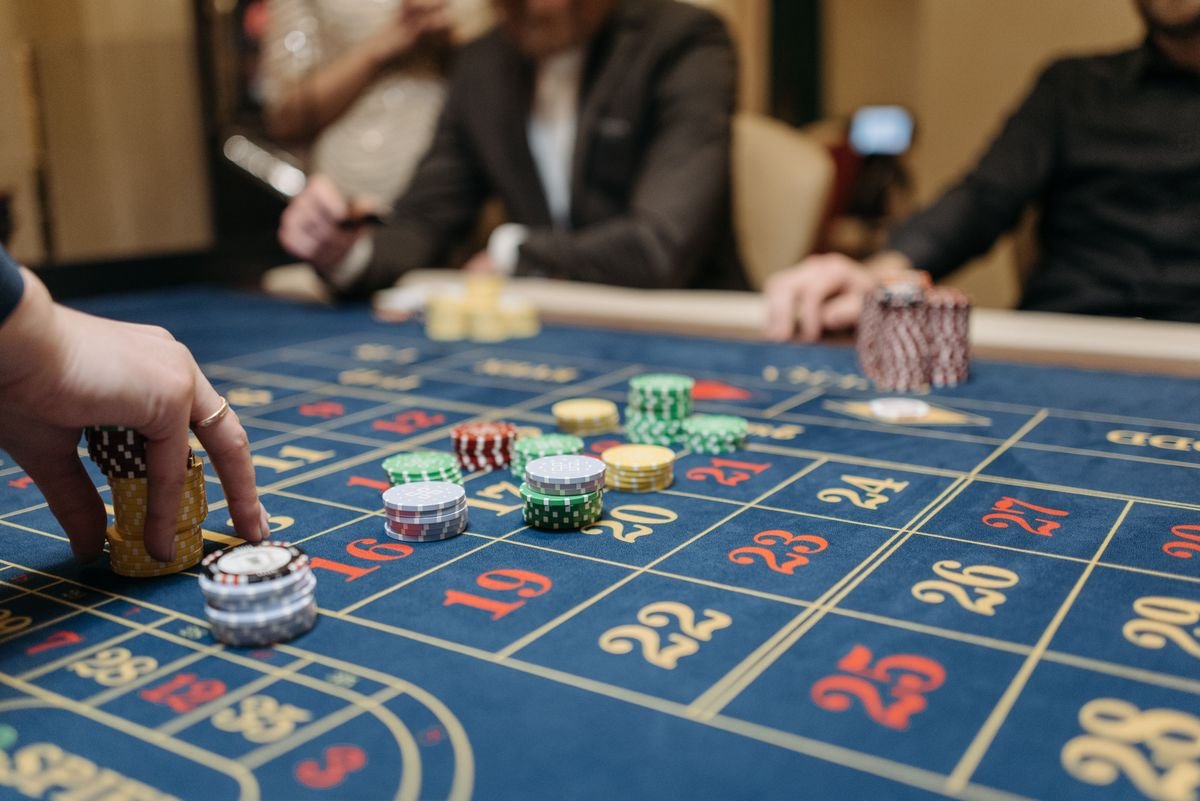
Roulette is the cleanest example, and it uses numbers everyone can check. A European roulette wheel has 37 pockets: numbers 1 through 36, plus a single zero. If you bet on a single number and win, the casino pays you 35 to 1. But the true odds of hitting that number are 36 to 1 — there are 37 pockets, and one of them is yours. That one-pocket difference, multiplied across every spin, gives the house an edge of 2.7%. On the American wheel, there’s an extra double-zero pocket, which pushes the edge to 5.26%. Same game, same felt, same glamour — twice the skim, just because of one green pocket.
Blackjack, craps, baccarat — they all work the same way. The payout for each outcome is set just slightly below what fair odds would pay. The gap looks tiny. A few percent here, a couple of percent there. And that’s the genius of it: the fee is so small that no individual player really feels it on any given hand. It only becomes real money at scale.
The Law of Large Numbers: Why the Casino Can’t Lose (Eventually)
Okay, so the edge is small — maybe 2 or 3 percent. Why doesn’t a lucky player just wipe the casino out? Why can’t a hundred lucky players do it?
Because of the law of large numbers, which is the second half of how do casinos make money. It’s a simple statistical truth: the more times you repeat a random event, the closer the actual results get to the expected average. A coin can land heads ten times in a row — that’s just luck. Flip it ten thousand times, and it’ll be almost exactly 50/50.
A single blackjack player can absolutely win big tonight. A hundred players can have a great weekend, and the casino’s accountants will wince at the month’s report. But a big casino runs hundreds of thousands of bets every single day. Across that kind of volume, luck cancels itself out and the house edge asserts itself like gravity. The casino doesn’t need to predict your cards. It just needs the game to keep running.
This is also why casinos have table limits, by the way. A maximum bet isn’t there to be mean — it’s there to keep any single bet from being large enough to dent the math. The edge works best when no individual outcome can hurt.
Why You Can Still Win: Short-Term Luck Is Real
I want to be clear about something, because this matters: the house edge does not mean you can’t win. It doesn’t mean every session ends in losses. It means that if you played forever, you’d lose. But you don’t play forever — you play for three hours on a Friday night, and in the short term, variance is king.
That guy in Malta hitting his number? That was real. Progressive jackpots get won. People walk out of casinos with more than they walked in with, every single night. The casino is completely fine with that, because it knows something the winner doesn’t always know: winning sessions are part of the business model. They’re advertising. Nothing keeps the floor full like watching someone else get paid.
Think of it like weather versus climate. Your session is weather — it can be sunny or stormy, and nobody can predict it. The house edge is climate. The casino lives in the climate; you visit the weather. So yes, enjoy your wins. They’re genuine. They’re just not the trend.
How the Different Games Contribute
Not all casino profit comes from the same place. Here’s roughly how the money breaks down across the floor:
Slots are the workhorses. In most casinos, slot machines generate the majority of gaming revenue — often well over half. The edge on a slot can range from a couple of percent to over ten, depending on the machine and the jurisdiction. Slots are fast (hundreds of spins per hour), they never need a dealer, and they never take a break. If you want to understand what RTP in slots means, it’s essentially the flip side of the house edge: a 96% RTP means the machine is designed to return €96 of every €100 wagered over its lifetime, keeping €4. The casino’s favorite customers aren’t the high rollers at the baccarat table — they’re the thousands of ordinary players feeding machines all day.
Table games are the prestige department. Blackjack, roulette, baccarat, craps — they carry smaller edges (blackjack played well can be under 1%), but they attract bigger bets and they make the casino look like a casino. A packed craps table with everyone cheering is worth more in atmosphere than its direct profit. Tables are also slower and labor-intensive — every table needs dealers, pit bosses, and surveillance — so their margins are thinner than people assume.
Poker is the odd one out. This is where how do casinos make money gets interesting, because in poker the casino doesn’t play against you at all. You’re playing against other players. So the casino takes a “rake” — a small percentage of every pot, usually a few percent up to a capped amount. The house has zero risk on who wins the hand. It just takes its cut off the top, hand after hand, all night. Poker rooms are steady, low-risk income, which is why casinos love hosting tournaments: dozens of players, hundreds of hands, and the house never has to sweat a bad beat.
Sports betting and everything else. Sportsbooks work on the same principle as everything else — the odds are set so the book keeps a margin (the “vig” or “juice”) no matter who wins, as long as betting is balanced on both sides. Side games, keno, bingo — all of them carry some of the highest edges in the building.
The Online Side of the Business
Everything I’ve described so far happens on a physical casino floor, but the same math runs the online world — with even better economics for the operator. An online casino has no dealers to pay, no building to light, no free drinks to pour. A single server can deal thousands of blackjack hands simultaneously to players all over the world.
If you’re curious about the specifics, this breakdown of how online casinos make money covers the business model in more detail — the margins, the bonuses, and the affiliate economics. The short version is that online casinos run the same house-edge math with lower overhead and essentially unlimited table capacity, which is why the online market has exploded the way it has. The bonuses look generous — and some genuinely are — but the wagering requirements attached to them make sure the math still works out in the house’s favor.
Comps: The “Free” Stuff That Isn’t Free
Here’s the part of the business most players misunderstand: the free drinks, the comped hotel rooms, the steak dinners, the show tickets. None of it is generosity. All of it is calculated.
Casinos track your play — that’s what the player’s card is for. They know your average bet, how long you play, and which games you prefer. From that, they can calculate your “theoretical loss”: your expected contribution to the house edge over your visit. Then they give you back a fraction of it — typically 20 to 40 percent — in the form of comps.
Read that again: they give you back a fraction of what they expect to win from you. If your theoretical loss for the weekend is €1,000, a €200 hotel room and €80 in dinners is a fantastic deal for the casino. You’re thrilled because you got a “free” room. They’re thrilled because they paid €280 to secure €1,000 in expected profit — and because the room keeps you on property, playing, instead of going home.
This is why high rollers get the suites and the private jets. A whale who bets €10,000 a hand has a theoretical loss that dwarfs the cost of any comp. The casino isn’t being lavish — it’s protecting an investment. The day the comps stop being profitable, they stop.
Why Rigging Would Be Completely Pointless
Every so often someone tells me the games must be rigged — the machines must be “tightened” on weekends, or the roulette wheel must know where the ball lands. And I always ask the same question: why would they bother?
Think about what rigging would require: corrupting regulators, bribing inspectors, risking a gaming license worth hundreds of millions, and risking criminal prosecution — all to squeeze out a few extra percent on top of a guaranteed edge that already works. It makes no business sense. The house edge is a license to print money legally. Rigging the games would be like robbing a bank you already own.
Casinos are among the most heavily regulated businesses in the world. Gaming commissions test machines, audit payout percentages, and can pull a license for violations. The entire industry runs on one asset: the public’s belief that the games are fair. A casino caught cheating wouldn’t just pay a fine — it would lose the trust that fills its floor every night. The math already guarantees the profit. Cheating would only guarantee the downfall.
That’s the honest truth at the heart of how do casinos make money: they don’t need to cheat, because the game was never fair to begin with — and everyone agreed to play anyway.
The Real Business Model, in Plain English
So let’s put it all together. A casino is not really a gambling business. It’s a volume business with a built-in margin — and that, in the end, is the complete answer to how do casinos make money:
- Every game has a small mathematical edge — the gap between true odds and payout odds.
- Enormous volume smooths out luck — the law of large numbers turns that small edge into predictable profit.
- Slots do the heavy lifting — fast, automated, high-margin, running around the clock.
- Tables provide the theater — thinner margins, but they create the atmosphere that fills the building.
- Poker takes a risk-free cut — the rake, with zero exposure to who wins.
- Comps are reinvested profit — a fraction of your expected loss, given back to keep you playing.
- Regulation protects the golden goose — fairness is enforced because fairness is what keeps customers coming.
The glitter, the fountains, the free drinks, the celebrity chef restaurants — all of it is funded by those few percentage points, multiplied by millions of bets. It’s the most honest con in the world: the casino tells you the odds are against you, prints it on the felt, and you play anyway — because tonight might be your night. And sometimes it is.
Just remember whose night it is most of the time.
How do casinos make money if players win jackpots?
They do — players win jackpots every day, and the casino pays them gladly. How do casinos make money despite this? Because jackpots are rare events funded by the losses of thousands of other spins. The machine’s math already accounts for the jackpot in its payout percentage, so even after paying a big winner, the casino keeps its edge across all play.
What is the house edge, in simple terms?
The house edge is the small percentage of every bet the casino expects to keep over time. It comes from the gap between the true odds of an outcome and the payout the casino offers. A 3% house edge means that, across huge numbers of bets, the casino keeps about €3 of every €100 wagered.
Can you beat the house edge?
In the short term, absolutely — that’s called luck, and it happens constantly. In the long term, essentially no. No betting system changes the math, because the edge is built into the payouts themselves. The only games where skill meaningfully narrows the edge are ones like blackjack and poker, and even there the casino still has its cut.
Do casinos make more money from slots or table games?
Slots, by a wide margin. Slot machines typically generate the majority of a casino’s gaming revenue because they’re fast, run constantly, need no staff per machine, and carry a higher average edge than table games. Tables matter for atmosphere and prestige, but slots pay the bills.
Why do casinos give away free rooms and drinks?
Because comps are cheap compared to what they earn from you. The casino calculates your expected loss based on your play and returns a fraction of it as perks. A "free" €200 room is a bargain for the casino if it keeps a player with a €1,000 expected loss on the property for another night.
Is it true that casinos rig their games?
No — and they have no reason to. The house edge already guarantees long-term profit, and getting caught cheating would cost a casino its gaming license and its reputation. Regulators test and audit games precisely so players can trust the math, because that trust is what keeps the business running.
Gamble responsibly. 18+ only.
Author

hamzayounus355@gmail.com
Related Posts

Blackjack Hand Signals: How to Talk to the Dealer Without Saying a Word
- 0
- 3,759 words
The first time I learned about blackjack hand signals, it wasn’t from a book or a website — it was from a...
Read out all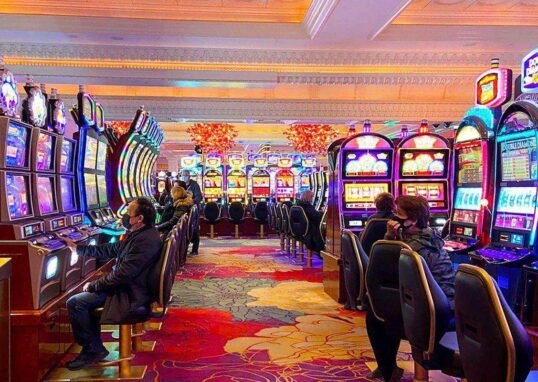
Why Do Casinos Pump Oxygen? The Myth Everyone Believes
- 0
- 2,665 words
The first time I heard it, I was sitting at a blackjack table at 2 a.m., wired and wide awake, and the...
Read out all
Can Casinos Refuse to Pay Out Winnings? Honest Answer
- 0
- 2,197 words
Can Casinos Refuse to Pay Out Winnings? The Honest Answer Picture this: you hit a jackpot, the machine flashes, the attendant walks...
Read out all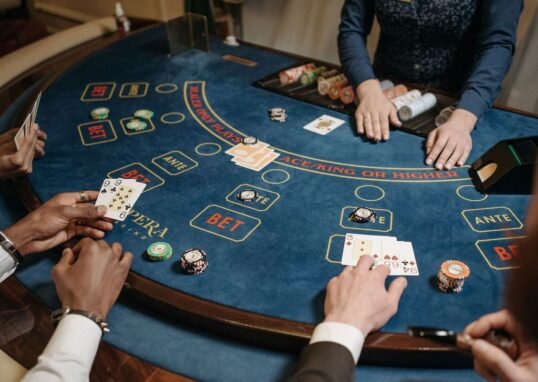
What Is a Casino Whale? Inside the High-Roller World
- 0
- 3,097 words
What Is a Casino Whale? Inside the High-Roller World So what is a casino whale? The first time I heard the term,...
Read out all
How Do Casino Comps Work? The Math Behind the Free Stuff
- 0
- 3,468 words
How Do Casino Comps Work? The Math Behind the Free Stuff So how do casino comps work? I will be honest with...
Read out all
How Does Casino Rake Work? The Hidden Cost of Poker
- 0
- 2,756 words
The first time someone asked me how does casino rake work, I gave them a blank look, because I had been playing...
Read out all