
- 0
- 2,665 words
The first time I heard it, I was sitting at a blackjack table at 2 a.m., wired and wide awake, and the guy next to me leaned over and said, “You know they pump oxygen through the vents to keep us playing, right?” He said it with total confidence, like he was letting me in on a secret. And for years, I believed him. Why do casinos pump oxygen? It seemed like such a natural question — because of course they do. Doesn’t everyone know that?
Except they don’t. Not even a little bit. But the story of why this myth exists, and what casinos actually do to keep you in your seat at 2 a.m., is honestly more interesting than the myth itself. So let me tell you what I found out when I finally decided to check.
Table of Contents
Why Do Casinos Pump Oxygen? The Short Answer
They don’t. No casino pumps extra oxygen into the air, and no casino ever has.
I know that feels anticlimactic, so let me give you the evidence before I give you the history, because the evidence is overwhelming. In 2026, a team of myth-busters carried an oxygen meter into four different Las Vegas casinos and measured the air on the gaming floors. Every single reading came back at 20.9% — the exact normal concentration of oxygen in the air everywhere on Earth. The air in a casino is, chemically speaking, the same air you breathe on the sidewalk outside.
If you want the longer version of why this myth is impossible, this detailed fact-check of the oxygen myth covers it well. But here’s the quick version: pumping extra oxygen into a building full of people would be insanely expensive, wildly impractical, and a catastrophic fire risk. It would violate fire codes, void the casino’s insurance, and put every person in the building in danger. No casino operator on earth is going to risk burning down a billion-dollar property just to keep you at the slots for one more hour.
So the question “why do casinos pump oxygen” has a boring but definitive answer: they don’t. The interesting question is why so many of us are convinced they do.
Where the Myth Came From
Like a lot of great urban legends, this one started in a novel.
In 1978, Mario Puzo — yes, the Godfather author — published a book called Fools Die. In it, the owner of a fictional Las Vegas casino has a control panel wired directly to his suite, and late at night, when the players start tiring and thinking about going to bed, he floods the casino pits with pure oxygen. The gamblers perk up like puppets on strings and keep playing. It’s a vivid, memorable scene.
Readers loved it. And because Puzo wrote about the mob and Vegas with an air of insider knowledge, people assumed he was revealing something real. He wasn’t — it was fiction, and he never claimed otherwise. But the image was so powerful that it escaped the book and became “something everybody knows.” For nearly fifty years now, people have been repeating the oxygen story as fact, even though it was born in a thriller.
This happens more often than you’d think with casino lore. A dramatic story gets repeated in a movie or a novel, people quote it at tables, and eventually it feels true just because you’ve heard it so many times. I’ve fallen for casino myths I’ve debunked before, so I’m not judging anyone here — this one fooled me for years.
Why the Story Feels True
Here’s the thing: the oxygen myth survives because it explains a real sensation. If you’ve ever spent a long session in a casino, you know the feeling — it’s 3 a.m., you’ve been playing for six hours, and you’re somehow still alert. You walk outside into the parking lot and suddenly feel like you’ve been hit by a truck. That contrast is real. Something IS keeping you awake in there. It’s just not oxygen.
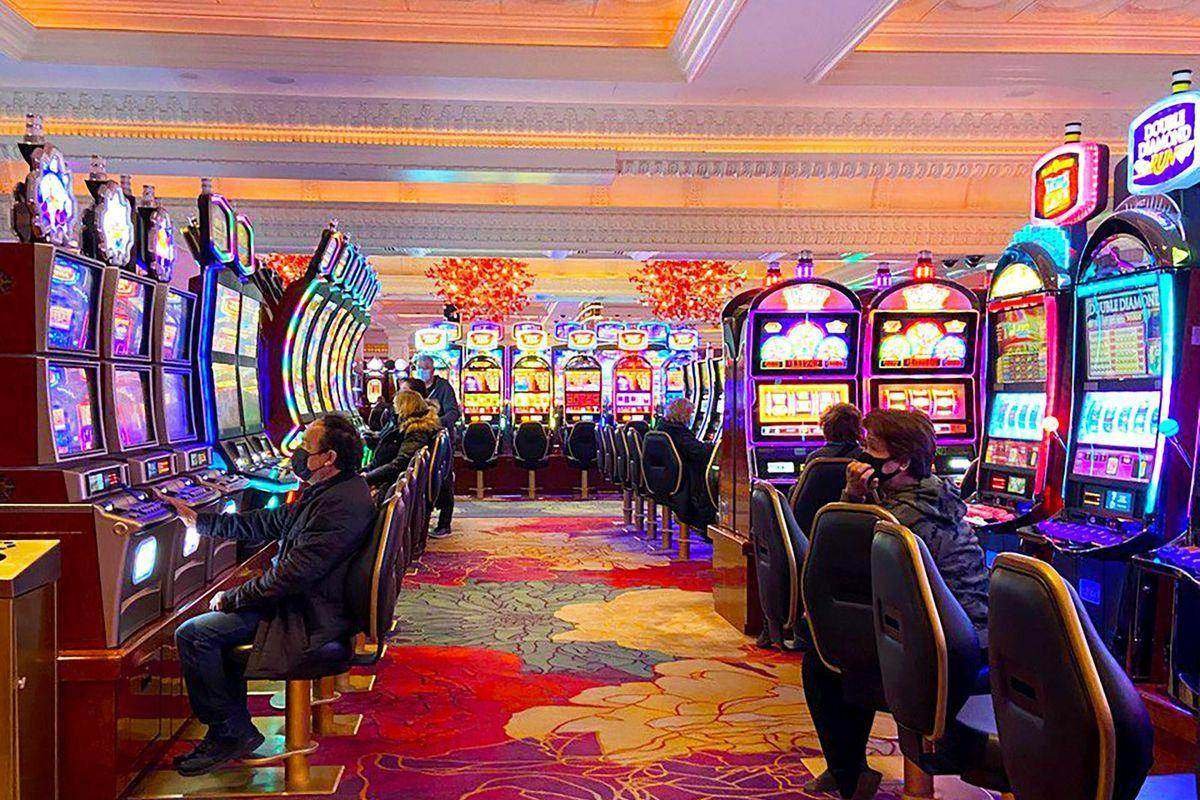
Casinos are among the most carefully engineered buildings in the world when it comes to human psychology. Every detail is designed to keep you comfortable, unhurried, and unaware of time passing:
- There are no clocks and no windows on most gaming floors, so your brain loses track of how long you’ve been there.
- The lighting never changes. It’s always the same golden evening inside, so your body never gets the “it’s getting dark, wind down” signal.
- The temperature is kept cool — usually around 20-22C. Cool air genuinely keeps you more alert than warm air. That part isn’t a trick; it’s just physiology.
- The layout is a maze. Getting to the exit means walking past hundreds of games, each one a chance to stop “for just one more.”
- The sounds are constant. The dinging and chiming of slots creates a low-level stimulation that keeps your brain engaged.
So when someone says “they must be doing something to the air,” your brain accepts it because the effect is real. The cause is just psychology and design, not chemistry.
What Oxygen Enrichment Would Actually Do
Let me put some numbers on this, because the logistics alone kill the myth.
A large Las Vegas casino floor holds well over a million cubic meters of air. To raise the oxygen level by just one percentage point, you’d need to pump in roughly 40,000 cubic meters of pure oxygen gas every single day. That’s not a vent in the ceiling — that’s an industrial gas operation running around the clock, with tanks, pipelines, and a dedicated facility. The cost would be enormous, and it would be happening in plain sight of every employee, contractor, inspector, and regulator in Nevada.
And then there’s the part that actually matters: fire.
Oxygen itself doesn’t burn, but it makes everything else burn faster and hotter. Air with elevated oxygen is a fire accelerant — flames ignite more easily, spread faster, and burn at higher temperatures. Casino floors are full of ignition sources: cigarette lighters (in the smoking sections), electrical equipment, kitchen flames in the restaurants. Turning a crowded building into a slightly more flammable version of itself would be, to put it mildly, a terrible idea.
Gaming regulators in Nevada are notoriously strict about safety. The Nevada Gaming Control Board would never permit it, the fire marshal would never permit it, and no insurance company on the planet would write a policy for a building that deliberately enriches its atmosphere with oxygen. The myth asks us to believe that the most regulated, inspected, and safety-conscious businesses in Las Vegas are all secretly running an illegal fire hazard. That alone should have killed the story decades ago.
The Fire Problem Casinos Can’t Ignore
If you want the strongest single argument against the oxygen myth, it’s this: casinos have spent decades making their buildings LESS flammable, not more.
Remember that Las Vegas casinos used to allow smoking everywhere, and many still have smoking sections. Open flames, thousands of people, fabrics, carpets — fire safety on a casino floor is a massive, constant operation. Sprinkler systems, smoke evacuation, flame-retardant materials, strict occupancy limits: these are the things casino operators actually spend money on.
The idea that the same operators would then deliberately pump a fire accelerant through the ventilation system is absurd on its face. It’s like believing a restaurant that spent millions on a commercial kitchen fire-suppression system is also secretly spraying cooking oil on the walls. The two ideas can’t coexist.
What They Actually Pump Into the Air
Now here’s where it gets interesting, because the myth has a grain of truth — casinos DO pump something through their ventilation systems. It’s just not oxygen. It’s perfume.
Scent marketing is a real, documented, multi-million-dollar industry, and casinos are some of its biggest customers. Companies design signature fragrances for casino properties, and the scent is diffused through the HVAC system so the entire floor smells faintly of… whatever the brand wants you to associate with winning. Vanilla, citrus, tropical flowers — the specific recipes are trade secrets, but the practice is openly acknowledged. Casino executives have confirmed it in interviews.
The research behind it is straightforward: pleasant scents make people feel comfortable and happy, and comfortable, happy people stay longer and spend more. One widely cited study found that a pleasant ambient scent increased slot machine revenue by a measurable amount. Whether you buy the exact numbers or not, the mechanism is plausible — nobody wants to linger in a room that smells bad.
So the guy at the blackjack table was half right. Casinos do manipulate the air. They just do it with fragrance, not oxygen. If the myth had been “they pump perfume through the vents,” it would be true — but it wouldn’t sound nearly as sinister, so it never caught on the same way.
The Real Tricks Casinos Use to Keep You Awake
Since the oxygen thing is a myth, here’s what actually keeps you playing until sunrise:
- Cold, fresh air. Casino ventilation systems are enormous and powerful. They constantly cycle in fresh air and keep the temperature low. Fresh, cool air genuinely makes you feel more alert — that’s why you feel the crash when you step outside into warm night air. It’s not extra oxygen; it’s just good HVAC doing exactly what HVAC is supposed to do.
- Free caffeine. Coffee, energy drinks, and soda flow freely on casino floors. A cocktail waitress bringing you your third espresso at midnight is doing more for your alertness than any gas ever could.
- Constant micro-stimulation. The lights, sounds, and motion of a casino floor keep your brain’s reward system engaged. Every near-miss on a slot machine gives you a little dopamine hit. You’re not awake because of the air — you’re awake because your brain is having fun.
- No bedtime cues. No windows, no clocks, no darkening sky. Your circadian rhythm relies on environmental cues to tell you it’s time to sleep, and the casino strips all of them away. It’s 3 a.m. and your body thinks it’s 8 p.m. because the room looks exactly the same as it did at 8 p.m.
- Social energy. A busy casino floor at night has an electric atmosphere. Other people’s excitement is contagious. Try feeling tired in a room where someone just won $50,000 two rows over.
None of this requires a secret oxygen pipeline. The mundane truth is that good air conditioning, free coffee, and clever interior design are more than enough.
How I Learned the Difference Between Air Tricks and Scent Tricks
I’ll tell you exactly when the myth died for me. I was in a casino in my early twenties — the kind of trip where you tell yourself you’ll play for an hour and leave — and around 4 a.m., I stepped outside for some air. The parking lot was empty, the desert air was warm, and I suddenly felt exhausted, like all the energy had drained out of me in thirty seconds.
My first thought was: see? The oxygen. Walking out of the oxygen zone made me crash.
But then I thought about it for another minute. I’d had four coffees. I hadn’t eaten since lunch. I’d been staring at flashing lights in a windowless room for seven hours. Of course I crashed — I was tired, dehydrated, caffeinated, and overstimulated, and stepping into the warm, quiet night removed every single thing that had been propping me up. No conspiracy required.
That’s the thing about this myth. It flatters us. It says: you’re not tired because you made bad decisions; you’re tired because they gassed you. It’s much more comfortable than admitting you just stayed up too late playing blackjack. I think that’s a big part of why the story has lasted fifty years — it lets us off the hook.
What Casino Workers Say
One of my favorite pieces of evidence against the oxygen myth comes from the people who actually work in casinos.
Dealers, pit bosses, and floor staff spend eight to twelve hours a day breathing casino air. If the floors were enriched with oxygen, they’d be the first to notice — and the first to complain. Oxygen enrichment at meaningful levels causes headaches, dizziness, and euphoria followed by fatigue. Casino workers would be staggering around like they’d just come from a dentist’s office. Instead, they’re famously, boringly normal — tired at the end of a long shift, like everyone else who works nights.
HVAC technicians are even more damning witnesses. Casino ventilation systems are serviced by outside contractors who have zero loyalty to casino management and every incentive to talk. In all the decades this myth has circulated, not one technician has ever come forward with evidence of an oxygen injection system. No photos of mysterious tanks, no whistleblower interviews, no leaked maintenance logs. For a conspiracy that would require hundreds of complicit workers across every major casino, the silence is deafening.
The Bottom Line on the Oxygen Myth
So: why do casinos pump oxygen? They don’t. The story came from a 1978 novel, it survives because it explains a real feeling, and it falls apart the moment you look at the fire codes, the costs, or the oxygen meter readings.
What casinos actually do is subtler and, frankly, smarter. They engineer the light, the temperature, the sound, the layout, and even the smell to make you comfortable and timeless. They don’t need to change the chemistry of the air — they just need to change your perception of everything around you. And they’re very, very good at it.
The next time someone leans over at 2 a.m. and tells you about the oxygen vents, you’ll know the real story. And honestly? The real story is better. A casino that could keep you awake with nothing but cold air, free coffee, and clever lighting doesn’t need science fiction. The mundane tricks work just fine.
Gamble responsibly. 18+ only.
Do casinos pump oxygen into the air?
No. Oxygen meter readings taken on real casino floors show the normal atmospheric level of 20.9%, and the logistics, cost, and fire risk of oxygen enrichment make it impossible for any regulated casino.
Where did the casino oxygen rumor start?
It comes from Mario Puzo’s 1978 novel Fools Die, in which a fictional casino owner floods the gaming floor with oxygen to keep players awake. Readers mistook the fiction for fact, and the story has circulated ever since.
Would pumping oxygen into a casino be illegal?
Almost certainly. It would violate fire safety codes, building ventilation regulations, and gaming commission rules in every major gambling jurisdiction, and no insurer would cover a building deliberately enriched with a fire accelerant.
Do casinos put anything in the air?
Yes — fragrance. Many casinos use scent marketing, diffusing signature perfumes through their ventilation systems to create a pleasant, memorable atmosphere. That’s the grain of truth inside the myth.
Why do I feel so awake in a casino then?
Cool fresh air, caffeine, constant light and sound stimulation, no clocks or windows to signal bedtime, and the social energy of the floor. It’s design and psychology, not chemistry.
Author

hamzayounus355@gmail.com
Related Posts

Blackjack Hand Signals: How to Talk to the Dealer Without Saying a Word
- 0
- 3,759 words
The first time I learned about blackjack hand signals, it wasn’t from a book or a website — it was from a...
Read out all
How Do Casinos Make Money? The Real Math Behind the Glitter
- 0
- 2,747 words
For years I kept asking myself one question: how do casinos make money when players win jackpots every single night? It started...
Read out all
Can Casinos Refuse to Pay Out Winnings? Honest Answer
- 0
- 2,197 words
Can Casinos Refuse to Pay Out Winnings? The Honest Answer Picture this: you hit a jackpot, the machine flashes, the attendant walks...
Read out all
What Is a Casino Whale? Inside the High-Roller World
- 0
- 3,097 words
What Is a Casino Whale? Inside the High-Roller World So what is a casino whale? The first time I heard the term,...
Read out all
How Do Casino Comps Work? The Math Behind the Free Stuff
- 0
- 3,468 words
How Do Casino Comps Work? The Math Behind the Free Stuff So how do casino comps work? I will be honest with...
Read out all
How Does Casino Rake Work? The Hidden Cost of Poker
- 0
- 2,756 words
The first time someone asked me how does casino rake work, I gave them a blank look, because I had been playing...
Read out all