
- 0
- 4,062 words
I will be honest with you: the first time I sat down at a real blackjack table, I had no idea what I was supposed to do about casino dealer tips. I understood the game well enough. I knew when to hit and when to stand, more or less, and I had my chips stacked in a reasonably tidy pile. But then I won a decent hand, the dealer smiled at me, and I froze.
Was I supposed to give something back? How much? Did I just slide a chip across the table? Would that look cheap, or would it look like I was showing off? I ended up doing nothing, feeling awkward about it for the rest of the evening, and then tipping far too much on my next visit to make up for it.
If you have ever felt that same awkward pause, you are in the right place. This guide covers casino dealer tips properly, the way I wish someone had explained them to me before I ever sat down: what they are, why players tip at all, how much is normal at each game, when to tip, how to do it without looking lost, where the money actually goes, and the mistakes that make dealers quietly sigh. No jargon, no snobbery, and no pretending there is one strict rule that everyone follows. Because there is not. There are customs, and customs are learnable.
Table of Contents
Casino Dealer Tips: What They Are and Why Players Tip
Let us start with the basics. A casino dealer tip, often called a “toke” in casino slang, is a small gratuity a player gives to the dealer running their table game. It is not a fee, it is not required by the casino, and nobody is going to throw you out for not tipping. But it is a deeply established custom, especially in the United States, and it exists for a very practical reason: in many casinos, dealers earn a modest base wage, and tips make up a large part of their actual take-home pay.
When you tip, you are not just being polite. You are topping up the income of the person who has been dealing your cards, spinning your wheel, or running your dice game for the last hour.
That is the money side of it. The human side matters just as much. A good dealer does a lot more than mechanically hand out cards. They keep the game moving at a comfortable pace, they explain the rules to nervous newcomers without making them feel stupid, they pay out correctly, they settle arguments calmly, and they set the mood of the whole table. I have sat at tables where a warm, funny dealer turned an ordinary losing session into a genuinely enjoyable evening, and I have sat at tables where a bored, silent dealer made winning feel flat. Tipping is how players say thank you for the first kind of experience. It is appreciation, not a transaction.
Here is the part people get wrong most often, and I want to get it out of the way early: a tip is not a bribe, and it is not a lucky charm. Dealers do not control which cards come out of the shoe, where the roulette ball lands, or how the dice bounce. They follow strict procedures, they are watched by cameras and supervisors, and they would lose their job for trying to favour a player. You tip because the service was good, not because you expect better cards in return. Once you understand that, everything else about tipping gets simpler, because you stop treating it like a strategy and start treating it like good manners.
How Much to Tip at Blackjack, Roulette, Craps and Poker
There is no official tariff, and anyone who tells you there is one exact amount is making it up. But there are widely accepted ranges, and knowing them takes the guesswork out of it. Think of these casino dealer tips as starting points, not rules carved in stone. You scale up or down based on the stakes you are playing, how long you have been at the table, and whether you are winning.
At blackjack, the most common approach is a small chip every so often rather than one big tip at the end. If you are playing a low-stakes table, a $1 chip every few hands, or after a nice win, is perfectly normal. Some players tip $5 after a blackjack or a big double-down win. A useful rule of thumb many regulars use is around $5 per hour of play, broken up into small tips along the way. At a higher-stakes table, the amounts rise with the bets: a $5 or $25 chip after a strong win would not raise an eyebrow, and on a high-limit table, tips of $25 or more are ordinary.
At roulette, tipping works much the same way. Roulette has no single dealer hand to reward, since you are betting against the wheel, but players still tip after a good hit, especially on a straight-up number that pays 35 to 1. If your number comes in and you collect a satisfying pile of chips, sliding one chip to the dealer is the standard thank-you. You do not need to tip after every spin, and nobody expects you to tip when your numbers keep missing. A chip now and then, particularly after a win that made you grin, is exactly right.
Craps is the social one, and the tipping culture there is a little different because the game is run by a crew rather than a single dealer. There is the stickman calling the rolls, two base dealers handling bets, and a boxman supervising.
Players usually tip the crew as a group rather than trying to single out one person, and a very popular way to do it is to place a bet for the dealers on the next roll — I will explain how that works in a moment. A few dollars spread across the session, or a share of a hot roll, is the norm. If the table has been on a long winning streak and everyone is cheering, tossing in a crew tip feels natural, and it is one of the nicest moments in a casino.
Poker is its own world, because you are playing against other players rather than the house, and the dealer is a neutral referee. The custom here is to tip from pots you win, not from your own stack on a schedule. A dollar or two per pot won is standard at low-stakes games, rising to $5 or more for a very large pot. You do not tip when you lose a hand, and you do not tip on tiny pots where a dollar would be a silly proportion of what you won. Just slide a chip or two toward the dealer after they push the pot your way, and you have done it right.
One more general guideline that ties all of this together: many players tip roughly 1 to 5 percent of their net winnings over a session, or a small chip per hour while they play. If you are losing, you are not expected to keep tipping heavily — a small token for good service is generous, but nobody reasonable expects you to tip money you do not have. Tips should always come out of what you can afford, never out of money you need for something else.
When to Tip: After a Win, When Leaving, and Every So Often
Timing is the part that confused me most as a beginner, so let me make it simple. There are three natural moments for casino dealer tips, and if you only ever tip at these three moments, you will never go wrong.
The first is after a win. This is the most common moment of all. You hit a blackjack, your roulette number comes in, the craps table goes on a run, you take down a poker pot — that little rush of pleasure is the natural time to slide a chip to the dealer. It does not need to be every win. A small win does not demand a tip, and a losing streak certainly does not. But a win that genuinely pleased you is the classic trigger, and dealers understand it that way too.
The second is when you leave the table. If you have been playing for an hour or more, it is customary to leave something for the dealer as you colour up and walk away, especially if you are leaving with a profit. This is the moment for a slightly larger tip than your during-play chips, because it covers the whole session rather than one hand. If you have had a rough losing session but the dealer was kind and professional throughout, a small leaving tip is a classy gesture — appreciated, but entirely optional.
The third is simply every so often during a long session. If you are settled in for a few hours, you do not need to wait for a jackpot moment. A chip every hour or so keeps things friendly and spreads the appreciation out. Dealers rotate regularly, usually every 20 to 30 minutes, so tipping as you go also means the different dealers who served you each get a share of the goodwill, rather than one person collecting everything at the end.
What about when you are losing badly? Be honest with yourself here. You are not obliged to tip on a losing night, and no decent dealer expects you to. If the service was good and you can spare a small chip, it is a kind thing to do. If you cannot, that is fine too. The dealer knows the cards were cold. They were there.
How to Tip: Chips on the Table, and the Bet for the Dealer
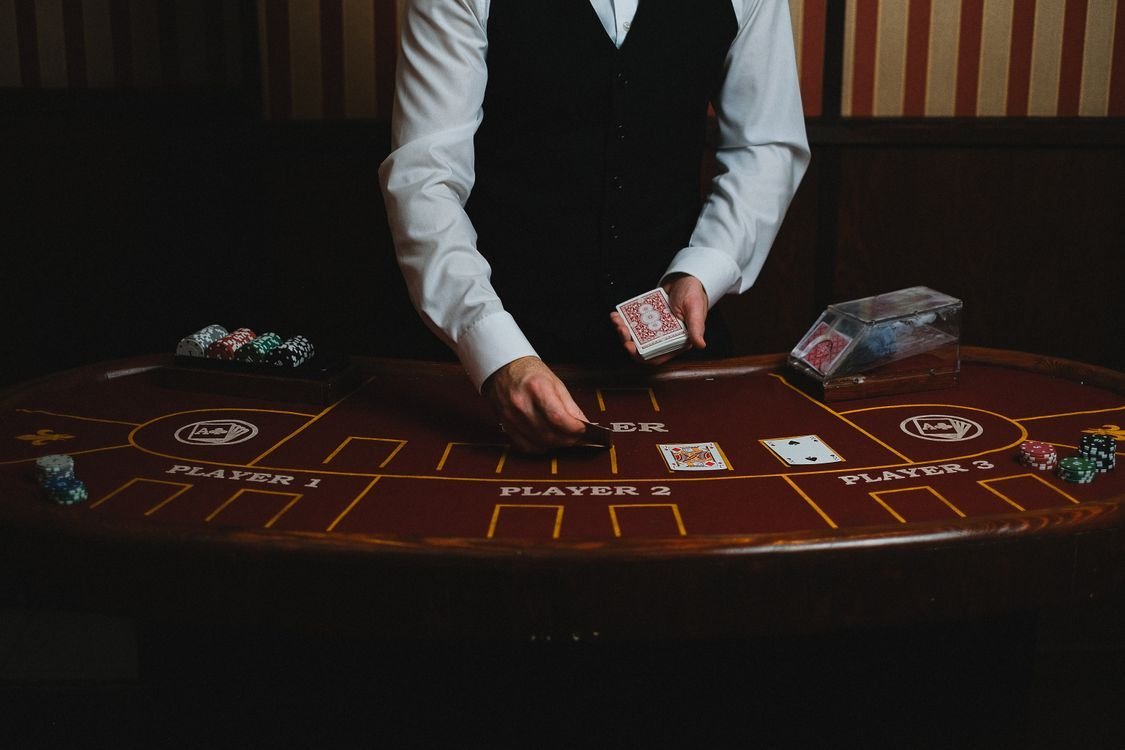
Now the practical part: how do you physically hand over casino dealer tips without breaking some unwritten rule? The golden rule is simple, and it exists for security reasons. Never hand cash or chips directly into the dealer’s hand.
Casinos want every transaction visible on camera, so you always place your tip on the table, in the open, where the dealer can pick it up in full view. Slide a chip toward the dealer, or place it just in front of your betting spot, and say something simple like “this is for you” or “for the dealer”. The dealer will tap the table, say thank you, and drop the chip into the tip box. That little tap is not them being cheeky; it is part of the procedure, a visible acknowledgement for the cameras.
There are two main ways to tip at a table game, and both are perfectly acceptable. The first is the straightforward tip I just described: a chip placed on the table for the dealer, no strings attached. The dealer pockets it — or rather, drops it in the tip box — and the game carries on. This is the simplest method, and it is what I recommend if you are new, because there is nothing to get wrong.
The second method is placing a bet for the dealer, and this one is more fun once you understand it. You place a chip just outside your own betting area, usually slightly in front of or beside your bet, and you tell the dealer “this one is for you”. The dealer then plays that chip as their own bet on the next hand or roll, alongside yours. If the bet wins, the dealer keeps both the original chip and the winnings. If it loses, the chip goes to the house like any other losing bet.
At blackjack, players often place a dealer bet next to their own hand, and if the hand wins, the dealer gets paid just like you did. At craps, players commonly put a bet for the crew on the pass line or on a hardway, and the whole table gets to cheer for it together.
A few practical notes on dealer bets. Place them before the round starts, not halfway through, and always say clearly that the bet is for the dealer, so there is no confusion about whose chip it is. Keep the amount modest and in line with your own bets — a dealer bet bigger than your own bet looks odd. And remember that a dealer bet is a gamble, not a guaranteed tip: if it loses, the dealer gets nothing from it. Some players prefer the straightforward chip for exactly that reason, because it is a guaranteed thank-you. Neither choice is wrong. It is a matter of style.
Do Dealers Keep Their Tips, or Do They Go Into a Pool?
This is a question I hear a lot, and the honest answer is: it depends on the casino. In most large casinos, table-game dealers do not keep the tips from their own table. Instead, the tips go into a shared pool, often called a toke pool, which is divided among all the dealers working that shift or rotation. The idea is fairness: a dealer stuck on a quiet table all night should not earn far less than a colleague on a busy table, just because of where they were assigned. The pool smooths that out, and in many places it is managed carefully and divided by hours worked.
There are exceptions, and they matter. In many poker rooms, dealers keep their own tips individually, because poker tips are tied directly to the pots at their specific table. Some smaller casinos let dealers keep their own tokes too, and some split tips by game type or by pit. The exact system varies by property, by state or country, and sometimes by union agreement. Federal law in the United States also draws a line here: the casino itself, its managers and its supervisors cannot take a share of the tip pool. The money belongs to the tipping staff.
Why does any of this matter to you as a player? Mostly, it should not change what you do. Whether your chip goes to one dealer or into a shared pool, it still reaches the people who dealt your game, and it still says the same thing.
The one practical difference for casino dealer tips is psychological: if you were hoping to reward one particular dealer for a wonderful hour, a pooled system means your tip is shared with the whole crew. That is not a reason to stop tipping. It is a reason to tip steadily as you go, so each dealer who serves you benefits, and to remember that the dealer smiling at you right now is part of a team.
Does Tipping Change Your Odds or the Cards?
Let me be completely straight with you here, because this is the myth that causes the most trouble. No, tipping does not change your odds, your cards, or your luck. Not even slightly. Dealers do not control the outcome of any game in a licensed casino. Blackjack dealers follow fixed rules about when to hit and stand. Roulette wheels and dice are random, and the dealing procedures are designed so that no individual can influence the result even if they wanted to. A dealer who tried to favour a tipping player would be breaking the law and would be caught quickly, because every table is watched.
What tipping can change is the atmosphere. A dealer who feels appreciated tends to be warmer, chattier, and more willing to help a newcomer with the rules. The game feels friendlier, the table feels looser, and you enjoy yourself more. That is a real benefit, and it is worth something — but it is a social benefit, not a mathematical one.
If anyone ever tells you that tipping buys better cards, or that a dealer is “due” to help you because you have been generous, they are selling you a story. Enjoy the game, tip because the service was good, and never tip money you cannot afford in the hope of changing the maths. The maths does not care, and your bankroll will thank you for remembering that.
Tipping Online Live Dealers
Live dealer games online have their own tipping culture, and it is still evolving. On many live casino platforms, you can tip the dealer through a button on the screen, usually after a win or at the end of a session. The amount is typically small, a few dollars or the equivalent in your currency, and it is entirely optional. Some platforms do not offer a tipping feature at all, and on those, there is simply nothing to do — you cannot be expected to tip through a system that does not exist.
My advice on casino dealer tips for live dealer games is the same as for a physical table, just scaled down. If you have enjoyed a session, the dealer was engaging and professional, and the platform lets you tip easily, a small tip is a nice gesture. If the platform makes it awkward, or you are playing low stakes, do not stress about it. A friendly word in the chat — a simple “great dealing, thank you” — goes a surprisingly long way with live dealers, who spend long shifts talking to a camera. And everything I said about odds applies online too: tipping a live dealer does not change the cards or the wheel. It is appreciation, not influence.
One more online note: never send money to a dealer outside the platform’s official tipping feature, and never accept a dealer’s request for a private payment. Legitimate dealers will never ask for that. If it happens, report it to the casino’s support team and move on.
Common Mistakes and Tipping Etiquette Do’s and Don’ts
I have made most of these mistakes myself, so I say this with sympathy rather than judgement. The most common error is handing chips directly to the dealer or trying to press cash into their hand. I understand the instinct — it feels more personal — but it puts the dealer in an awkward position, because casino procedure requires everything to happen visibly on the table. Place it on the felt, say it is for them, and let them handle it from there.
Another mistake is tipping from a pot you have not won, or tipping in a way that slows the game down. In poker, for example, do not reach into your stack and hold up the next hand while you work out a tip. Keep it quick, keep it simple, and keep the game moving. Similarly, do not make a big performance of tipping. A quiet chip and a smile carries more class than a grand gesture designed to make the whole table look at you.
Do not tip to buy luck, and do not get annoyed if a big tip is followed by a losing hand. The dealer did not owe you a win, and sulking about it makes the table uncomfortable for everyone. Do not feel obliged to match another player’s tipping either. If the person next to you is tipping $25 chips and you are tipping $1 chips, that is completely fine — you are playing different bankrolls, and nobody is keeping score except, perhaps, you.
And please, do not let tips push you over your budget. Tips are part of the cost of a casino evening, not an extra on top of a budget you have already blown. Decide before you play what you can afford to spend in total, including tips, and stick to it. A dealer would much rather you leave happy and come back another day than watch you tip away money you needed. Finally, be polite to dealers even when you do not tip. A please, a thank you, and a bit of patience when the table is busy cost nothing, and they are remembered just as warmly as chips.
Frequently Asked Questions
Do I have to tip a casino dealer?
No, tipping is not compulsory, and no dealer will demand a tip or treat you badly for not leaving one. It is a strong custom, especially in the United States, because tips form a large part of many dealers’ pay. Think of it like tipping in a restaurant: optional in theory, expected in practice, and always appreciated when the service was good.
How much should I tip a casino dealer?
A good starting point is $1 to $5 per hour of play at low-stakes tables, or a small chip after a pleasing win, scaling up with the stakes you are playing. At poker, $1 to $2 per pot won is standard, rising for very large pots. There is no fixed rate, so tip what feels comfortable for your bankroll and the quality of the service.
Can I place a bet for the dealer instead of giving a straight tip?
Yes, and it is a popular option at blackjack and craps. You place a chip beside your own bet and tell the dealer it is for them, and if the bet wins, the dealer keeps the chip and the winnings. If the bet loses, the dealer gets nothing, so some players prefer a straightforward chip tip because it is a guaranteed thank-you.
Do dealers keep their own tips or share them?
In most large casinos, table-game tips go into a shared pool that is divided among the dealers on shift, so your tip benefits the whole crew rather than one individual. Poker dealers are a common exception and usually keep their own tips. Either way, your tip reaches the dealing staff, and the casino’s managers cannot legally take a share of it.
Does tipping a dealer improve my chances of winning?
No, it does not. Dealers follow strict procedures and cannot control the cards, the wheel, or the dice, and licensed games are monitored to make sure of it. Tipping can make the table friendlier and the session more enjoyable, but it has no effect on the maths of the game, so never tip in the hope of buying better luck.
Conclusion
When I look back at that first awkward evening at the blackjack table, I mostly laugh at myself now. I was so worried about getting tipping exactly right that I forgot the whole point of it, which is simply to be gracious to the person running your game. The customs for casino dealer tips are not complicated once you know them: tip when you are winning or when you leave, use chips on the table rather than cash in hand, try a bet for the dealer if you fancy it, keep the amounts in proportion to your stakes, and never tip money you cannot afford.
If you want to understand more about the little tricks casinos use to keep you at the tables, my piece on why casinos pump oxygen and other design myths (https://dailyblick.de/why-do-casinos-pump-oxygen/) is a fun companion read — it turns out the air is not the thing keeping you playing, and the real psychology is much more interesting. And for a clear outside overview of tipping customs, the PokerListings guide to casino tipping etiquette (https://www.pokerlistings.com/casino-guides/casino-tipping-etiquette) is a solid reference worth a look.
Most of all, remember that dealers are people doing a skilled, demanding job under bright lights and constant scrutiny. A small tip, given with a smile and without any expectation attached, is one of the easiest ways to make a casino evening better for everyone at the table, including you. Play within your means, enjoy the game for what it is, and tip the way you would want to be thanked for good work.
Gamble responsibly. 18+ only.
Author

hamzayounus355@gmail.com
Related Posts
What Is a Push in Blackjack? Tie Rules, Examples and Strategy, Explained
- 0
- 2,994 words
The first time I ever saw a push, I thought the dealer had made a mistake. I was sitting at a small...
Read out all
What Is a 3 Bet in Poker? Meaning, Sizing and Strategy, Explained
- 0
- 2,970 words
The first time someone re-raised me before the flop, I had no idea what had just happened. I was playing a friendly...
Read out all
What Is a Poker Kicker? Rules, Examples and Strategy, Explained
- 0
- 3,085 words
What Is a Poker Kicker? Rules, Examples and Strategy, Explained The first time I lost a pot I was sure I had...
Read out all
What Is a Craps Horn Bet? Payouts, Odds and Rules, Explained
- 0
- 3,036 words
What Is a Craps Horn Bet? Payouts, Odds and Rules, Explained The first time I heard someone at a craps table shout...
Read out all
How to Play Online Poker for Real Money: A Beginner’s Guide, Explained
- 0
- 3,123 words
How to Play Online Poker for Real Money: A Beginner’s Guide, Explained I still remember the night I first typed how to...
Read out all
How to Play 5 Card Draw Poker: Rules, Draws and Strategy, Explained
- 1
- 3,088 words
How to Play 5 Card Draw Poker: Rules, Draws and Strategy, Explained The first time someone asked me how to play 5...
Read out all