
- 0
- 3,341 words
If you have ever sat at a blackjack table and felt like someone was watching you, you were probably right — and you were probably wrong about why. I had that feeling myself the first time I played in a big casino. I kept glancing up at the ceiling, half expecting a camera to swivel toward me like in a spy film, and I spent half the session wondering what is a casino surveillance and whether a room full of people was studying my every move.
The truth is much less dramatic and much more interesting. Yes, you are on camera from the moment you walk in. No, nobody is personally watching you play your five-dollar hand — unless you give them a reason to. Casino surveillance is a whole system of cameras, people, and software that protects the casino’s money, its games, and, in a way, you as well. Let me walk you through how it actually works, because once you understand it, the casino floor feels a lot less mysterious.
Table of Contents
What Is a Casino Surveillance? The Simple Answer
What is a casino surveillance, in plain English? It is the system a casino uses to watch its own games, money, and people — the cameras in the ceiling, the operators watching the screens, and the software that flags anything unusual. The most important thing to understand is that surveillance is not there to spy on ordinary players. It exists to protect the games: to make sure the cards are dealt fairly, the chips are counted correctly, and nobody — player or employee — is stealing.
Think of it like the security system in a bank, except the bank is open to the public and thousands of people are handling cash and chips every hour. The casino has to watch the tables, the cashier’s cage, the slot machines, the entrances, the counting rooms, and the corridors in between. A single casino can run hundreds or even thousands of cameras, and the footage from all of them flows into one control room, usually hidden away from the gaming floor.
In short, what is a casino surveillance comes down to this: a network of eyes in the ceiling and a team of trained watchers whose job is to spot trouble — cheating, theft, mistakes, or disputes — before it costs the casino, or an honest player, real money. Everything else I explain below is just the detail of how that system is built.
The Eye in the Sky: A Short History
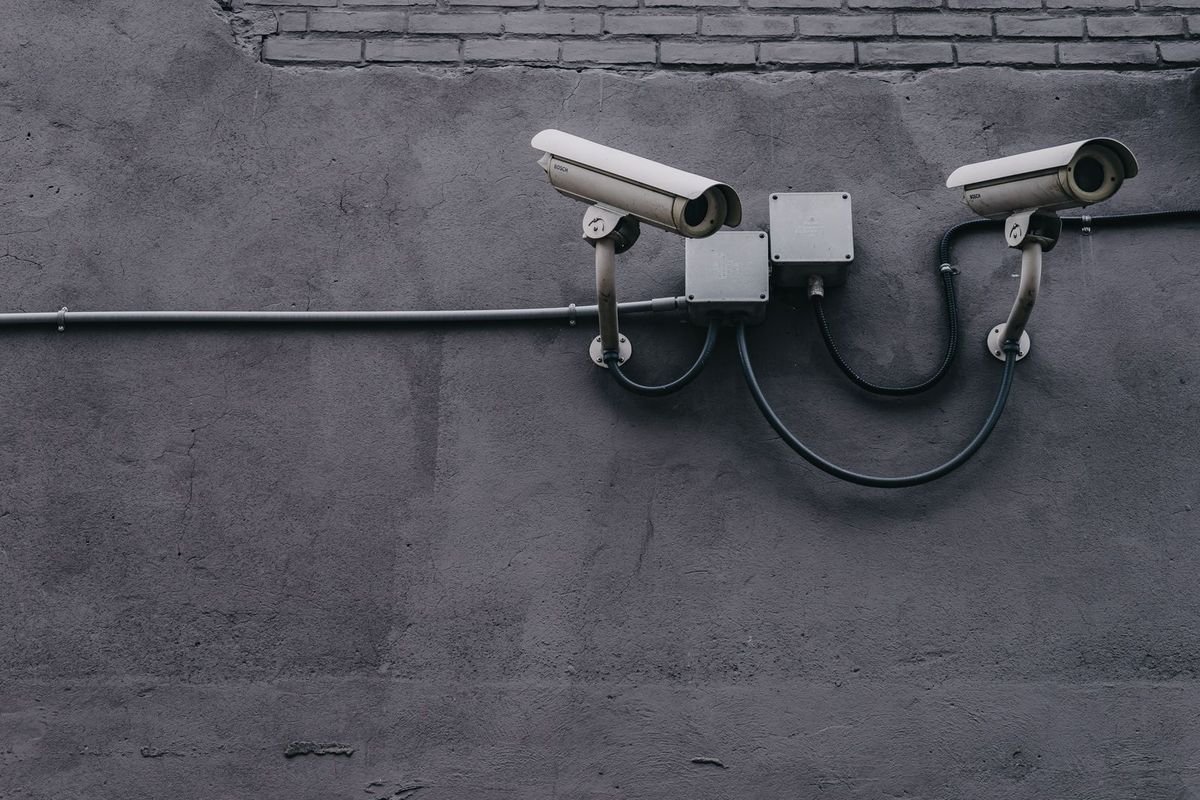
The nickname for casino surveillance is “the eye in the sky,” and it dates back to the 1960s and 1970s, when Las Vegas casinos first started hiding cameras in the ceiling. Before that, security was mostly floor walkers — big men in suits who strolled the floor and watched the tables with their own eyes. That worked when casinos were small, but as the floors grew, one person could not watch twenty tables at once.
The early camera rooms were crude by today’s standards. Operators sat in a dark room watching small black-and-white monitors, and the cameras could barely read the cards on a table. The tapes were bulky, the picture was grainy, and reviewing footage took hours. Still, it changed the game: for the first time, a casino could replay a hand and settle a dispute with evidence instead of arguments.
Then came the big shift. In the 1990s, digital cameras and video storage arrived, and the picture got sharp enough to read the value of a chip from across the room. In the 2000s, casinos added software that could track betting patterns and flag suspicious play automatically. Those early rooms were the first version of what is a casino surveillance, and they changed casino security for good. Today, a modern surveillance room is closer to a television control room than a guard post — walls of high-definition screens, cameras that can zoom in close enough to read a serial number on a banknote, and computer systems that never blink. The nickname stuck, though. Players and staff still call it the eye in the sky.
Types of Cameras and Where They Are Placed
Not every camera in a casino does the same job, and their placement is no accident. The busiest and most closely watched cameras sit directly above the gaming tables, pointed straight down at the felt. These are the cameras that matter most, because the tables are where the money moves fastest. A table camera needs to see every card, every chip, and every hand movement clearly enough to settle a dispute days later.
Slot machine areas get a different kind of coverage. The cameras there watch the machines themselves, the coin and ticket dispensers, and the players sitting at them. The aim is to catch anyone tampering with a machine or trying to claim a payout they did not win. The cashier’s cage — where chips are bought and cashed in — has some of the tightest coverage in the building, with multiple cameras recording every transaction from different angles.
Then there is the coverage you barely notice: the entrances, the corridors, the lifts, the car park, and the counting rooms where the day’s cash is sorted. These cameras are less about the games and more about safety and theft. If someone walks out with a bag of chips, the casino wants to know exactly which door they used and when.
Here is a rough picture of how a typical casino spreads its cameras:
| Area | Camera coverage | What operators watch for |
|---|---|---|
| Gaming tables | One or more cameras per table, overhead | Card handling, chip theft, dealer errors, disputes |
| Slot machines | Wide-angle cameras over machine rows | Machine tampering, false payout claims |
| Cashier’s cage | Multiple cameras, close and wide | Chip counts, cash handling, counterfeit notes |
| Entrances and exits | Cameras at every door | Known cheaters, banned players, suspicious arrivals |
| Counting rooms | Cameras from every angle | Cash handling, internal theft |
| Car parks and corridors | General coverage | Safety incidents, theft, tracking movements |
That is what is a casino surveillance in practice: coverage without gaps, designed so that a person can be followed on camera from the front door to the table and back again.
Facial Recognition and Modern Technology
This is the part of what is a casino surveillance that sounds most like science fiction, and it is the part players ask me about most. Yes, many large casinos use facial recognition. Cameras at the entrances compare faces against databases of known card counters, cheaters, and people who have been banned or who have asked to be excluded from gambling. If there is a match, security is alerted quietly — there is no alarm bell, just a message to a security officer’s earpiece.
Facial recognition is only one piece of the modern toolkit. Some casinos use software that analyses betting patterns in real time. If a player suddenly increases their bets at exactly the right moments over and over again, the system flags it, and an operator takes a closer look. Other software tracks chips: special “smart” chips with tiny radio tags can tell the casino where high-value chips are on the floor at any moment.
Table games have had their own upgrades too. Many casinos now use automatic card shufflers and card-reading shoes that record every card dealt, so the surveillance team can check a dispute against an exact digital record of the hand. Some roulette wheels have sensors that record the winning number and flag any pattern that should not be happening. None of this is there to punish ordinary players. It is there because cheating has become more sophisticated too, and the casino’s defences have had to keep up.
How Surveillance Catches Cheaters and Card Counters
Cheating in a casino is rarer than films make it look, but it does happen, and surveillance is how most of it gets caught. The classic cases are not dramatic. They are quiet: a dealer palming a chip, a player marking cards, two players signalling each other at a poker table, or someone past-posting — slipping extra chips onto a winning bet after the result is known.
Surveillance catches these things because operators know exactly what to look for. A dealer who pays out a little too generously to the same player, time after time, will show up on camera. A player who always seems to know when to raise their bet will draw attention. And a pair of players who never look at each other but always win together will be watched until the pattern is clear. The team does not act on a single suspicious hand. That is why what is a casino surveillance is built around patience: they record, they review, and they wait until the evidence is solid.
Card counting is a different case, and it is worth being clear about. Counting cards is not cheating — it is using your memory and maths to track which cards have been played. But casinos are private businesses, and they are allowed to refuse service to someone they believe is counting. Surveillance helps them identify counters by watching betting patterns: a player whose bets jump up and down in step with the count is easy to spot on camera over time. When that happens, the usual response is a quiet word from a supervisor, or the player being asked to leave. No cameras, no drama — just a polite conversation.
The other thing surveillance catches is mistakes, and this is where it genuinely helps honest players. If a dealer pays you the wrong amount, or a dispute breaks out over whether a card was dealt correctly, the surveillance team can replay the hand and settle it. I have seen a player get a payout they were owed because the camera showed the dealer had made an error. That replay is the real value of the system for most of us.
The Surveillance Team, the Pit Boss and the Dealers
The technology is only half the story. The other half is the people, and they work as a team. In the surveillance room sit the operators — trained staff who watch the screens in shifts, often for hours at a time, each assigned to a section of the floor. They are not security guards. They are specialists who know the games inside out and can spot a wrong payout or a suspicious hand movement at a glance.
On the floor, the pit boss is the link between the tables and the surveillance room. The pit boss watches the dealers and players in person, manages the table, and decides when something needs a closer look. If a pit boss notices a player acting strangely, they can call the surveillance room and ask for the cameras on that table to be checked. The dealers are part of this too: a good dealer notices when a player is handling chips oddly or when a card is not where it should be, and they report it up the chain.
The relationship runs both ways. Sometimes the surveillance room spots something first and radios down to the floor. Sometimes the floor team asks the room to check a table. Either way, nothing happens in a hurry. The team builds a picture over time, because a single odd hand proves nothing — but a pattern across an evening proves a lot. It is slow, careful work, and the best operators are patient people who can watch the same table for an hour and notice the one thing that does not fit. This teamwork is what is a casino surveillance at its best — technology and people watching the same floor from different angles.
What Surveillance Can and Cannot Do
For all its cameras, what is a casino surveillance is not unlimited — and players should know where the limits are, because the myths are louder than the facts. The first limit is practical: nobody can watch every camera at once. A casino may have a thousand cameras, but only a handful of operators on shift. Most footage is simply recorded and only reviewed when something happens — a dispute, a theft report, or an alert from the software.
The second limit is legal. Casinos operate under strict gambling regulation, and regulators set rules about how surveillance can be used. In the UK, for example, operators are licensed and overseen by the Gambling Commission, which expects casinos to protect players and run fair games. That oversight is part of why the system exists in the form it does: it is not just the casino watching you, it is the casino being watched itself.
There are also hard privacy limits. Surveillance cameras cover the gaming floor, the entrances, and the public areas. They do not cover hotel rooms, toilets, or other private spaces. And the footage is not public — it is held by the casino and released to the police or regulators when there is a proper reason, not shared with other players.
The final limit is the most important for honest players: surveillance cannot tell the casino what you are thinking. It can see your bets and your hands, but it cannot read your mind. A player who wins a lot by luck is not a cheater, and the system knows the difference — which is why winning a big hand does not get you watched, but winning the same way, at the same moment, over and over again does.
Online Casino Monitoring: A Different Kind of Watching
Online casinos have no ceilings to hide cameras in, so their version of surveillance works completely differently. There is no eye in the sky — instead, every click, bet, and card is already a digital record. The online casino does not need a camera to know what you did, because the software logged it the moment it happened.
Online monitoring focuses on patterns in the data. The software checks for players using multiple accounts, for bonus abuse — such as players creating new accounts just to claim welcome offers — and for betting patterns that suggest automated play or collusion in poker. It also watches for problem gambling behaviour, and licensed operators are expected to step in with warnings or limits when a player’s spending looks out of control.
The contrast with a physical casino is striking, and it shows what is a casino surveillance online really is: not watching people, but watching data. Both systems are trying to do the same job — keep the games fair and catch the small number of people who try to cheat — but they use entirely different tools to do it. And from a player’s point of view, the online version is arguably more thorough: there is no blind spot, because every action is recorded by definition.
Common Myths About Casino Surveillance
The myths about what is a casino surveillance are almost as famous as the system itself, and most of them are wrong. The first myth is that a camera operator is personally watching you the whole time you play. In reality, you are one face among thousands, and nobody has the time or the reason to follow your five-dollar hands.
The second myth is that casinos can read your cards through the table, or that they use cameras to see your hole cards and cheat you. They cannot. The cameras look down at the table from above; they see what everyone else sees. And a licensed casino has no reason to cheat its players — the house edge already guarantees its profit over time.
The third myth is that surveillance footage is kept forever and shared freely. It is not. Footage is stored for a set period set by the casino’s licence and local law, then overwritten. Access is restricted to the surveillance team, management, and the authorities when there is a proper request.
The fourth myth is that if you win too much, security will throw you out. Winning is not a crime, and casinos expect some players to win — that is the whole point of gambling. What gets you a conversation is not winning, but winning in a way that suggests you are not playing fairly. And the fifth myth is that the cameras can see through the ceiling into the hotel rooms above. They cannot, and they are not there. The eye in the sky watches the gaming floor, nothing more.
Practical Takeaways for Ordinary Players
So what does all of this mean for you, the ordinary player? First, relax. The cameras are not your enemy. If you are playing honestly, surveillance is mostly working in your favour — it is the reason a dealer error gets corrected and a dispute gets settled fairly.
Second, play in the open. Handle your chips and cards clearly, keep your hands visible on the table, and do not do anything that looks like you are hiding your actions. This is not just good manners; it is how you stay invisible to the system. The players who draw attention are the ones whose hands keep disappearing below the table edge.
Third, remember that the casino is a private business. It can ask you to leave, even if you have done nothing wrong, and card counting — while not illegal — can get you shown the door. That is the deal when you walk onto a casino floor.
And fourth, if a dispute comes up at your table, ask for the surveillance replay. It is your right as a player to have a hand reviewed, and the camera record is usually the quickest way to settle it. Stay calm, state what happened clearly, and let the pit boss call the room. The eye in the sky is there to protect the game, and that includes your game.
Frequently Asked Questions
Can casinos watch you all the time?
Yes, cameras cover the gaming floor, entrances, and cashier areas, and everything is recorded. But with hundreds of cameras and only a few operators on shift, nobody is personally watching your individual play unless something flags your table for a closer look.
Do casinos use facial recognition?
Many large casinos do, mainly at entrances. The cameras compare faces against lists of known cheaters, banned players, and people who have asked to be excluded from gambling. If there is a match, security is alerted quietly.
Can surveillance see my cards?
No. Table cameras look down from above and see what everyone at the table can see. They cannot see cards held face down or read your hole cards, and they cannot see through the table or into private areas.
How long do casinos keep surveillance footage?
It depends on the casino’s licence and local law, but footage is usually kept for a set period — often days or weeks — and then overwritten. It is not kept forever, and access is restricted to the surveillance team, management, and the authorities.
Will I get in trouble for winning a lot?
No. Winning is part of gambling, and casinos expect some players to win. You will only draw attention if your wins follow a pattern that suggests cheating or card counting, and even then the usual response is a quiet conversation, not an accusation.
Now that you know what is a casino surveillance, the casino floor should feel a little less mysterious. The cameras, the control room, and the team behind them are not there to ruin your night — they are there to keep the games honest, the money safe, and the disputes short. Play fairly, keep your hands visible, and if anything goes wrong at your table, remember that the eye in the sky is probably the best witness you have.
Gamble responsibly. 18+ only.
Author

hamzayounus355@gmail.com
Related Posts
What Is a Push in Blackjack? Tie Rules, Examples and Strategy, Explained
- 0
- 2,994 words
The first time I ever saw a push, I thought the dealer had made a mistake. I was sitting at a small...
Read out all
What Is a 3 Bet in Poker? Meaning, Sizing and Strategy, Explained
- 0
- 2,970 words
The first time someone re-raised me before the flop, I had no idea what had just happened. I was playing a friendly...
Read out all
What Is a Poker Kicker? Rules, Examples and Strategy, Explained
- 0
- 3,085 words
What Is a Poker Kicker? Rules, Examples and Strategy, Explained The first time I lost a pot I was sure I had...
Read out all
What Is a Craps Horn Bet? Payouts, Odds and Rules, Explained
- 0
- 3,036 words
What Is a Craps Horn Bet? Payouts, Odds and Rules, Explained The first time I heard someone at a craps table shout...
Read out all
How to Play Online Poker for Real Money: A Beginner’s Guide, Explained
- 0
- 3,123 words
How to Play Online Poker for Real Money: A Beginner’s Guide, Explained I still remember the night I first typed how to...
Read out all
How to Play 5 Card Draw Poker: Rules, Draws and Strategy, Explained
- 1
- 3,088 words
How to Play 5 Card Draw Poker: Rules, Draws and Strategy, Explained The first time someone asked me how to play 5...
Read out all