
- 1
- 2,832 words
If you have ever wondered what is a casino craps table, you are not alone — I stood staring at one on my first casino trip before I worked up the nerve to walk over. It looked like a giant bathtub covered in writing, and I had no idea where I was supposed to stand.
Here is the good news: the table looks far more complicated than it actually is. Most of that printed felt is just the same few bets repeated on both sides. In this guide I will walk you around the table the way a friend would — each zone, the staff, how to buy in, and the
What Is a Casino Craps Table? The Layout at a Glance
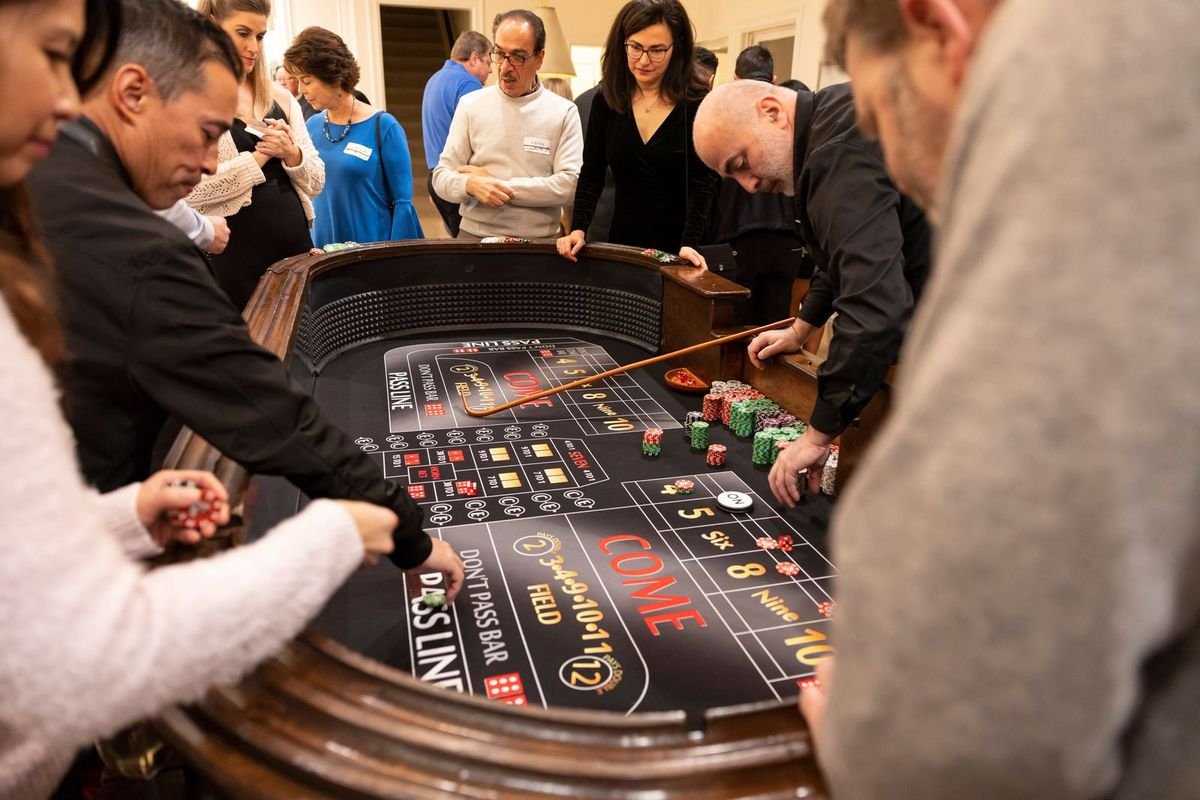
So what is a casino craps table, stripped down to the basics? It is a long, curved table — usually about twelve to fourteen feet long — covered in a printed felt layout that shows every bet you can make. Players stand around the outside, the dealers stand inside, and two dice travel back and forth all night.
Think of the layout as a map. The areas closest to you hold the bets you will actually use: the pass line, the don’t pass bar, the field, and the come area. The numbers in the middle are the place bets, the hardways sit above them, and the very centre belongs to the one-roll proposition bets. You only need the pass line, the field, and the come box to start.
The shape is the first thing everyone notices about what is a casino craps table. It is a long oval with rounded ends, a bit like a bathtub, so a dozen or more players can stand around the outside and reach the betting areas while the dice stay in play. A raised padded rail runs around the edge, with a groove where your chips sit, and the back wall is lined with a rubberised pyramid surface that the dice must hit on every roll, making them bounce randomly.
The Felt Layout Zones: Pass Line, Don’t Pass Bar and the Field
If you are still wondering what is a casino craps table after one look at the felt, the betting zones are the answer. Along the bottom edge, right in front of you, is the pass line, where the most popular bet in craps goes. It sits there from the come-out roll until the round ends: it wins on a 7 or 11, or when the shooter makes their point, and it carries a house edge of about 1.41%, one of the lowest in the casino.
Directly above the pass line is the don’t pass bar, the mirror-image bet, where you bet that the shooter will lose. It pays even money, and the bar is there because a roll of 12 on the come-out is a push rather than a win — the casino’s way of keeping its small edge. Above that sits the field, a big box covering 2, 3, 4, 9, 10, 11 and 12. A field bet lasts one roll: you win if the next roll is one of those numbers, and you lose on a 5, 6, 7 or 8. The 2 and 12 usually pay double or triple, but the house edge is higher than on the pass line, so I treat the field as a fun side bet.
Next to the field is the come area, which works like a personal pass line starting on any roll after the point is set, and along the top are the boxes for the point numbers — 4, 5, 6, 8, 9 and 10 — where the dealer moves your come bets and where place bets live. The table is also mirrored, so each end gets its own copy of the main betting areas, which is why the felt looks so crowded. Layouts vary slightly, so scan the felt before you bet somewhere new.
Come, Don’t Come and Place Bets
Once the point is set, the come and don’t come boxes become useful. A come bet is exactly like a pass line bet, except you place it after the point is established, and the very next roll acts as its own little come-out roll. A 7 or 11 wins; a 2, 3 or 12 loses; and any other number becomes the point for that bet, with your chips moved into the matching number box.
A don’t come bet is the same idea in reverse: you are betting the shooter will lose, starting from the next roll. It goes in the don’t come box, and after the roll your chips move into the number box too — only now you win if a 7 shows up before that number.
Place bets are simpler and very popular with regulars. You tell the dealer you want to place the 6, and they put your chips in the 6 box. You win every time a 6 rolls before a 7, and you lose when the 7 comes. The payouts are not quite true odds — the 6 and 8 pay 7 to 6, the 5 and 9 pay 7 to 5, and the 4 and 10 pay 9 to 5 — which is why the house edge is higher than on the pass line. For a first session, stick to the pass line with odds, and add a place bet on the 6 or 8 once you are comfortable.
Hardways and the Proposition Bets in the Centre
Above the point-number boxes sit the hardways, small boxes marked 4, 6, 8 and 10. A hardway bet wins only if the number rolls as a pair — a hard 8 means two 4s — and it loses if a 7 rolls, or if the number rolls the “easy” way, like a 5 and a 3. They pay 7 to 1 or 9 to 1, but the house edge is steep, roughly 9 to 11%, so I treat them as a dollar of fun.
Then there is the centre of the table, the strip down the middle that both sides share — home of the proposition bets, the one-roll wagers the stickman calls out: any 7, any craps, the 2, the 3, the 11, the 12, and the horn bets. Ask any dealer what is a casino craps table’s worst-value area and they will point at the middle — the house edge on some of these bets runs past 13%, and on the “any 7” bet it is over 16%.
That is the honest truth about the centre of the table: it exists for players who want a quick thrill on a single roll, and the casino loves it for exactly that reason. I have thrown a dollar on the hard 8 for luck, but I know it is entertainment, not a plan. If you are learning, keep your money on the edges where the maths is kind.
The Chip Rail, the Dice and the People Running the Game
The groove along the padded rail in front of you is the chip rail, and it is yours. That is where your chips live between bets, and it is how the dealers know which chips belong to whom. Keep your chips in your rail, and never reach across to someone else’s stack — touching another player’s chips is one of the fastest ways to get a cold stare.
There are always five dice on the table even though only two are in play. The stickman — the dealer standing in the middle with a long curved stick — uses it to slide the dice to the shooter and collect them after each roll. The dice are translucent red, with sharp edges and the casino’s logo on them, and they are swapped out regularly.
The stickman does more than move the dice: they call out every result, announce the point, and take the centre bets. Opposite the stickman sits the boxman, who watches the game, guards the chips in the centre bank, and settles disputes. On each end stands a dealer, one per side, who handles your bets, pays your winners, and moves your chips into the number boxes. Four people run one table.
Table Limits: Minimums, Maximums and Buying In
Once you understand what is a casino craps table, the limits sign is the next thing to read. A common setup is a $5 or $10 minimum on the pass line, with a maximum of maybe $1,000 or $2,000, though busy casinos on a Saturday night might run $25 minimums. The minimum applies to each bet individually, not to your total, so on a $10 table your pass line bet must be at least $10, and a field bet on the same roll must be at least $10 too.
Maximums matter less for beginners, but they cap the casino’s exposure on the odds bets. The “odds” are an extra bet you place behind your pass line bet after the point is set, and they pay at true odds with no house edge at all. Most tables allow three, four or five times odds, and some allow ten times or more. For the full maths, the Wizard of Odds craps guide lays it out better than anyone.
Buying in is simple, but timing matters. Wait until the current roll is finished — never throw cash onto the table while the dice are in the air — then place your money flat on the felt in front of you. The dealer will take it, count it out loud, and slide you chips in return. Cash never goes directly from your hand to the dealer’s hand; that is a security rule, not rudeness. A first buy-in of $100 or $200 is plenty.
How a Round Flows from the Layout’s Point of View
Once you know what is a casino craps table, the flow of a round is easy to follow, because it follows the same rhythm every time. It starts with the come-out roll: the shooter rolls while the pass line and don’t pass bets wait. A 7 or 11 wins for the pass line right away; a 2, 3 or 12 loses; and any other number becomes the point.
When a point is set, the dealer places a puck — a small round marker that says ON on one side and OFF on the other — on the matching number box. That puck is the whole game in miniature: it tells everyone which number the shooter is trying to repeat. From here, the shooter keeps rolling until either the point repeats, which wins for the pass line, or a 7 shows up first — “seven out” — and ends the round.
After a seven out, the puck flips to OFF, the dice move clockwise to the next player, and a new come-out roll begins. Meanwhile the other bets run their own little lives: come bets travel into the number boxes, place bets pay out every time their number hits, and the field resets on every roll. The stickman calls each result, the dealers move chips like a team, and your job is to watch your own bets and keep your hands clear.
Common Beginner Mistakes at the Table
The first mistake I made after learning what is a casino craps table was betting on everything at once. A new player looks at the felt, sees twenty different boxes, and starts sprinkling chips everywhere — a dollar on the field, a dollar on the hard 8, a horn bet for luck. Ten minutes later they have no idea what they have riding on the next roll. Pick one bet, the pass line, and learn it before you add anything else.
The second mistake is betting too big for the table. On a $10 minimum table, a pass line bet plus odds plus a place bet can chew through $100 in minutes when the shooter sevens out early. I set a loss limit before I sit down and I leave when it is gone. The dice have no memory, and “due for a win” is not a real thing.
The third mistake is not knowing when you can and cannot bet. You cannot place a pass line bet after the point is set, you cannot pick up your pass line bet mid-round, and you cannot throw chips onto the table while the dice are rolling. The fourth mistake is chasing the centre bets: they pay big and lose fast, and a player who keeps feeding them will empty their rail while the pass line players are still in the game.
Craps Table Etiquette: Hands, Dice and Timing
Part of understanding what is a casino craps table is learning the etiquette, and most of it is about not getting in the way of the dice. When the shooter has the dice, keep your hands behind the rail, not hovering over the felt. Nothing slows a game like a dealer waiting for someone’s hands to move, and nothing irritates a shooter like fingers in the landing zone. When the dice come to you, pick them up with one hand only, and never take them past the edge of the table.
Do not say the word “seven” at the table if you can help it — many players consider it bad luck, and while I am not superstitious myself, I respect the room I am in. The same goes for celebrating when the shooter sevens out while you are betting the don’t pass side: a quiet smile is fine, but cheering while everyone else groans will make you unpopular fast. When you win, tip the dealers now and then, with a chip placed as a bet for them or slid their way.
Timing matters too. Place your bets when the stickman has the dice or between rolls, never while the dice are in the air. If you are not sure whether you can bet, just ask the dealer — they would rather answer a question than fix a mistake. If you leave the table for a minute, your chips stay in your rail and nobody touches them.
Online and Live-Dealer Craps Tables
The online version of what is a casino craps table is the same game with a very different layout. The whole felt is squeezed onto your screen, you click to place chips instead of handing them to a dealer, and there is no stickman, no boxman and no one to slow the game down. That makes it a brilliant place to learn: tiny stakes, time to read each betting zone, and nobody watching you hesitate.
Live-dealer craps is the middle ground. A real dealer runs a real table on camera, you place bets by clicking an on-screen layout, and the dice are genuinely rolled in a studio. It feels closer to the casino, but you still miss the physical parts — the rail, the chips in front of you, the sound of the dice hitting the back wall. The betting zones are identical, though, so everything in this guide transfers directly. If you are still learning the bets, my how to play craps for beginners guide walks through the only bets you actually need to know.
Frequently Asked Questions
What is a casino craps table made of?
A craps table is a long, padded table with a printed felt layout, a raised rail to lean on, and a rubberised pyramid back wall that the dice must hit on every roll. It is usually twelve to fourteen feet long.
How big is a casino craps table?
A standard craps table is about twelve to fourteen feet long and around five feet wide, with room for roughly twelve to sixteen players around the outside edge. Smaller tables exist, but the full-size version is the most common.
What is a casino craps table layout and which bets should a beginner use?
The layout is the printed felt showing every bet in the game, with the pass line, don’t pass bar, field and come areas nearest the players and the proposition bets in the centre. A beginner should start with the pass line bet only, then add odds.
Do I need to know all the bets before I play at a craps table?
No — the pass line and the field, plus the come bet if you want it, are enough for a fun first session. Dealers are used to beginners and will happily tell you where a bet goes, so ask rather than guessing.
Can I play craps on a table with a low minimum?
Yes, many casinos run $5 or $10 minimum tables, especially during quieter hours, and online tables often go even lower. A low-minimum table is the best place to learn, because your money lasts longer.
Gamble responsibly. 18+ only.
Author

hamzayounus355@gmail.com
Related Posts
What Is a Push in Blackjack? Tie Rules, Examples and Strategy, Explained
- 0
- 2,994 words
The first time I ever saw a push, I thought the dealer had made a mistake. I was sitting at a small...
Read out all
What Is a 3 Bet in Poker? Meaning, Sizing and Strategy, Explained
- 0
- 2,970 words
The first time someone re-raised me before the flop, I had no idea what had just happened. I was playing a friendly...
Read out all
What Is a Poker Kicker? Rules, Examples and Strategy, Explained
- 0
- 3,085 words
What Is a Poker Kicker? Rules, Examples and Strategy, Explained The first time I lost a pot I was sure I had...
Read out all
What Is a Craps Horn Bet? Payouts, Odds and Rules, Explained
- 0
- 3,036 words
What Is a Craps Horn Bet? Payouts, Odds and Rules, Explained The first time I heard someone at a craps table shout...
Read out all
How to Play Online Poker for Real Money: A Beginner’s Guide, Explained
- 0
- 3,123 words
How to Play Online Poker for Real Money: A Beginner’s Guide, Explained I still remember the night I first typed how to...
Read out all
How to Play 5 Card Draw Poker: Rules, Draws and Strategy, Explained
- 1
- 3,088 words
How to Play 5 Card Draw Poker: Rules, Draws and Strategy, Explained The first time someone asked me how to play 5...
Read out all
1 comment