- 2
- 2,918 words
The first time I sat down to learn how to play four card poker, I assumed it was just Three Card Poker with one extra card. It is not. I raised hands I should have folded, folded hands I should have raised, and watched my chips disappear. That familiarity is exactly what catches people out.
Nobody explained it to me, so I learned it the slow way. This is the plain-English guide I wish I’d had.
Table of Contents
How to Play Four Card Poker: The Basics in Plain English
Here is the whole game in one sentence: you make an ante bet, you get five cards, you throw one away to make your best four-card hand, and then you either fold or raise by betting one to three times your ante, hoping your four cards beat the dealer’s four.
The game was invented by Roger Snow and is marketed by Shuffle Master. A hand takes a couple of minutes at most.
You are not playing against the other players: everyone plays their own hand against the dealer, so you can take your time over every decision.
The deal is unusual, so pay attention. You get five cards, face down. The dealer gets six cards, with one placed face up so you can see it, and five face down. That face-up dealer card is a small gift of information, and it can genuinely help you decide whether to raise or fold. The dealer then picks the best four cards out of their six, which is a real advantage for the house, and one reason the strategy here is stricter than people expect.
You will also see a betting spot called Aces Up: an optional side bet, paid on your hand alone, whether you beat the dealer or not.
How a Round Works, Step by Step
Once you see it in action, how to play four card poker stops feeling complicated.
First, you place your bets: chips on the Ante spot, and on Aces Up too if you fancy it. The ante is compulsory; Aces Up is optional.
Second, the cards are dealt. You get five cards face down, the dealer gets six with one face up. Take a moment: this is when the game is decided.
Third, you choose your best four cards and discard one. Usually it is obvious: keep the pair, throw away the lowest unrelated card. The discarded card is gone, so be sure.
Fourth, you decide whether to fold or play. Fold, and you lose your ante. Play, and you place a Play bet of one, two, or three times your ante.
Fifth, the dealer turns over their cards and picks their best four out of six. There is no dealer qualifying hand here, unlike Three Card Poker: the dealer always plays.
Sixth, the hands are compared and paid. Beat the dealer, or tie the dealer, and your ante and play bet both pay even money. Lose, and you lose both bets. Make three of a kind or better, and you also collect an ante bonus, paid no matter what the dealer has.
The Ante Bet and the Play Bet Explained
The ante is your ticket into the hand: the bet you place before any cards are dealt, and the bet you lose if you fold. Most tables have low minimums, so you can learn without risking serious money.
The play bet is where the real money goes, and where beginners make their most expensive mistakes. Once you have seen your cards, you can bet one, two, or three times your ante. That choice matters: the play bet is often bigger than the ante, so getting it wrong costs two or three times as much.
Think of the play bet as your vote of confidence: a pair of tens or better gets the full three times your ante, a small pair gets one times, and no pair usually means fold. That simple rule is the first real lesson in how to play four card poker well.
Remember the dealer gets six cards and picks the best four, so they will very often have a pair. Your pair of twos is not nearly as strong as it feels.
Your ante and play bets are separate from Aces Up: you can win one and lose the other on the same hand.
The Aces Up Bonus Bet: The Side Bet Worth Knowing
The Aces Up bet is the side bet that gives Four Card Poker its sparkle, and the one beginners misunderstand most. You bet your four-card hand will be a pair of aces or better, and get paid on its strength regardless of the dealer. You can win it on a hand you lose, and lose it on a hand you win.
On the most common pay table, a pair of aces pays even money, two pair three to one, a straight four to one, a flush five to one, three of a kind eight to one, a straight flush forty to one, and four of a kind fifty to one. Put five pounds on and hit four of a kind, and two hundred and fifty pounds comes back to you.
But the house edge on Aces Up is about 3.89 percent, higher than the main game played well. A pair of aces or better is rare, and roughly four out of five Aces Up bets lose.
So treat Aces Up as entertainment, not a money-making bet. I stake less than my ante, never raise it after losses, and never let it become the main event. The main game is where the better odds are.
Four-Card Hand Rankings, Best to Worst
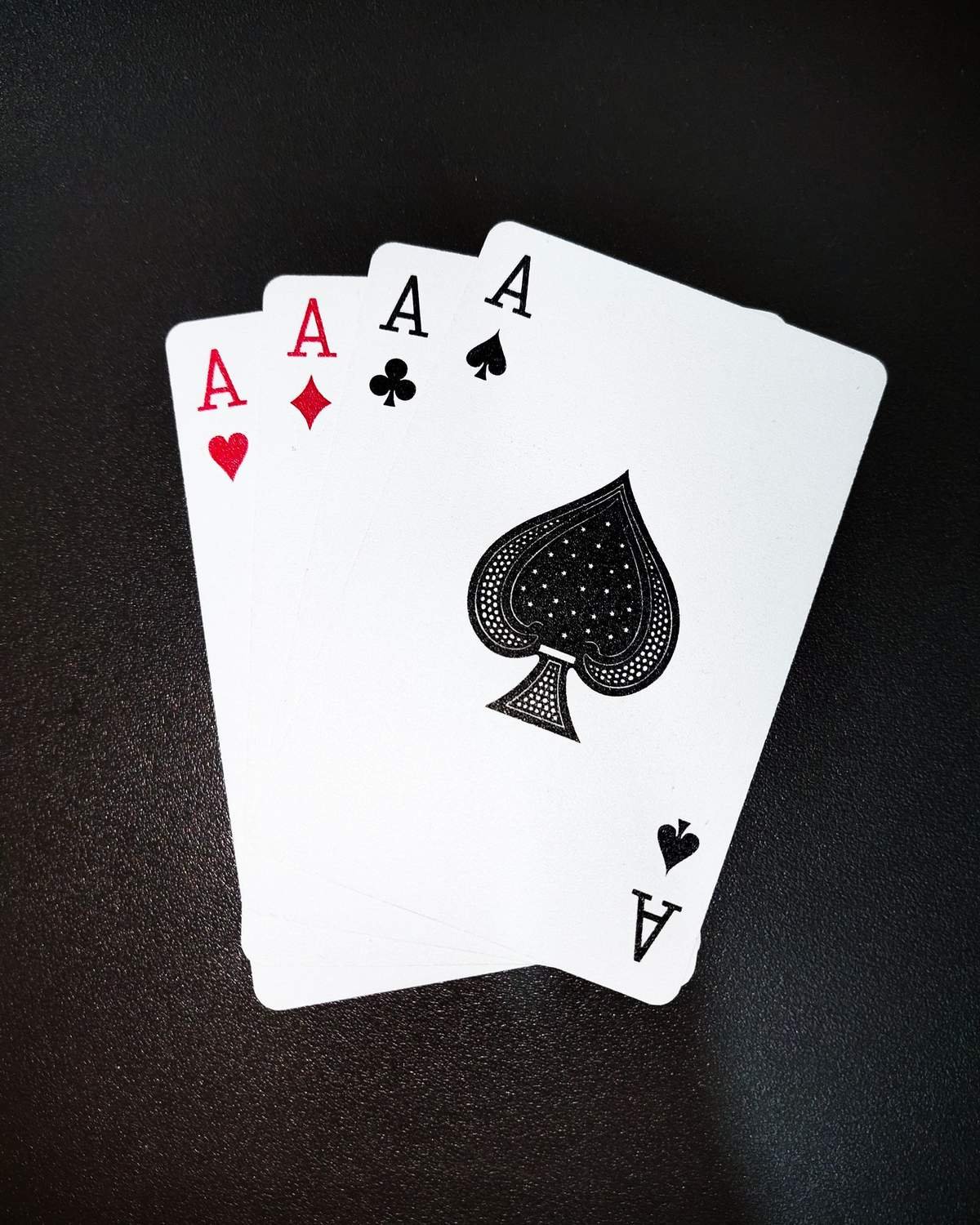
Hand rankings are the foundation of the game. There is no full house and no royal flush here, since both need five cards. The rankings are the first thing to memorise when learning how to play four card poker. Best to worst: four of a kind, straight flush, three of a kind, flush, straight, two pair, one pair, high card.
Four of a kind is four cards of the same rank. A straight flush is four in sequence and all the same suit. Three of a kind is three of the same rank. A flush is four of the same suit, not in sequence. A straight is four in sequence, not all the same suit. Two pair is two different pairs, one pair is a single pair, and high card is no made hand at all.
Two details trip beginners up. First, the ace can be high or low in a straight. Second, a flush beats a straight here, as in five-card poker, but three of a kind beats both. In Three Card Poker a straight beats a flush; here the order is the familiar one.
When two hands are the same type, the higher cards win: a pair of kings beats a pair of jacks, a straight to the eight beats a straight to the seven. If both hands are exactly equal, it is a tie, and a tie pays the player. That tie rule is a small but real gift.
Four Card Poker Payouts: What Each Hand Pays
The main bets are simple and almost always the same: beat or tie the dealer and your ante and play bets both pay even money; lose and you lose both.
Then comes the ante bonus, paid for three of a kind or better no matter what the dealer has: three of a kind pays two to one, a straight flush twenty to one, and four of a kind twenty-five to one. On a ten-pound ante, four of a kind pays a two-hundred-and-fifty-pound bonus, even if the dealer beats you.
Aces Up pays from even money for a pair of aces to fifty to one for four of a kind. But pay tables vary: some pay nine to one on three of a kind instead of eight, or six to one on a flush instead of five. Read the payouts on the felt before you buy in; if they look worse than these, find another table.
Basic Strategy: When to Raise and When to Fold
This section will save you the most money. The basic strategy is simple enough to learn in two minutes, yet most beginners ignore it, because folding feels boring and raising feels exciting. Get past that feeling and you are already ahead of most of the table.
The simplest version of how to play four card poker well comes from Stanley Ko: raise three times with a pair of tens or better, once with a pair of twos through nines, and fold everything else.
Why it works: a pair of tens or better justifies the maximum bet. A small pair is decent but not great, since the dealer has six cards and often makes a better pair, so you stay in cheaply. No pair is a losing hand far more often than a winning one, so you fold. This gives the house an edge of about 3.4 percent: not perfect, but far better than guessing.
A more advanced version uses the dealer’s face-up card. With jacks, queens or kings, bet three times when the upcard is lower than your pair or matches a card in your hand, and once otherwise. With nines or tens, bet once when the upcard outranks your pair, three times otherwise. With a pair of twos, or ace-king-queen with no pair, bet once only when the upcard matches a rank in your hand. This trims the edge to about 2.85 percent.
The hardest part is the discipline. Folding ace-high feels wrong, but here it loses far more often than it wins, because the dealer has six cards and pairs up most of the time. Fold it, wait for a pair, and put your money in when you actually have something. That discipline is the real secret of how to play four card poker for the long run.
Never vary your play bet on luck: do not bet big because you are on a winning streak, or fold good hands after three losses. Bet the hand you have, not the mood you are in.
The House Edge, Explained in Plain English
Every casino game has a house edge: the average the casino keeps from every bet over a very long run. With perfect strategy it is about 2.79 percent of your ante, roughly 1.30 percent of everything you bet. Bet a hundred pounds in antes, play perfectly, and you would expect to lose about two pounds and seventy-nine pence. With the simple strategy above, the edge is about 3.4 percent.
That is worse than blackjack played well, which can get below one percent, but better than American roulette at 5.26 percent and most slot machines. Aces Up, at about 3.89 percent, is the most expensive bet on the table, which is why I keep it small. For a fuller breakdown, the Wizard of Odds Four Card Poker guide lays out the maths in detail.
But the edge is a long-run average, not a prediction about tonight. In one session anything can happen: a straight flush, or ten losses in a row. Neither means the maths is broken. The edge only grinds you down over hundreds of hands, which is why session limits matter more than any betting system.
No betting system can beat this edge. The only things that reduce what the game costs you are the right strategy, small side bets, a good pay table, and knowing when to walk away.
Four Card Poker vs Three Card Poker: What’s the Difference?
If you already know three card poker, Four Card Poker will feel familiar, but the differences matter.
First, the cards: three cards is your whole hand in Three Card Poker, while here you get five, discard one, and play your best four, so strong hands come around more often.
Second, the dealer: three cards in Three Card Poker, the same as you, but six here, picking the best four with one shown face up. That is a big house advantage, and why a small pair is weaker than it feels.
Third, the raise: always exactly your ante in Three Card Poker, but one, two, or three times your ante here. That choice is where the skill lives, and where the money is won and lost.
Fourth, the qualifier: Three Card Poker needs the dealer to hold at least queen high, or your play bet is returned. Here there is no qualifier: the dealer always plays, and a tie counts as a win for you.
Fifth, the side bet: Pair Plus there, Aces Up here. They play a similar role, carry a similar house edge, and both tempt you into betting too much. Treat them the same: small bets, for fun, never the main event.
If you like simple, fast decisions, Three Card Poker is the easier game. If you like more choices, Four Card Poker gives you more to do. I play both, but I never sit at one table playing the other game’s strategy.
Common Beginner Mistakes (and How to Avoid Them)
I made most of these myself. Each one cost me money, and each is easy to avoid once you know it exists.
First, playing every hand. New players hate folding, but the ante is gone whether you fold or play, and throwing good money after bad is how bankrolls disappear. Ace-high or worse: fold it. The next hand is a minute away.
Second, always betting three times the ante. The play bet should match the hand, not the mood: a pair of fours is not a three-times hand. Save the big raises for the big hands.
Third, treating Aces Up as your main bet. It has a higher house edge and loses four times out of five, so keep it small and never let it grow bigger than your ante.
Fourth, misreading your hand. Straights and flushes are easy to miss under pressure, so lay your cards out and double check before you discard. There is no prize for deciding quickly.
Fifth, forgetting the dealer gets six cards. Your pair of sixes feels good until you remember the dealer’s six chances to beat it. Respect that advantage and play small pairs cheaply.
Sixth, chasing losses. Five bad hands in a row, frustration builds, and you raise your bets to win it all back at once. It never works. Set a loss limit before you sit down, and walk away when you hit it.
Finally, set your bankroll before you sit down and treat it as spent the moment you buy in. Size your ante at one to two percent of your session bankroll, and remember one hand can expose four times your ante plus any side bet.
Frequently Asked Questions
Is Four Card Poker hard to learn for a complete beginner?
Not at all. The rules take five minutes to understand, and the strategy is three rules: raise three times with a pair of tens or better, once with a smaller pair, and fold everything else. Play a few low-stakes hands first.
What is the best starting hand in Four Card Poker?
Four of a kind, paying the biggest bonuses. In practice, the best hand you will see regularly is a pair of aces or better, which is why the strategy says to raise three times with a pair of tens or higher.
Should I always make the Aces Up side bet?
You do not have to; many sensible players skip it. It pays on your hand alone from a pair of aces, up to fifty to one, but loses four times out of five with a house edge near 3.89 percent. Keep it smaller than your ante.
How is Four Card Poker different from Three Card Poker?
You get five cards and keep four, the dealer gets six with one face up, you raise one to three times your ante instead of a fixed one time, and there is no dealer qualifier, so ties pay you. The side bet is Aces Up, not Pair Plus.
Can you win money playing Four Card Poker in the long run?
In the short run, yes, especially if you catch a big bonus hand. In the long run, no: the house edge near 2.79 percent means the casino keeps a small slice of everything wagered over thousands of hands. Play well and walk away when your limits say so.
If you take one thing from this guide on how to play four card poker, let it be this: the game rewards patience more than bravery. Fold the weak hands, bet big only on the strong ones, keep the side bet small, and set your limits before you start.
Gamble responsibly. 18+ only.
Author

hamzayounus355@gmail.com
Related Posts
What Is a Push in Blackjack? Tie Rules, Examples and Strategy, Explained
- 0
- 2,994 words
The first time I ever saw a push, I thought the dealer had made a mistake. I was sitting at a small...
Read out all
What Is a 3 Bet in Poker? Meaning, Sizing and Strategy, Explained
- 0
- 2,970 words
The first time someone re-raised me before the flop, I had no idea what had just happened. I was playing a friendly...
Read out all
What Is a Poker Kicker? Rules, Examples and Strategy, Explained
- 0
- 3,085 words
What Is a Poker Kicker? Rules, Examples and Strategy, Explained The first time I lost a pot I was sure I had...
Read out all
What Is a Craps Horn Bet? Payouts, Odds and Rules, Explained
- 0
- 3,036 words
What Is a Craps Horn Bet? Payouts, Odds and Rules, Explained The first time I heard someone at a craps table shout...
Read out all
How to Play Online Poker for Real Money: A Beginner’s Guide, Explained
- 0
- 3,123 words
How to Play Online Poker for Real Money: A Beginner’s Guide, Explained I still remember the night I first typed how to...
Read out all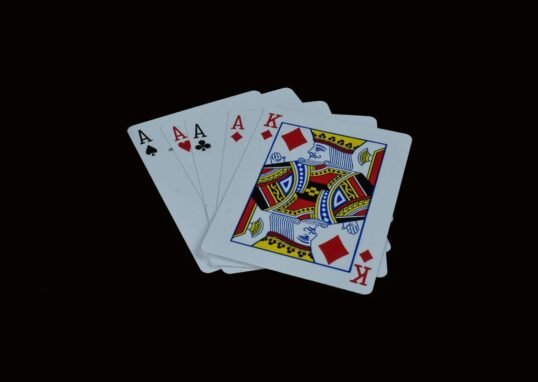
How to Play 5 Card Draw Poker: Rules, Draws and Strategy, Explained
- 1
- 3,088 words
How to Play 5 Card Draw Poker: Rules, Draws and Strategy, Explained The first time someone asked me how to play 5...
Read out all
2 comments