
- 1
- 3,655 words
The first time I sat down to learn how to bet on roulette, I did everything wrong. I had a small stack of chips, a big pile of confidence, and absolutely no idea what the numbers on the table meant. I put chips on my birthday, on my lucky number, and on a random corner because it looked busy. The ball landed nowhere near any of them, and my chips were gone in about four spins.
I wish someone had sat me down that night and explained the table in plain English. Nobody did, so I learned the slow way, one lost chip at a time. That is exactly why I wrote this guide. If you are standing in front of a roulette table for the first time, or staring at one on your phone wondering where to start, this is the conversation I wish I had been given.
Roulette looks complicated from the outside, but it is really one of the simplest games in the casino.
Table of Contents
How to Bet on Roulette: The Basics in Plain English
When I first tried to learn how to bet on roulette, the table itself scared me more than the wheel did. The wheel is just a spinning circle with numbered pockets. The table is the big grid of numbers and boxes in front of it, and that grid is where all the decisions happen. Every bet in roulette is just a chip placed on a particular part of that grid.
Here is the whole game in one sentence: you place chips on the layout to predict where the ball will land, the dealer spins the wheel and drops the ball in the opposite direction, and when the ball settles into a pocket, the winning bets get paid and the losing bets get swept away.
You do not need to understand every bet before your first spin. You only need to understand two families of bets: inside bets and outside bets. Inside bets sit on the numbered grid itself and cover one number or a small group of numbers. Outside bets sit on the boxes around the edge of the grid and cover big groups, like all the red numbers or all the odd numbers.
Inside bets pay more because they are harder to hit. Outside bets pay less because they win more often. That trade-off is the whole game.
The Betting Layout Explained: Where Your Chips Actually Go
The layout is the printed grid on the table, and learning to read it is half the battle. Down the middle there are three columns of numbers, running from 1 to 36, arranged in rows of three. At the top of the grid sit the zero pockets: a single zero on a European wheel, and a zero and a double zero on an American wheel.
Around the edges of the numbered grid are the outside betting boxes. Along the bottom you will find the even-money boxes: red and black, odd and even, and 1 to 18 and 19 to 36. Along the sides are the dozens boxes, marked 1st 12, 2nd 12 and 3rd 12, and the column boxes at the end of each number column, marked 2 to 1.
Placement matters, and it matters precisely. A chip placed squarely in the middle of a number box bets on that number alone. A chip placed on the line between two numbers bets on both of them. A chip on the corner where four numbers meet bets on all four. The dealer reads the exact position of your chip, so place it carefully and deliberately, not tossed in the general direction of the table.
If you are unsure where a chip goes, ask the dealer before the spin starts.
Inside Bets: Straight Up, Split, Street, Corner and Six Line
Inside bets are the exciting ones. They cover small groups of numbers, they pay well, and they lose most of the time. That is the deal, and you should go into them with your eyes open.
A straight up bet is a chip on a single number, and it pays 35 to 1. If you bet ten pounds on number 17 and 17 hits, you get your ten back plus three hundred and fifty in winnings. It feels wonderful when it happens. It happens about once in every thirty-seven spins on a European wheel, so do not plan your evening around it.
A split bet covers two neighbouring numbers, and it pays 17 to 1. You place your chip on the line between the two numbers, and either one landing wins. Splits are my usual compromise when I like two numbers and cannot choose between them, which happens more often than I care to admit.
A street bet covers a row of three numbers, and it pays 11 to 1. You place your chip on the edge of the row, on the outer line at the end of the three numbers. Streets are a nice middle ground: a bigger target than a single number, with a payout that still feels worth celebrating.
A corner bet, sometimes called a square bet, covers four numbers that meet at one corner, and it pays 8 to 1. You place your chip right on the cross where the four numbers touch. Corners are popular with players who like to cover a little patch of the layout, a cluster of numbers they feel good about, without scattering chips everywhere.
A six line bet covers two neighbouring rows, six numbers in total, and it pays 5 to 1.
Outside Bets: Red or Black, Odd or Even, Dozens and Columns
Outside bets are the calm, steady side of roulette. They cover large groups of numbers, they win often, and they pay modestly. If inside bets are the lottery tickets of the table, outside bets are the slow and steady option.
Red or black is the most famous bet in the game. You are betting that the ball lands on a number of that colour. It pays 1 to 1, which means a ten pound bet wins ten pounds. Almost half the numbers are red and almost half are black, but the zero pockets are green, and that green is the reason this is not a true fifty-fifty bet. We will come back to that.
Odd or even works the same way, paying 1 to 1. You are betting that the winning number is odd or even. The zero pockets are neither odd nor even, so again, green is the spoiler. High or low, also called 1 to 18 and 19 to 36, is the third even-money bet, paying 1 to 1 on whether the number falls in the low half or the high half.
Dozens bets cover twelve numbers at a time: 1 to 12, 13 to 24, or 25 to 36. They pay 2 to 1. Columns bets cover one of the three vertical columns of numbers on the layout, also twelve numbers, also paying 2 to 1. A ten pound dozen bet returns twenty in winnings plus your stake back when it hits.
For a first-timer, I would start here: put a small bet on red or black, watch a few spins, and get comfortable with the rhythm of the game before you venture into the inside numbers.
Payouts and Odds: What Every Bet Really Pays
This is the part most guides rush through, and it is the part that matters most. A bet is only as good as its payout compared with its real chance of winning, and roulette is honest about both numbers if you know where to look.
Here is the full picture in words. A straight up bet on one number pays 35 to 1, and on a European wheel with thirty-seven pockets your chance is one in thirty-seven. A split bet on two numbers pays 17 to 1, with a chance of two in thirty-seven. A street bet on three numbers pays 11 to 1, with a chance of three in thirty-seven. A corner bet on four numbers pays 8 to 1, with a chance of four in thirty-seven. A six line bet on six numbers pays 5 to 1, with a chance of six in thirty-seven.
The outside bets are simpler. Red or black, odd or even, and high or low all pay 1 to 1, and each covers eighteen numbers, so your chance is eighteen in thirty-seven on a European wheel. Dozens and columns pay 2 to 1, each covering twelve numbers, so your chance is twelve in thirty-seven.
Now, here is the catch that every player needs to understand. If a straight up bet were perfectly fair, it would pay 36 to 1, because there are thirty-seven pockets and only one of them wins. It pays 35 to 1 instead. That missing unit is the house edge, and it is built into every bet on the table. The same gap exists everywhere: a true even-money bet would pay out exactly half the time, but the green zero means it pays out slightly less often than that.
Every bet on a European wheel carries the same house edge of 2.70 percent, so choosing between a straight up and a red or black bet is a choice about volatility, not about value: how big a win you want, and how often you want to win.
European vs American vs French: The Wheel You Pick Changes Everything
Not all roulette wheels are the same, and the difference is worth real money. If you remember one thing from this guide, let it be this: always pick a European wheel over an American one when you have the choice.
The European wheel has thirty-seven pockets: numbers 1 to 36 plus a single zero. The house edge is 2.70 percent. That means that, over a very long run, the casino expects to keep about two pounds and seventy pence out of every hundred wagered. That is the best deal you will find in roulette.
The American wheel adds a double zero, making thirty-eight pockets. That one extra green pocket nearly doubles the house edge to 5.26 percent. The payouts are exactly the same as on a European wheel, so you are getting the same rewards for worse odds. There is no upside to the American wheel for the player, only a faster drain on the bankroll. If a casino offers both, I walk past the American table every single time.
The French wheel is a European wheel with friendlier rules. It has the same single zero, but on even-money bets it offers La Partage or En Prison. With La Partage, if the ball lands on zero, you lose only half your even-money bet instead of the whole thing. That cuts the house edge on even-money bets down to 1.35 percent, which is the best deal in the game.
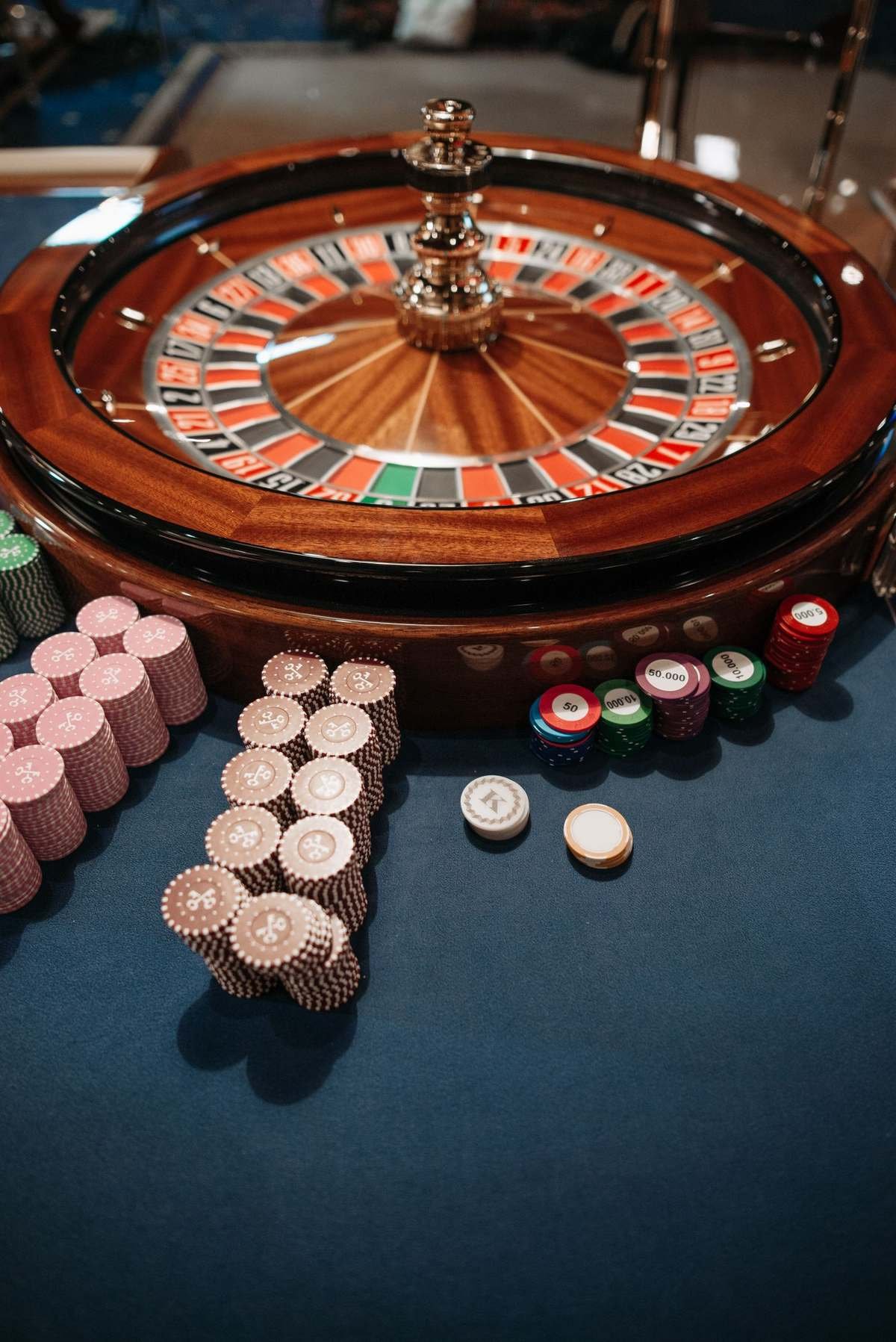
Before you sit down anywhere, it is worth understanding how a roulette wheel is built, because once you can picture the pockets, the frets, and the ball track, the differences between these wheels make much more sense. And once you understand how to bet on roulette, the wheel you choose becomes the single easiest decision you will make all night.
How a Round Actually Plays Out, Step by Step
Knowing the bets is one thing. Knowing how a round flows is what stops you feeling lost at the table. Here is how it goes, from the moment you sit down to the moment you get paid.
First, you buy in. You hand the dealer cash or casino chips, and they give you coloured roulette chips in return. In a real casino, tell the dealer what value you want each chip to be. Online, you pick your chip value on screen. Place your chips on the layout wherever you want to bet.
Second, the dealer spins the wheel in one direction and launches the ball in the opposite direction around the track. There is something genuinely thrilling about that moment, the little white ball rattling around the rim while the wheel turns beneath it. Even after all my sessions, I still watch it like it is the first time.
Third, while the ball is still spinning, you can keep placing bets. This is your window. You can add chips, move them, or change your mind. But the window closes: the dealer will call out “no more bets” and wave a hand over the table, and from that moment your chips are locked in place. Knowing how to bet on roulette means knowing when to stop touching your chips, because a bet placed after the call does not count and will earn you a sharp look from the dealer.
Fourth, the ball loses speed, drops from the track, bounces between the pockets, and settles into one. The dealer announces the winning number and colour, and places a marker, called a dolly, on that number on the layout so everyone can see it clearly.
Fifth, the dealer sweeps away all the losing bets, then pays the winners, working from the outside bets inward. The dealer will stack your winnings next to your original bet, and you can leave them there for the next spin or collect them. A full round takes a couple of minutes in a real casino, and less than a minute online. That pace is part of the charm, and part of the danger: it is very easy to play far more spins than you planned.
Call Bets: The Fancy Bets You Hear Regulars Shouting
If you spend any time at a European or French table, you will hear regulars calling out strange phrases like “voisins du zero” or “tiers du cylindre” or “orphelins.” These are call bets, also known as announced bets, and they cover fixed sections of the wheel rather than the layout.
Voisins du zero means “neighbours of zero,” and it covers the seventeen numbers on either side of the zero on the wheel. Tiers du cylindre means “thirds of the wheel,” covering the twelve numbers opposite the zero. Orphelins means “orphans,” covering the eight numbers left over between the other two sections. There is also the simple “neighbours” bet, which covers a number and the two numbers on either side of it on the wheel.
These bets are placed on a separate section of the layout, usually a small oval track called the racetrack, which mirrors the order of numbers on the wheel. You will find it on most European and French tables, and on many online versions too. The racetrack exists precisely because these bets are about wheel position, not layout position.
Do beginners need call bets? Honestly, no. They are a shortcut for experienced players who think in terms of wheel sections, and they do not offer better odds than the standard bets. Each call bet is just a combination of splits, corners and straight up bets bundled together, and the house edge is exactly the same 2.70 percent on a European wheel. For the numbers behind all of this, the Wizard of Odds roulette guide lays out the maths more thoroughly than I ever could, and it is worth a read once you are comfortable with the basics.
Betting Systems and Why None of Them Beats the Wheel
Sooner or later, someone at the table will tell you about a system. A friend, a forum, a video, a stranger who swears he has cracked it. Every system sounds convincing for about five minutes, and every single one fails for the same reason: the wheel has no memory.
The Martingale is the most famous. You bet on an even-money outcome, and every time you lose, you double your bet, so that one win recovers everything. It works beautifully until it does not. A run of six or seven losses in a row is not rare, and by then you are betting huge amounts to recover a small original stake, and the table limit stops you doubling any further. I have watched players hit that wall. It is not a pretty sight.
The Fibonacci system uses the famous number sequence, raising your bet after a loss and stepping back after a win. It is gentler than the Martingale, but it is still chasing losses with bigger bets, and it still runs into the same wall: the odds never change, no matter what your last ten spins looked like. No staking plan changes how to bet on roulette in a way that beats the maths, because the wheel has no memory and the house edge never moves.
Here is the truth that no system seller will tell you. Each spin is independent. The ball does not know that red has come up five times in a row, and it does not owe you a black. A system can change how your wins and losses are arranged, making your session feel smoother or more exciting, but it cannot change the house edge. Over a long enough run, every system loses 2.70 percent of everything wagered on a European wheel, and no staking pattern gets around that maths.
That does not mean systems are useless. If a system helps you manage your money and walk away at a planned point, it has done something valuable. Just do not buy one expecting it to beat the wheel. The only real edge in roulette is picking the right wheel and knowing when to stop.
Bankroll and Table Limits: The Rules That Keep You in the Game
This is the least exciting section in the guide, and it is the one that saves the most money. Bankroll management is not glamorous, but it is the difference between a fun evening and a miserable one.
Set your bankroll before you sit down. Decide the total amount you are comfortable losing, and treat it as spent the moment you buy in. If it is fifty pounds, it is fifty pounds, not fifty plus a quick trip to the cash machine. I keep my session money in a separate pocket from everything else, and when that pocket is empty, the session is over.
Then divide that bankroll into units. A common rule is to make your standard bet about one to two percent of your total session bankroll. On a fifty pound session, that means bets of about one pound. It sounds small, and that is the point: small bets mean more spins, more fun, and a much lower chance of a nasty surprise.
Set a win goal and a loss limit before you start. A loss limit is the point where you walk away no matter what: for me, it is usually my whole session bankroll. A win goal is the point where you pocket your profit and either stop or drop down to tiny bets.
That is the least glamorous part of learning how to bet on roulette, and the most important. The bets are the fun, the wheel is the theatre, but the bankroll rules are what make sure you can come back and enjoy it again next time.
Frequently Asked Questions
What is the easiest way to learn how to bet on roulette?
Start with outside bets like red or black on a European wheel, with small stakes, and watch a few spins before you add inside bets. Learn the layout first, the payouts second, and the fancy bets last. Most players feel comfortable after ten or fifteen spins.
What is the best bet in roulette for a beginner?
There is no single best bet, because every bet on a European wheel carries the same 2.70 percent house edge. For a first session, even-money bets like red or black are the friendliest choice, since they win often and keep your bankroll alive longer.
How much money do I need to play roulette?
You can start with very little: many online tables accept bets of ten or twenty pence, and low-limit casino tables often start at one pound. Bring an amount you can afford to lose entirely, divide it into small units, and treat it as the price of an evening’s entertainment. That is the cheapest way to practise how to bet on roulette without risking money you need.
Can you really win at roulette?
Yes, in the short term, and many players do walk away winners on a given night. In the long term the house edge guarantees the casino wins, because the payouts are slightly less than the true odds. That is why bankroll limits and walking away ahead matter so much.
Once I know how to bet on roulette, is European roulette really better than American roulette?
Yes, without question. European roulette has one zero and a house edge of 2.70 percent, while American roulette adds a double zero and nearly doubles the edge to 5.26 percent, with identical payouts. If you have the choice, always pick the European wheel, and a French table with La Partage is better still.
I still remember that first night, standing at the table with chips on my birthday and no idea what I was doing. I lost that money, and I do not regret it, because it sent me off to learn the game properly. If you take one thing from this guide, let it be this: understanding how to bet on roulette is not about finding a secret system, it is about knowing your bets, picking the kindest wheel, and playing within limits you set before the first spin.
Gamble responsibly. 18+ only.
Author

hamzayounus355@gmail.com
Related Posts
What Is a Push in Blackjack? Tie Rules, Examples and Strategy, Explained
- 0
- 2,994 words
The first time I ever saw a push, I thought the dealer had made a mistake. I was sitting at a small...
Read out all
What Is a 3 Bet in Poker? Meaning, Sizing and Strategy, Explained
- 0
- 2,970 words
The first time someone re-raised me before the flop, I had no idea what had just happened. I was playing a friendly...
Read out all
What Is a Poker Kicker? Rules, Examples and Strategy, Explained
- 0
- 3,085 words
What Is a Poker Kicker? Rules, Examples and Strategy, Explained The first time I lost a pot I was sure I had...
Read out all
What Is a Craps Horn Bet? Payouts, Odds and Rules, Explained
- 0
- 3,036 words
What Is a Craps Horn Bet? Payouts, Odds and Rules, Explained The first time I heard someone at a craps table shout...
Read out all
How to Play Online Poker for Real Money: A Beginner’s Guide, Explained
- 0
- 3,123 words
How to Play Online Poker for Real Money: A Beginner’s Guide, Explained I still remember the night I first typed how to...
Read out all
How to Play 5 Card Draw Poker: Rules, Draws and Strategy, Explained
- 1
- 3,088 words
How to Play 5 Card Draw Poker: Rules, Draws and Strategy, Explained The first time someone asked me how to play 5...
Read out all
1 comment