
- 1
- 3,913 words
I will be honest with you: the first time I stood in front of a roulette table, I spent longer staring at the wheel than I did at the betting layout. The layout I could sort of read — red, black, odd, even, a grid of numbers. But the wheel itself looked like a beautiful, spinning mystery. Little numbered pockets, a white ball whizzing around the rim, and a dealer who seemed to know exactly when to say “no more bets.” I placed my chips, watched the ball bounce around, and had absolutely no idea what was actually happening in those few seconds. If you have ever wondered what is a roulette wheel, in the real, physical sense — not just “the thing the ball spins in” — you are in the right place.
Here is the short version before we get into the detail: a roulette wheel is a carefully engineered spinning disc with numbered pockets around its rim. A small ball is spun in the opposite direction, it loses momentum, drops into one of the pockets, and that pocket’s number decides every bet on the table. Everything else — the colours, the sequence of numbers, the difference between European and American wheels — is detail built on top of that simple idea. And the detail matters, because the wheel you play on quietly decides how much the house keeps over time.
Table of Contents
What Is a Roulette Wheel? The Wheel, the Ball, and the Pockets
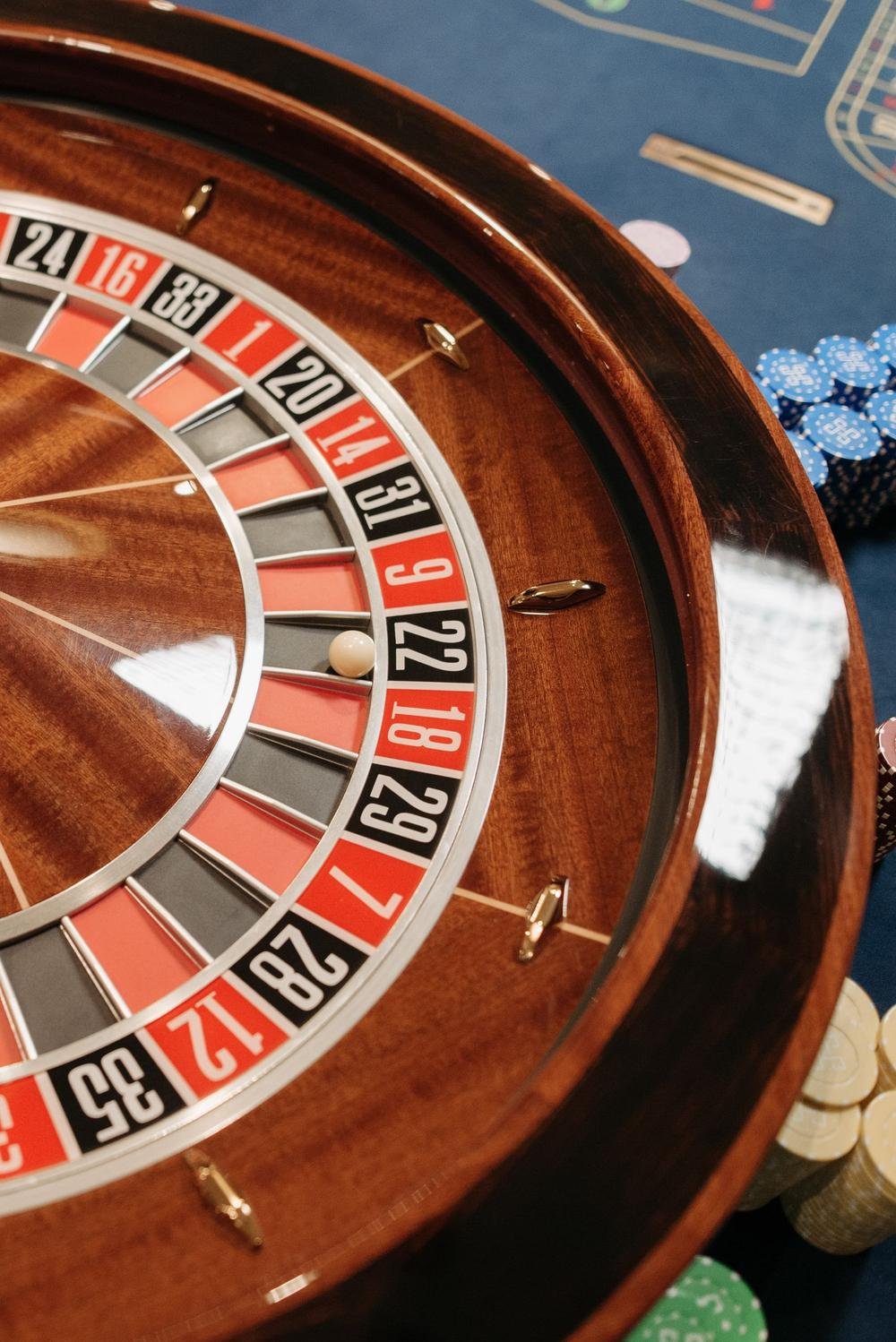
Strip away the glamour and what is a roulette wheel comes down to three working parts: the wheel itself, the ball, and the pockets. The wheel is a solid, heavy disc, usually made of wood with a polished metal rim, mounted in a bowl-shaped housing on the table. It spins freely on a central spindle, and it is heavier than it looks — that weight is deliberate, because a heavy wheel spins smoothly and predictably, without wobbling or juddering to a stop.
Around the outer edge of the spinning disc sit the pockets: small, separated compartments, each marked with a number. On a European wheel there are 37 pockets, numbered 0 to 36. On an American wheel there are 38, because it adds a 00 pocket. Each pocket is divided from its neighbours by small metal dividers called frets, and the numbers alternate between red and black — except for the zero (and double zero), which are green. The ball itself is small, light, and usually made of ivory-coloured plastic or a similar synthetic material these days, though older wheels used real ivory. The dealer spins the wheel in one direction and launches the ball around the rim in the opposite direction. Gravity and friction do the rest: the ball circles, slows, drops off the rim, bounces across the pockets, and finally settles into one. That number is the result, and every bet on the table is settled against it.
The Parts of the Wheel, Piece by Piece
Once you know what to look for, the wheel stops being a blur and starts being a machine you can read. If someone asked me what is a roulette wheel in one sentence, I would say it is a spinning disc of numbered pockets with a ball deciding the result — but the parts below show why that simple description hides a cleverly built machine. The centre of the wheel holds the turret, the decorative post that sits on top of the spindle — it is mostly ornamental, but it is also where the dealer sometimes rests a hand while the wheel spins. Around it is the cone, the gently sloped central area that guides the ball downward as it loses speed. The cone is not flat by accident: its slope is calibrated so the ball descends gradually rather than dropping straight down.
Then comes the part that matters most: the pocket ring, sometimes called the rotor. This is the outer section that carries the numbered pockets, and it rotates with the wheel. The pockets themselves are shallow cups, and the frets between them are low metal walls. The frets are important because they are what the ball bounces off as it settles — a ball that hits a fret can skip into a neighbouring pocket, which is one reason no spin is ever quite predictable. Around the whole spinning disc sits the stationary bowl, or stator, with its smooth rim track. The ball travels around this rim track at the start of the spin, high up on the bowl, before gravity pulls it down onto the rotor. So when you watch a spin, you are watching two separate movements: the ball racing around the stationary rim, and the pockets rotating underneath it. The result is the collision of those two motions.
The Number Sequence: Why the Numbers Are Not in Order
Here is the detail that surprises most beginners. If you look at the numbers around a European wheel, they do not run 1, 2, 3, 4 in order. The sequence goes 0, 32, 15, 19, 4, 21, 2, 25, 17, 34, 6, 27, 13, 36, 11, 30, 8, 23, 10, 5, 24, 16, 33, 1, 20, 14, 31, 9, 22, 18, 29, 7, 28, 12, 35, 3, 26. It looks random, but it is not — it is a deliberate design, and it exists for a very good reason.
The sequence is arranged so that high and low numbers, red and black numbers, and odd and even numbers are spread as evenly as possible around the wheel. The idea is balance: no section of the wheel is dominated by one type of number, so a ball landing in any area of the wheel gives a roughly fair spread of outcomes. On the European wheel, the sequence is also roughly split so that numbers in the first half of the layout (1 to 18) and the second half (19 to 36) alternate around the rim. The American wheel has its own sequence, again with the 0 and 00 placed opposite each other, and again designed for balance rather than order.
Why does this matter to you as a player? Because it means there is no “hot side” of the wheel, no cluster of red numbers you can target, and no shortcut in the layout. When people ask what is a roulette wheel, the honest answer should include this sequence, because it is proof the game was designed to be balanced rather than beaten. The wheel’s designer already thought of that.
Red and Black: How the Colours Are Arranged
The colour pattern follows the same logic as the number sequence: balance, not pattern. On both European and American wheels, red and black pockets alternate around the rim, with the green zero (and double zero on the American wheel) breaking the run. No two adjacent pockets share a colour, and the reds and blacks are distributed so that no stretch of the wheel is all one colour. It looks neat and symmetrical, and it is meant to — the symmetry is the point.
One common beginner mistake is assuming the colours on the wheel match some pattern on the betting layout. They do not. The betting layout arranges numbers in a neat grid of rows and columns for convenience, but the wheel arranges them by its own sequence. A number’s neighbours on the layout are not its neighbours on the wheel. This is why “neighbour bets” exist in some casinos — bets that cover a number and the numbers sitting next to it on the wheel, not on the layout. You do not need neighbour bets to play roulette, but knowing the distinction stops you from assuming that two numbers sitting side by side on the felt are somehow connected on the wheel. They are not.
European vs American vs French Wheels: The Difference That Costs You Money
This is the most important section in the whole article, because the type of wheel you play on changes your odds more than any betting system ever will. A European wheel has 37 pockets: numbers 1 to 36 plus a single 0. An American wheel has 38 pockets: numbers 1 to 36 plus 0 and 00. That one extra pocket is the whole story. On a European wheel, the house edge on most bets is 2.70 percent. On an American wheel, it is 5.26 percent — nearly double. The payouts are the same on both wheels (a straight-up single number pays 35 to 1 either way), so you are simply getting worse value on the American wheel for the same payout. If you remember one thing from this article, make it this: always choose the European wheel when you have the choice. Anyone asking what is a roulette wheel should really be asking which type of wheel they are playing on, because that single detail changes the price of every bet you place.
The French wheel is essentially the same physical wheel as the European one — 37 pockets, single zero — but it comes with two special rules that make it even better for the player. The first is called “la partage”: if you place an even-money bet (red or black, odd or even, high or low) and the ball lands on zero, you get half your stake back instead of losing it all. The second is “en prison”: on some French tables, your even-money bet is held “in prison” for the next spin when zero hits, and if it wins on that next spin, you get your stake back. Both rules cut the house edge on even-money bets to about 1.35 percent. French tables are less common, especially online, but if you ever see one, it is the best-value roulette you will find.
How a Spin Actually Works, Second by Second
A spin looks chaotic, but it follows a calm, rehearsed routine. First, players place their bets while the wheel is still or spinning slowly. The dealer — called the croupier in a traditional casino — then spins the wheel in one direction and sends the ball around the rim in the opposite direction. The ball races around the rim track several times, gradually losing speed, while the wheel turns steadily beneath it. At some point the dealer announces “no more bets” and waves a hand over the layout, and from that moment no more chips can be placed or moved.
Then gravity takes over. This is the part of what is a roulette wheel that most players never slow down to watch: the ball drops off the rim track, hits the cone, and bounces across the pocket ring. It may skip across several frets, rattle between pockets, and occasionally jump back out before settling. Finally it comes to rest in a pocket, the dealer calls the number and colour, places a marker (called a dolly) on the winning number on the layout, sweeps away the losing chips, and pays the winners. The whole thing takes well under a minute, and it is oddly calming once you know the sequence — the apparent chaos is really a fixed ritual with a random ending.
Is the Wheel Random? Live Wheels, RNG Wheels, and Honest Answers
A physical roulette wheel is as close to genuinely random as a casino game gets, because the outcome depends on a messy collision of physics: the speed of the wheel, the speed of the ball, the exact point the ball leaves the rim, and the bounces off the frets. No dealer can control all of those variables precisely, and the tiniest difference in any one of them changes the result. That is why roulette has survived for centuries without anyone reliably beating it — the machine itself is the randomiser, and it does its job well. That is the honest answer to what is a roulette wheel in terms of fairness: not a puzzle to solve, but a physical randomiser that resists prediction by design.
Online, though, there are two very different kinds of wheel. In a live-dealer game, you are watching a real physical wheel in a studio, spun by a real dealer, streamed to your screen. The physics is the same as in a land casino, and the randomness comes from the same messy collision. In a standard online roulette game, there is no physical wheel at all: the result is produced by a random number generator (RNG), a piece of software that picks a number from 0 to 36 (or 37 on an American layout) with equal probability each spin. A properly tested RNG is fair, and licensed casinos have theirs audited, but it is a different kind of randomness — mathematical rather than physical. Neither version is “due” to produce a particular number, and neither remembers what happened on the last spin. If a live-dealer table shows five reds in a row, the next spin is still roughly a coin flip between red and black (minus the green pockets). The wheel has no memory, and neither does the software.
Wheel Bias Myths: Dealer Signatures, Biased Wheels, and Why They Mostly Fail
Every casino game attracts myths, and roulette attracts more than most, because the wheel looks like something you could outsmart. The most famous myth is the “biased wheel”: the idea that a worn or slightly tilted wheel favours certain pockets, and that a clever player who records thousands of spins can spot the bias and profit. In the distant past, when wheels were handmade and poorly maintained, a few players genuinely did find biased wheels. Modern casinos, however, maintain their wheels carefully, rotate them between tables, level them regularly, and monitor results for exactly this kind of pattern. A modern wheel that developed a real bias would be spotted by the casino’s own data long before a player could exploit it.
The second myth is the “dealer signature”: the idea that a dealer spins the ball and wheel with such consistent speed that the ball lands in a predictable section. It sounds plausible until you think about the number of variables involved — ball speed, wheel speed, bounce, fret contact — and how much they vary from spin to spin even for the most consistent dealer. Small differences compound into large ones, and the bounce alone scrambles any pattern. There are also stories about “visual ballistics,” where a player tries to predict the landing area by watching the ball’s speed late in the spin. Casinos counter this by calling “no more bets” early, before the ball’s path becomes predictable, and by varying spin speeds. The honest truth is that the wheel is designed to defeat prediction, and it does so very well. Anyone selling you a system that claims to beat the wheel is selling you the system, not the secret.
How Bets Relate to the Wheel
Understanding the wheel makes the betting layout suddenly make sense. Every bet in roulette is really a bet about which pocket the ball will land in. A straight-up bet covers one pocket. A split covers two adjacent numbers on the layout. A street covers three. Red or black covers all 18 pockets of that colour. Odd or even, high or low, dozens, columns — all of them are just different ways of grouping the wheel’s pockets. The layout is a map of the wheel, reorganised into a grid so you can place chips quickly, but every chip you place is ultimately a claim about where the ball will stop.
This is also why the payouts are what they are. A straight-up bet pays 35 to 1 because on a European wheel there are 37 pockets and only one of them wins — so the fair payout would be 36 to 1, and the gap between 36 and 35 is the house’s margin. The same logic applies to every bet: the payout is always slightly less than the true odds, and that shortfall is the house edge. Once you see the wheel as 37 pockets (or 38 on an American wheel), every payout on the layout becomes a simple fraction, and the game stops feeling like a mystery and starts feeling like arithmetic.
Playing Online: What Changes and What Does Not
If you mostly play online, the wheel you see depends on the game type. Live-dealer roulette is the closest thing to a real casino: a real wheel, a real ball, a real dealer, and a camera showing you every spin. The pace is slower, the atmosphere is better, and you can watch the ball bounce, which many players find reassuring. RNG roulette is faster, cheaper to play, and available around the clock, but the wheel on screen is an animation, and the result comes from software. Both are legitimate at licensed casinos; the choice is really about atmosphere and pace rather than fairness.
One practical difference worth knowing: online RNG games let you play for very small stakes and let you spin far more often than a live table, which means your money can move faster. That speed is the main risk online, not the fairness of the wheel. Set a session budget before you start, decide your stake size in advance, and treat the spin speed as part of the game, not as a way to win faster. The wheel does not care how quickly you spin it, and neither does the RNG.
Common Beginner Mistakes Around the Wheel
The first mistake is playing the American wheel when a European one is available. I have done this myself, years ago, without realising there was a difference — and it is the single most expensive beginner error in roulette, because it nearly doubles the house edge for no benefit. Always check the wheel before you sit down: one green pocket is good, two green pockets means walk away and find another table.
The second mistake is the gambler’s fallacy applied to the wheel: believing that because red has come up five times, black is “due.” It is not. Each spin is independent, and the wheel does not keep score. The third mistake is betting on a “hot number” because it has appeared a few times recently. Short-term clusters happen by chance, and they carry no information about the next spin. And the fourth mistake is trusting a betting system — doubling after losses, or following a pattern — that promises to beat the wheel. No arrangement of bets changes the house edge, because every bet is settled against the same 37 or 38 pockets. Systems can change how your bankroll swings, but they cannot change the arithmetic.
My Honest Advice on the Roulette Wheel
So, after all of that, what would I actually tell a friend who asked about the roulette wheel? First, learn the wheel before you learn the betting systems, because the wheel is the game and the systems are noise. Know how many pockets your wheel has, know whether it has one zero or two, and know that the sequence around the rim is designed for balance, not for patterns. Second, always pick the European wheel, and the French wheel with la partage or en prison if you can find one. That single choice is worth more than any strategy book.
Third, enjoy the spin for what it is: a short, elegant piece of physics with a random ending. Watch the ball, appreciate the ritual, and do not try to outsmart it. If you want to understand how casino equipment shapes the game in other games too, my guide on what is a casino shoe in blackjack explains the shoe the same way — a piece of equipment that quietly sets the rules. And for the detailed odds behind every roulette bet, the Wizard of Odds roulette guide is one of the most authoritative references out there. Finally, keep your stakes modest and your sessions short. Roulette is at its best as a relaxed, social game, not as a way to make money.
Frequently Asked Questions
What is a roulette wheel made of?
A traditional roulette wheel is made of polished wood with a metal rim and metal frets separating the pockets, mounted on a central spindle in a bowl-shaped housing. Modern wheels use similar materials, though the ball is usually a synthetic ivory-like plastic rather than real ivory. The weight and balance of the wheel are carefully engineered so it spins smoothly and the ball settles fairly.
How many pockets are on a roulette wheel?
A European or French roulette wheel has 37 pockets, numbered 0 to 36, while an American wheel has 38 pockets because it adds a 00 pocket alongside the 0. The extra pocket is the reason the American wheel has a higher house edge, nearly double that of the European wheel. Always check how many green pockets a wheel has before you play.
Why are the numbers on a roulette wheel not in order?
The numbers are arranged in a deliberate sequence designed to balance high and low numbers, red and black colours, and odd and even numbers evenly around the wheel. This prevents any section of the wheel from being dominated by one type of number. The layout on the betting table is a separate grid arranged for convenience, and a number’s neighbours on the layout are not its neighbours on the wheel.
Can a roulette wheel be rigged or biased?
A modern casino wheel is very hard to rig or bias, because casinos maintain, level, and rotate their wheels regularly and monitor spin results for unusual patterns. Historical cases of biased wheels involved older, poorly maintained equipment, and a modern wheel with a genuine bias would be detected by the casino’s own data. At licensed casinos, the wheel is one of the fairest randomisers in gambling.
Is online roulette as fair as a physical wheel?
At licensed casinos, yes — but the fairness works differently depending on the game type. Live-dealer roulette uses a real physical wheel streamed to your screen, so the randomness comes from the same physics as a land casino. Standard online roulette uses an audited random number generator that picks each result with equal probability. Either way, each spin is independent and no number is ever “due”.
The first time I stood at that wheel, I felt like an outsider watching a ritual I did not understand. Now, when I watch the ball circle the rim and drop into a pocket, I see a machine doing exactly what it was designed to do: produce a random result, fairly, in front of everyone. That is what is a roulette wheel to me now — not a mystery, but a beautifully simple machine I finally understand. That understanding does not make me win more often — nothing does — but it makes the game far more enjoyable, because I know what I am watching and what I am paying for.
So the next time you sit down at a roulette table, take a moment to look at the wheel before you place a chip. Count the green pockets, notice the sequence, and watch the ball. You will be playing as an informed player, not a confused bystander — and that is the best position to play from. Enjoy the spin, keep your stakes sensible, and keep it fun.
Gamble responsibly. 18+ only.
Author

hamzayounus355@gmail.com
Related Posts
What Is a Push in Blackjack? Tie Rules, Examples and Strategy, Explained
- 0
- 2,994 words
The first time I ever saw a push, I thought the dealer had made a mistake. I was sitting at a small...
Read out all
What Is a 3 Bet in Poker? Meaning, Sizing and Strategy, Explained
- 0
- 2,970 words
The first time someone re-raised me before the flop, I had no idea what had just happened. I was playing a friendly...
Read out all
What Is a Poker Kicker? Rules, Examples and Strategy, Explained
- 0
- 3,085 words
What Is a Poker Kicker? Rules, Examples and Strategy, Explained The first time I lost a pot I was sure I had...
Read out all
What Is a Craps Horn Bet? Payouts, Odds and Rules, Explained
- 0
- 3,036 words
What Is a Craps Horn Bet? Payouts, Odds and Rules, Explained The first time I heard someone at a craps table shout...
Read out all
How to Play Online Poker for Real Money: A Beginner’s Guide, Explained
- 0
- 3,123 words
How to Play Online Poker for Real Money: A Beginner’s Guide, Explained I still remember the night I first typed how to...
Read out all
How to Play 5 Card Draw Poker: Rules, Draws and Strategy, Explained
- 1
- 3,088 words
How to Play 5 Card Draw Poker: Rules, Draws and Strategy, Explained The first time someone asked me how to play 5...
Read out all
1 comment