

- 0
- 6,988 words
Poker is one of the most recognizable card games in the world, but understanding the game properly requires more than knowing which cards are valuable. The real foundation of a good poker game is learning the rules, understanding betting rounds, recognizing hand rankings, and knowing when to fold, call, check, or raise. For anyone searching for poker regeln, learning these fundamentals is the best way to move from confusion to confidence at the table.
Poker can look complicated when you first watch experienced players make quick decisions, but the basic principles are surprisingly easy to learn. Once you understand how cards are dealt, how the pot works, which hands beat which, and when you can act, the game becomes much easier to follow. From there, experience helps you improve your strategy, reading of opponents, and decision-making.
This guide explains the most important poker regeln in a simple and practical way. It focuses heavily on Texas Hold’em because it is one of the most widely played versions of poker, while also explaining concepts that apply to other popular poker variants. Whether you are completely new to the game or want to refresh your knowledge, this article gives you a complete foundation for playing poker with greater confidence.
Before getting started, remember that poker involves risk when played for money. Good poker play includes understanding the rules, setting sensible limits, and treating the game as entertainment rather than a guaranteed way to make money.
Poker Regeln: Die wichtigsten Grundlagen auf einen Blick
The first step in learning poker regeln is understanding what the game is trying to achieve. In poker, players compete for chips or money placed into a central pot. A player can win the pot by having the strongest qualifying hand at the showdown or by convincing every other active player to fold before the showdown.
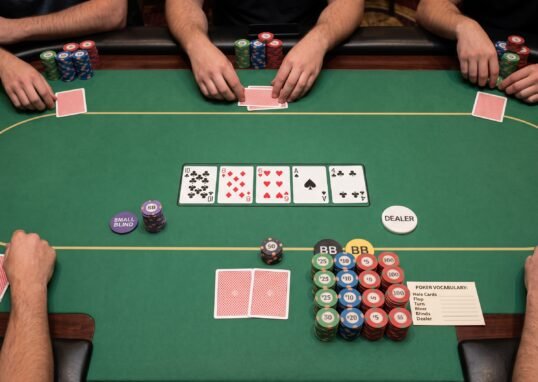
Texas Hold’em is generally played with a standard 52-card deck. Each player receives two private cards, which are often called hole cards. Five community cards are gradually placed face up in the middle of the table. Players use their private cards together with the community cards to create the best possible five-card poker hand.
The objective is not necessarily to have the best cards from the beginning. Poker is different from many simple card games because betting decisions are part of the game. A player with a weak hand can sometimes win by making opponents fold, while a player holding a very strong hand can lose by allowing an opponent to complete an even stronger combination.
A complete understanding of poker therefore involves both card rules and action rules. You need to know what you can do when it is your turn, how much you can bet, when a betting round ends, and how the winner is determined.
How Texas Hold’em Poker Works
Texas Hold’em begins with players receiving two cards face down. These cards belong only to the individual player and remain hidden from everyone else. After the initial deal, players begin the first betting round.
The action normally starts with the players positioned immediately to the left of the dealer button. Before cards are dealt, two players usually place forced bets called the small blind and the big blind. These blinds create action and ensure that there is something to play for in every hand.
Once the first betting round is complete, the dealer places three community cards face up on the table. This is known as the flop. Another betting round follows.
A fourth community card, called the turn, is then dealt. Players participate in another betting round.
Finally, the fifth community card, called the river, is placed on the table. The final betting round then takes place.
If more than one player remains after all betting is finished, the players reach the showdown. Each remaining player reveals their cards, and the best five-card poker hand wins the pot.
Understanding this sequence is one of the most important parts of poker regeln because every betting decision depends on the stage of the hand.
The Dealer Button and Table Position
The dealer button is a small marker that identifies the theoretical dealer position for the current hand. In a casino or poker room, a professional dealer may physically deal the cards, but the button still determines the order of play.
After each hand, the dealer button normally moves clockwise to the next player. This means every player eventually occupies each position around the table.
Position is extremely important in poker. Players who act later in a betting round have more information because they can observe what players before them have done. A player acting first has less information and therefore has to make decisions with greater uncertainty.
This is why experienced players often treat position as one of the most valuable advantages in the game. Two players can receive identical cards, yet the player with the better position can sometimes have a significant strategic advantage.
Poker Blinds Explained
The small blind and big blind are mandatory bets placed before each hand begins in games using blinds.
The small blind is posted by the player immediately to the left of the dealer button, while the big blind is posted by the next player. The big blind is commonly twice the size of the small blind, although the exact structure can vary depending on the game.
For example, suppose a game has blinds of $1 and $2. The small blind places $1 into the pot before the cards are dealt, and the big blind places $2.
These forced bets give players a reason to compete for the pot. Without blinds or another form of forced betting, players could theoretically fold every hand without losing anything.
Blind levels can also increase in tournaments, which changes the pressure on players as the game continues.
The Four Betting Rounds in Texas Hold’em
One of the easiest ways to understand poker regeln is to learn the four main betting stages.
The Pre-Flop Betting Round
The pre-flop round starts after every player receives two private cards. The player to the left of the big blind usually acts first in this round.
Players may fold, call, or raise depending on the game structure and their cards.
A fold means giving up the hand. A call means matching the current bet. A raise means increasing the amount that other players must match if they want to remain in the hand.
After all players have had the required opportunity to act and betting is balanced, the flop is dealt.
The Flop
The flop consists of three community cards placed face up on the table.
This is often a crucial moment because players can now see five cards in total when combining the three community cards with their two private cards.
For example, imagine your private cards are the Ace of Spades and King of Spades. The flop comes with the Queen of Spades, Seven of Spades, and Two of Hearts. You already have four cards toward a possible flush, and the remaining community cards could improve your hand.
The flop creates many possible combinations, and players must evaluate how their cards interact with the board.
The Turn
The turn is the fourth community card.
By this point, players have considerably more information than they did before the flop. Straight possibilities, flush draws, pairs, three-of-a-kind combinations, and full houses can become much clearer.
The turn is also a stage where betting can become more expensive, especially in games where the standard bet size increases.
The River
The river is the fifth and final community card.
No more cards are dealt after the river. Players now have access to all seven available cards: their two private cards plus the five community cards.
A final betting round takes place. If multiple players remain, the hand goes to showdown.
Poker Hand Rankings Explained
Learning hand rankings is essential. Even if you understand every other part of poker, you cannot confidently play until you know which hands are stronger than others.
Royal Flush
A royal flush is the highest standard poker hand. It consists of the Ace, King, Queen, Jack, and Ten, all in the same suit.
For example, Ace of Hearts, King of Hearts, Queen of Hearts, Jack of Hearts, and Ten of Hearts form a royal flush.
A royal flush is extremely rare and cannot be beaten by another standard poker hand.
Straight Flush
A straight flush consists of five consecutive cards of the same suit.
For example, 9, 8, 7, 6, and 5 all in hearts form a straight flush.
A straight flush is lower than a royal flush but still exceptionally strong.
Four of a Kind
Four of a kind means holding four cards of the same rank.
For example, four Kings form four of a kind.
The fifth card is known as the kicker and can become relevant in certain comparisons.
Full House
A full house contains three cards of one rank and two cards of another rank.
For example, three Queens and two Fives form a full house.
If two players both have full houses, the higher three-of-a-kind portion determines the stronger hand first.
Flush
A flush consists of five cards of the same suit, regardless of whether the cards are consecutive.
For example, five different hearts can form a flush.
If two players have flushes, the highest card is compared first, followed by the next highest card if necessary.
Straight
A straight consists of five consecutive cards of different or mixed suits.
For example, 10, 9, 8, 7, and 6 form a straight.
An Ace can sometimes function as a low card in A-2-3-4-5, known as a five-high straight.
Three of a Kind
Three of a kind means having three cards with the same rank.
For example, three Jacks form three of a kind.
Two Pair
Two pair means having two cards of one rank and two cards of another rank.
For example, two Kings and two Nines make two pair.
The fifth card is the kicker.
One Pair
One pair consists of two cards with the same rank.
For example, two Aces form a pair of Aces.
The remaining three cards act as kickers if no stronger combination exists.
High Card
If no player forms a pair or stronger combination, the hand is determined by the highest individual card.
For example, Ace-high beats King-high when neither player has a pair or another qualifying combination.
How to Build the Best Five-Card Hand
In Texas Hold’em, each player has seven cards available by the river: two private cards and five community cards.
However, players do not have to use both private cards.
A player’s final hand is the best possible five-card combination available from those seven cards.
For example, if the community board contains a complete straight that is stronger than anything your private cards can improve, your best hand may consist entirely of community cards.
This is an important part of poker regeln because new players sometimes assume they must use one or both hole cards. That is not the case in standard Texas Hold’em.
Checking, Calling, Betting, Raising, and Folding
Poker actions can appear confusing at first, but the basic choices are straightforward.
Check
A check means you do not place a bet when no bet is currently required.
Checking allows you to stay in the hand without adding chips at that moment.
You cannot normally check when another player has already made a bet during the current betting round. In that situation, you must usually call, raise, or fold.
Bet
A bet is the first voluntary wager made during a betting round.
The amount depends on the game structure.
Call
A call means matching the amount of the current outstanding bet.
For example, if another player bets $20 and you want to remain in the hand without raising, you call $20.
Raise
A raise increases the amount of the existing bet.
For example, if a player bets $20 and you raise to $60, the next player must generally match the new required amount of $60 to continue.
Fold
Folding means giving up your hand and losing any chips you have already committed to the pot.
Folding is not a sign of weakness. In fact, knowing when to fold is one of the most important poker skills.
Understanding the Pot
The pot is the collection of chips or money being contested in the current hand.
Whenever players make bets, calls, or raises, the relevant amounts are added to the pot.
The player who wins the hand receives the pot, subject to situations involving side pots or split pots.
Understanding pot size is essential for making rational decisions. Players should not only think about the cards they hold but also consider how much they need to invest compared with what they could potentially win.
This concept becomes especially important when calculating pot odds and evaluating draws.
What Happens When Two Players Have the Same Hand?
Poker hands can sometimes be exactly equal.
When that happens, the pot is usually split equally among the tied players.
For example, suppose the best five-card hand for two players is an identical straight using the community cards. Neither player has a better five-card combination, so the pot is divided between them.
This is known as a split pot.
Understanding this rule prevents confusion during unusual hands where the board itself creates the strongest combination.
Understanding Kickers in Poker
A kicker is a card that helps determine the winner when players have the same primary hand category.
Imagine one player has a pair of Queens with an Ace kicker while another has a pair of Queens with a King kicker. Assuming the remaining cards do not create another difference, the Ace kicker gives the first player the stronger hand.
Kickers can make a major difference in poker, particularly when players have the same pair, two pair, or three of a kind.
However, kickers matter only when they are part of the best five-card hand.
Limit, No-Limit, and Pot-Limit Poker
Different poker formats use different betting structures.
No-Limit Poker
In no-limit poker, a player can generally bet any amount up to the number of chips they have available, subject to minimum betting requirements.
No-limit Texas Hold’em is particularly popular because it allows players to make large bets and raises.
Fixed-Limit Poker
In fixed-limit games, predetermined betting amounts restrict how much players can wager or raise during each round.
This creates a different strategic environment because players cannot simply move all their chips into the pot whenever they want.
Pot-Limit Poker
In pot-limit poker, the maximum bet or raise is determined by the size of the pot according to the rules of the specific game.
Pot-limit Omaha is a well-known example.
The betting structure matters because it affects strategy, risk, and the size of possible bets.
Understanding All-In Rules
Going all-in means putting all of your remaining chips into the pot.
An all-in can occur when you have a very strong hand, a powerful drawing hand, or when you want to apply maximum pressure to opponents.
However, a player can only win the portion of the pot that they are eligible to compete for based on the amount they contributed.
This leads to the creation of side pots when players have different stack sizes.
For example, imagine three players remain in a hand. One player has only 50 chips, while the other two each have 200. If the short-stacked player goes all-in for 50 and the larger stacks continue betting beyond that amount, the chips beyond the short player’s contribution belong to a separate side pot.
The short-stacked player cannot win that side pot because they did not contribute to it.
What Is a Side Pot?
A side pot is a separate pot created when one or more players are all-in for less than the amounts other players continue to wager.
Side pots can seem complicated, but the basic principle is easy: a player is eligible to win only the pot that includes contributions they were able to match.
This rule is especially important in multi-player cash games and tournaments.
At the showdown, different players can win different pots depending on their eligible contributions and hand strength.
What Is the Showdown?
The showdown occurs when the betting is finished and multiple players remain active.
Players reveal their hole cards, and the dealer or players compare the best five-card hands.
The strongest eligible hand wins.
Sometimes players may fold before the showdown, meaning the remaining player wins the pot without needing to reveal their cards. This is one of the features that makes poker different from games based purely on card strength.
Can You Win Poker Without the Best Hand?
Yes.
This is one of the most important concepts for beginners to understand.
If every opponent folds after your bet or raise, you win the pot even if your cards are weak.
This is why bluffing exists in poker. A player may represent a stronger hand than they actually have in an attempt to make opponents fold.
However, successful bluffing is not simply betting randomly. Good players consider the situation, board texture, previous actions, opponent tendencies, and the story their betting tells.
What Is a Bluff?
A bluff is a bet or raise made with a relatively weak hand in the hope that opponents will fold stronger hands.
For example, you may hold a missed draw on the river but believe your opponent is unlikely to have a strong made hand. A well-timed bet could convince them to fold.
Bluffing is an important strategic element, but beginners should avoid turning every hand into a bluffing contest.
Strong poker comes from making profitable decisions over time, not from trying to win every single pot.
Drawing Hands and Poker Odds
A drawing hand is a hand that has the potential to improve significantly with future cards.
A common example is a flush draw, where a player has four cards of the same suit and needs one additional card of that suit to complete the flush.
Another common draw is an open-ended straight draw, where a player has four consecutive cards and can complete the straight with a card on either end.
Understanding the likelihood of completing a draw helps players decide whether continuing is mathematically sensible.
You do not need to calculate advanced probabilities at first, but learning basic poker odds can significantly improve your decisions.
Pot Odds Explained in Simple Terms
Pot odds compare the cost of calling with the potential amount you can win from the pot.
Suppose the pot contains $100 and an opponent bets $25. You would need to call $25 for a chance to win the existing $125 plus your call, assuming no further betting for the simplified example.
Players can use this relationship to determine whether a call is justified based on their chance of improving or already having the best hand.
Pot odds become increasingly useful as you move from beginner to intermediate poker strategy.
Common Beginner Mistakes When Learning Poker Regeln
New players often focus heavily on the cards they are holding and not enough on the overall situation.
One common mistake is playing too many hands. Receiving two cards every hand can create the feeling that you should participate, but many starting hands are simply not worth playing.
Another mistake is calling too often. Calling may feel safer than raising or folding, but passive play can quickly become expensive.
Some beginners also become emotionally attached to strong-looking cards such as Ace-King. Although Ace-King is a powerful starting hand, it is not automatically a winning hand after the flop.
Another frequent mistake is chasing every possible draw regardless of the cost. A draw is not automatically worth pursuing just because completing it would create a strong hand.
Beginners may also ignore position, fail to pay attention to bet sizing, or continue playing emotionally after losing several pots.
Learning the rules is the first stage. Learning when not to act is equally important.
Starting Hand Selection
A good poker strategy begins before the flop.
Premium starting hands such as pocket Aces, pocket Kings, pocket Queens, and Ace-King can be played aggressively in many situations. But the correct action depends on position, stack sizes, number of opponents, and betting history.
Medium and speculative hands can sometimes be profitable, particularly when played from favorable positions and at appropriate prices.
The important principle is that not every hand deserves an investment.
Strong players are often willing to fold repeatedly and wait for more favorable situations.
Why Position Matters So Much
Position affects the amount of information available to you.
A player who acts after several opponents can observe their choices before deciding what to do.
This makes later positions strategically attractive because you can adjust your action based on what has already happened.
Early-position players face greater uncertainty because many opponents remain to act behind them.
Understanding position is one of the easiest ways for a new player to improve without learning complicated mathematics.
Poker Etiquette and Table Rules
Knowing poker regeln also means understanding basic table etiquette.
Players should act in a reasonable amount of time, avoid deliberately revealing information about their hands, and avoid discussing the contents of a live hand while other players are still making decisions.
Players should also avoid making misleading actions intentionally, such as pretending to fold or intentionally acting out of turn to influence another player.
Respectful table behavior makes games more enjoyable for everyone.
In live poker, players should also follow the casino, card room, or tournament’s specific rules because certain procedures can vary.
Online Poker Rules
Online poker follows the same fundamental ideas but operates through digital software.
Cards are dealt automatically, betting occurs through buttons or controls, and the system tracks pots, player actions, and hand results.
Online poker can move much faster than live poker, so beginners may find it useful to start with lower-pressure games while learning.
Players should always verify the rules, age requirements, and legality applicable to their location before participating in real-money online gambling.
Cash Games vs Poker Tournaments
Cash games and tournaments use many of the same basic poker regeln, but the objectives and strategies are different.
In cash games, chips usually represent a monetary value, and players can normally buy additional chips according to the game’s rules.
In tournaments, players generally pay an entry amount, receive tournament chips, and compete until they lose all their chips or finish in a prize position.
Tournament blinds typically increase over time, creating increasing pressure.
This means tournament poker requires an understanding of stack sizes, blind levels, payout structures, and changing risk levels.
What Is a Poker Tournament?
A poker tournament is a structured competition in which players begin with a defined number of chips.
Players are eliminated when they lose all their chips and cannot continue under the specific tournament format.
The tournament continues until one player wins the remaining chips or reaches the designated final outcome.
Tournament rules can include different formats such as freezeouts, re-entry events, bounty competitions, and other structures.
Each format can change strategic considerations.
Freezeout, Re-Entry, and Bounty Formats
In a freezeout tournament, once you lose all your chips, you are eliminated and cannot buy back into the event.
A re-entry tournament allows eliminated players to enter again during a specified period, depending on the tournament conditions.
In bounty tournaments, players can win an additional reward for eliminating another participant.
These formats use the same core poker hand rankings but can create different incentives and strategic decisions.
Tournament Blinds and Antes
As a tournament progresses, blinds generally increase.
The purpose is to prevent players from simply waiting indefinitely.
Some tournaments also use antes. An ante is a forced contribution made by players before the hand begins, depending on the specific tournament structure.
As blinds and antes become larger relative to player stacks, players must make decisions more frequently.
This is why stack management becomes increasingly important during tournament play.
Common Poker Terms You Should Know
Learning poker vocabulary makes it much easier to understand discussions, strategy guides, and live commentary.
A hand refers to one round of poker from the deal through the conclusion.
The pot is the collection of chips being contested.
The board refers to the community cards.
A hole card is a private card dealt to an individual player.
The flop is the first three community cards.
The turn is the fourth community card.
The river is the fifth community card.
A kicker is a supporting card used to determine hand strength in certain situations.
A draw is an incomplete hand that can improve into a stronger combination.
A made hand is a completed hand such as a pair, straight, flush, or full house.
A check-raise involves checking initially and then raising after an opponent bets.
A c-bet, or continuation bet, is a post-flop bet made by a player who raised before the flop.
As you become more familiar with these terms, poker tables and strategy discussions become much easier to understand.
How to Read the Poker Board
Board reading is a fundamental skill.
Players should ask what possible hands the community cards create.
For example, if three cards of the same suit appear on the board, flush possibilities exist. If the cards are closely connected in rank, straight possibilities may become important.
Paired boards can create full-house and four-of-a-kind possibilities.
Reading the board does not mean automatically assuming your opponent has the strongest possible combination. Instead, you consider which hands are realistically possible based on the betting and cards available.
Why Bet Sizing Matters
Bet sizing communicates information, even though it should never be treated as absolute proof of a player’s hand.
A very large bet may indicate strength, a bluff, or simply a player’s preferred strategy.
Small bets can also represent many different intentions.
Good players pay attention to how opponents size their bets in different situations.
For beginners, consistent and purposeful bet sizing is more useful than choosing random amounts.
The Difference Between Calling and Raising
Calling keeps the current betting level while raising increases it.
This difference is strategically significant.
A raise can apply pressure, build a pot when you have a strong hand, deny opponents favorable odds, or attempt to win immediately.
A call can keep weaker hands in the pot or allow you to continue with a drawing hand.
Neither action is always correct. The right decision depends on the situation.
When Should Beginners Fold?
Folding is often the most overlooked part of beginner poker.
Suppose you hold a weak starting hand and face a large raise from a player who has shown significant strength. Continuing simply because you already invested chips can be a mistake.
Those chips are already committed to the pot. The relevant question is whether continuing is profitable from the current point forward.
Strong players frequently fold without emotional hesitation.
Why Emotional Control Matters
Poker combines money, uncertainty, competition, and incomplete information. That combination can create emotional reactions.
A player might become frustrated after losing a large pot and begin making aggressive decisions.
This is often called tilt.
Tilt can lead to chasing losses, playing too many hands, making oversized bets, or ignoring sound strategy.
One of the most valuable skills in poker is learning to step away when emotions begin to influence decisions.
Bankroll Management Basics
Players who participate in real-money poker should understand bankroll management.
A bankroll is the amount of money specifically allocated for poker.
Responsible bankroll management means avoiding stakes that are too large relative to the amount you can comfortably afford to lose.
Never use money needed for rent, bills, food, debt payments, or essential expenses to play poker.
Poker outcomes can fluctuate significantly, even for skilled players.
A good approach is to treat gambling money as a discretionary entertainment budget, not as guaranteed income.
Poker and Responsible Gambling
Understanding poker regeln should always go together with responsible play.
Poker involves financial risk, and no strategy can guarantee a profit.
Set a budget before playing, decide how long you intend to play, and avoid increasing stakes just because you are losing.
Never chase losses.
If gambling stops feeling like entertainment and starts creating financial or emotional problems, stopping and seeking appropriate support is a sensible step.
How Beginners Can Practice Poker Regeln
The best way to learn is to combine reading with practical experience.
Start by learning hand rankings until you can identify them quickly.
Then practice the sequence of pre-flop, flop, turn, river, and showdown.
You can use play-money games, training environments, or friendly home games to become comfortable with the mechanics without immediately taking financial risks.
After the rules become familiar, focus on position, starting hands, bet sizing, and pot odds.
Improvement comes from making many thoughtful decisions rather than trying to memorize every possible situation.
A Simple Example of a Texas Hold’em Hand
Imagine four players are participating in a Texas Hold’em hand.
Player A receives Ace of Spades and King of Spades.
Player B receives Queen of Hearts and Queen of Clubs.
Player C receives Jack of Spades and Ten of Spades.
Player D receives 8 of Hearts and 8 of Diamonds.
After the blinds are posted, the first betting round takes place.
The flop then comes Ace of Clubs, Jack of Spades, and 7 of Spades.
Player A now has a pair of Aces plus a strong flush draw.
Player B has a pair of Queens.
Player C has a pair of Jacks plus a strong straight and flush potential.
Player D has a pair of Eights.
Another betting round occurs.
The turn brings 10 of Diamonds.
Now Player C has two pair, Jacks and Tens, while Player A still has a pair of Aces and a flush draw.
Finally, the river produces the 2 of Spades.
Player A completes a flush with five Spades available in the seven-card combination.
At showdown, Player A may win depending on the exact best five-card combinations available to the other players.
This example shows why poker decisions can change dramatically as community cards appear.
What Happens if Everyone Folds?
If all players except one fold, the remaining player wins the pot immediately.
The player generally does not need to reveal their hole cards.
This is important because poker is not simply a competition to produce the best cards. It is also a competition involving betting decisions and the ability to influence opponents.
Can the Dealer Win the Pot Automatically?
No.
The dealer button is a positional marker and does not give the player an automatic advantage in terms of hand strength.
The player on the button simply benefits from acting later during most post-flop betting rounds.
The actual winner is determined by the rules of the hand and the final result of betting and showdown.
What Is a Misdeal?
A misdeal is an error in dealing cards that may require the hand to be restarted or corrected.
Specific misdeal procedures differ between casinos, card rooms, tournaments, and home games.
For example, an improperly exposed card may trigger a dealer procedure under the relevant house rules.
Because these procedural situations can vary, live players should follow the instructions of the dealer and floor staff.
What Are Table Stakes?
The table stakes principle generally means that players can only use chips that are already in play at the beginning of the hand.
Players usually cannot suddenly reach into their pockets during a hand and add additional money directly to the table.
The exact implementation can vary by poker room and format, but table-stakes rules help create a fair and controlled betting environment.
Common Poker Rules Questions Beginners Ask
How many cards does each player get in Texas Hold’em?
Each player normally receives two private hole cards.
Five additional community cards are dealt during the hand, creating seven available cards from which the best five-card hand is selected.
Can you use only one hole card?
Yes.
In Texas Hold’em, you may use both hole cards, one hole card, or neither hole card when making your best five-card hand.
Is Ace always the highest card?
Usually, the Ace is the highest individual card, but it can also function as a low card when creating an A-2-3-4-5 straight.
What beats a full house?
A four of a kind, straight flush, and royal flush beat a full house.
What happens if two players have the same pair?
The remaining cards in the best five-card hands are compared as kickers when relevant.
Can you win without showing your cards?
Yes.
If all opponents fold before showdown, the last remaining player wins the pot without needing to reveal the hand in many normal circumstances.
What is the strongest poker hand?
A royal flush is the highest standard poker hand.
What is the weakest poker hand?
When no pair or stronger combination exists, the hand is determined by high card.
Do suits have different values?
In standard poker hand rankings, suits generally have equal value.
A Spade is not automatically stronger than a Heart, Diamond, or Club.
Poker Regeln for Home Games
Home poker games are often more relaxed than casino games, but establishing clear rules before starting can prevent disagreements.
Players should agree on blind levels, starting stacks, betting structure, dealer procedures, and what happens in unusual situations.
It is also useful to clarify whether the game is cash-based or simply played with chips for fun.
A consistent rule set makes the game smoother and more enjoyable.
Poker Regeln for Beginners: A Practical Learning Strategy
Rather than attempting to learn every advanced poker concept immediately, beginners should build their understanding in stages.
First, memorize the hand rankings.
Second, learn the order of the game: blinds, pre-flop, flop, turn, river, and showdown.
Third, learn what check, bet, call, raise, and fold mean.
Fourth, begin studying position and starting-hand selection.
Fifth, learn basic probability and pot odds.
Finally, study more advanced concepts such as ranges, implied odds, bluff frequencies, continuation betting, and opponent profiling.
This progression makes poker easier to learn because each new concept builds on the previous one.
How to Improve Your Poker Decisions
Improving at poker is less about finding one secret trick and more about making better decisions consistently.
Before acting, ask yourself what hands your opponent could realistically have.
Consider what the board represents.
Think about the size of the pot and the amount you need to invest.
Consider your position.
Think about how your opponent has played so far.
Most importantly, avoid making decisions purely from emotion.
The strongest poker habits develop when players repeatedly pause and consider the situation instead of reacting automatically.
Advanced Concept: Thinking in Ranges
Experienced poker players often stop thinking about an opponent’s exact two cards and instead think in terms of ranges.
A range is a collection of hands a player could reasonably hold based on their previous actions.
For example, if a player raises before the flop, they may have a stronger selection of starting hands than a player who simply calls.
As new cards appear and the player continues betting, the possible range changes.
Range thinking is more powerful than guessing one specific hand because it accounts for multiple realistic possibilities.
Advanced Concept: Expected Value
Expected value, often called EV, is a way of thinking about whether a decision is profitable over the long term.
A decision with positive expected value can be profitable even if it loses occasionally.
Likewise, a negative-EV decision can sometimes win in the short term.
This is why judging a poker decision based solely on the immediate outcome can be misleading.
A player can make the correct decision and still lose the hand.
The goal is to make good decisions repeatedly over a large sample of hands.
Advanced Concept: Variance
Variance refers to the natural short-term swings that occur in poker.
Even players making strong decisions can experience periods of losses because poker involves randomness.
A strong hand can lose to a weaker starting hand that improves later.
Understanding variance helps players avoid emotional reactions to short-term results.
It also reinforces the importance of sensible bankroll management.
Online and Live Poker: Key Differences
Although the underlying poker regeln remain similar, online and live poker can feel very different.
Live poker provides physical information such as timing, posture, speech, and betting motions.
Online poker is faster and provides a larger amount of statistical and action-based information.
Online players may participate in multiple tables, while live players generally focus on one table.
Neither format is automatically easier. Each requires different skills and adjustments.
How to Avoid Misunderstanding Poker Regeln
Many poker mistakes happen because players confuse the hand ranking with the betting rules.
For example, knowing that a flush beats a straight does not tell you whether you should call a bet with a flush draw.
Similarly, knowing how to calculate a straight does not automatically tell you how much to raise.
Poker has two layers: the rules of the game and the strategy of making decisions within those rules.
Start by mastering the rules. Then develop strategy through practice and study.
A Beginner-Friendly Poker Checklist Before Every Hand
Before the action begins, look at your position and your cards.
When you receive your hole cards, consider whether the hand is worth playing.
During the pre-flop betting round, pay attention to raises and the number of players involved.
After the flop, reconsider your hand completely. Do not assume that your pre-flop plan must continue.
On the turn, evaluate how the new card changes the possible hands.
On the river, carefully consider whether you have the best hand, whether your opponent may have improved, and whether betting or checking makes sense.
This simple mental process can dramatically reduce careless decisions.
Why Learning Poker Regeln Is Only the Beginning
Knowing poker regeln gives you the foundation, but successful poker requires much more.
You must understand that poker is a decision-making game under uncertainty.
The strongest players constantly evaluate information.
They understand when to apply pressure and when to step back.
They recognize that a good fold can be as valuable as a good call.
They understand probability, position, betting patterns, and opponent tendencies.
Most importantly, they accept that not every hand will go their way.
Poker is built around long-term decision quality rather than short-term certainty.
Final Thoughts on Poker Regeln
Learning poker regeln does not have to be difficult. Once you understand the basic structure of Texas Hold’em, the game becomes much easier to follow.
Start with the essentials: two private cards, five community cards, four main betting rounds, and the objective of making the best five-card hand or getting your opponents to fold.
Memorize the poker hand rankings and understand what each action means.
Then learn the importance of position, starting hands, pot size, betting patterns, and basic odds.
As your experience increases, you can move into more advanced subjects such as ranges, expected value, implied odds, bluffing frequencies, and tournament strategy.
The most important thing is not to rush. Poker is a game that rewards patience and thoughtful decision-making.
Whether you are learning poker for a casual home game, studying the rules before watching a tournament, or simply trying to understand what happens at a poker table, a strong knowledge of the fundamentals will give you a much better starting point.
Remember that real-money poker involves financial risk. Never play with money you cannot afford to lose, avoid chasing losses, and make responsible decisions about your time and spending.
Frequently Asked Questions About Poker Regeln
What are the basic poker regeln?
The basic poker regeln cover the order of play, betting actions, hand rankings, dealing procedure, and showdown. In Texas Hold’em, players receive two private cards and use those cards with five community cards to create the best possible five-card hand.
How do you win a poker hand?
You can win by having the strongest qualifying five-card hand at showdown or by making all remaining opponents fold before the showdown.
What is the order of poker hands?
From strongest to weakest, the standard rankings are royal flush, straight flush, four of a kind, full house, flush, straight, three of a kind, two pair, one pair, and high card.
How many community cards are used in Texas Hold’em?
Five community cards are used. They are dealt in three stages: three cards on the flop, one card on the turn, and one card on the river.
Can you fold at any point?
You can usually fold when it is your turn to act, although specific procedures can vary according to the game and circumstances. Folding removes you from the hand.
Is poker based only on luck?
Luck plays an important role in individual hands, but poker also involves probability, strategy, psychology, risk assessment, position, and decision-making. Skilled players aim to make profitable decisions over many hands rather than rely on a single result.
What is the best starting hand in Texas Hold’em?
Pocket Aces are generally considered the strongest starting hand before the flop, although no starting hand guarantees victory.
What happens when the board creates the best five-card hand for everyone?
If the best possible five-card hand is identical for the remaining players, the pot is generally split equally among them, subject to the applicable poker rules.
Is bluffing required to play poker?
No. Bluffing is an important strategic tool, but players can win pots through strong hands, well-timed bets, opponent folds, and other strategic decisions.
Ready to Learn Poker?
The fastest way to become comfortable with poker is to understand the rules first and then practice applying them one decision at a time. Keep the hand rankings close while learning, pay attention to the betting order, and focus on making thoughtful choices rather than trying to win every hand.
Once the basics become second nature, you can start exploring more advanced poker strategy and develop a playing style that fits your goals.
Learn the poker rules, practice responsibly, understand the odds, and make every decision with a clear mind.
- beginner poker guide
- how to play poker
- learn poker
- online poker rules
- poker basics
- poker basics for beginners
- poker betting rules
- poker game rules
- poker guide
- poker hand ranking
- poker hand rankings
- poker regeln
- poker rules
- poker rules for beginners
- poker strategy
- poker tips
- poker tutorial
- Texas Holdem poker
- Texas Holdem rules
Author

hamzayounus355@gmail.com
Related Posts
Poker Terms: 75 Essential Words Every Beginner Should Know
- 0
- 4,589 words
If you are learning poker for the first time, the cards are only part of the challenge. You also need to understand...
Read out all
Boxyard RTP: 7 Essential Things for a Great First Visit
- 0
- 3,017 words
If you searched for Boxyard RTP, the first thing to know is that this is not a casino term or a reference...
Read out all
Slot Car Track for Adults: 7 Essential Tips for Fun Racing
- 0
- 2,862 words
A good slot car track for adults should fit your available space, suit the number of people racing, and have replacement parts...
Read out all
Free Slot Games: A Beginner’s Guide to Demo Slots and Safer Play
- 0
- 3,800 words
Free slot games let you try slot-style games without staking your own money. In most true demo versions, you receive virtual credits...
Read out all
Poker Hands: 10 Winning Rankings Every Player Must Know
- 0
- 5,024 words
poker handsUnderstanding poker hands is one of the first and most important steps toward becoming a confident poker player. Whether you are...

Poker Regeln: Die wichtigsten Regeln für Anfänger und sichere Gewinne
- 0
- 6,121 words
Poker is one of the most popular card games in the world, but getting started can feel confusing when you first encounter...