- 1
- 3,062 words
The first time I ever sat at a Texas Hold’em table, I spent the whole first orbit just trying to keep up with the cards. Everyone else seemed to know what to look at, and I was still working out which cards were mine. Then the dealer burned a card and turned over three cards in the middle of the table. That was my first flop, and I kept asking myself what is a flop in poker, and why does everything seem to change the moment those cards hit the felt.
It did not take many hands before I got it. Before the flop you only have two cards and a lot of hope; after the flop you have five cards and a much clearer idea of where you stand. This guide explains the rule, the betting, the textures, and the mistakes that cost beginners real chips.
What Is a Flop in Poker? The Simple Definition
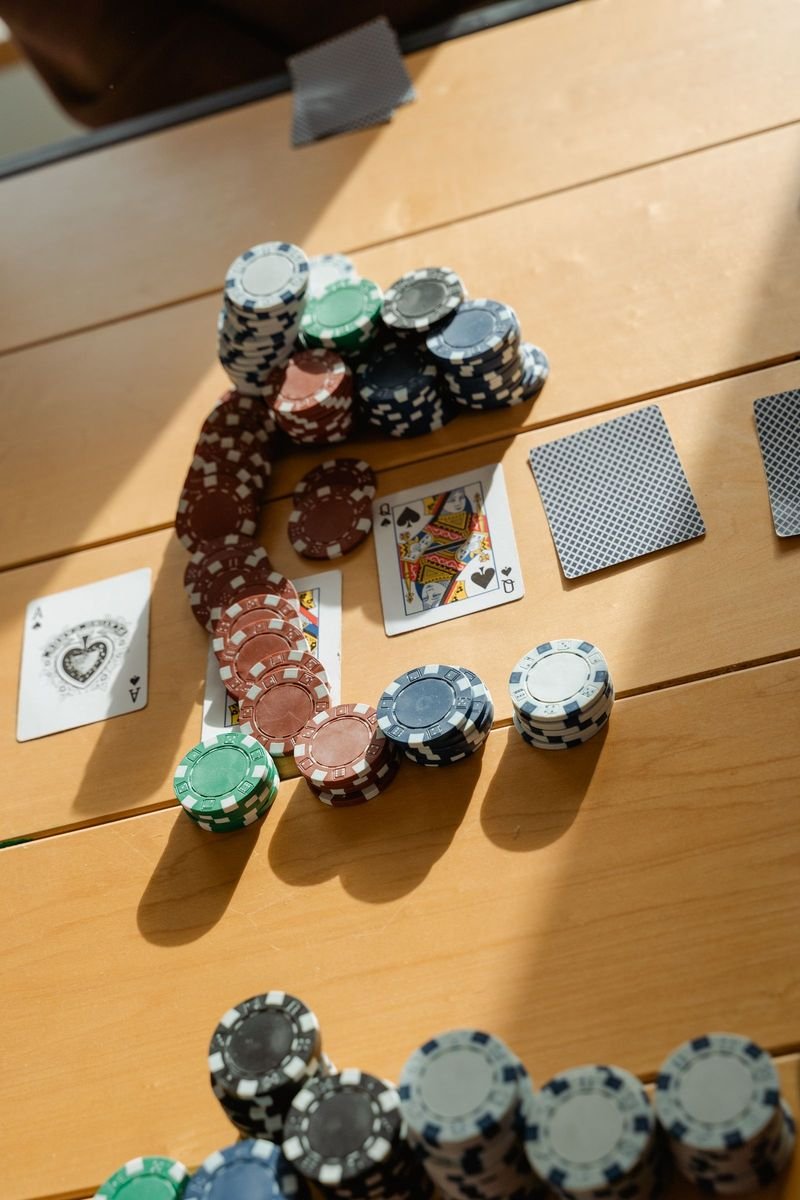
The flop is the first three community cards dealt face-up in the middle of the table in games like Texas Hold’em and Omaha. They are shared by every player still in the hand, and they combine with your hole cards to make the best five-card hand you can. If you want a short answer to what is a flop in poker, that is it: three shared cards, dealt together, that turn a two-card starting hand into a five-card poker hand. Ask a dealer what is a flop in poker and they will point at those three cards, because that is where the hand really begins.
Here is how it works in practice. Each player is dealt their hole cards first, and a round of betting takes place. Once that betting round is finished, the dealer burns one card, discarding the top card of the deck face-down, and then deals the next three cards face-up in the centre of the table. Those three cards are the flop, and after they land, a new round of betting begins. A clear glossary definition of the flop puts it in the same terms, and it is worth a look if you like your definitions short and official.
How the Flop Is Dealt: The Order of Play
Poker hands follow a fixed order. First, the dealer deals two hole cards to each player, face-down. Then the pre-flop betting round begins with the player to the left of the big blind, and everyone decides whether to call, raise, or fold. The order matters: what is a flop in poker is defined by when it arrives, after the pre-flop betting round and never before it.
Once the pre-flop betting is done, the dealer burns one card and deals the flop, three cards face-up in the middle. Now the betting starts again, but the order changes. After the flop, the first active player to the left of the dealer button acts first, which is usually the small blind if they are still in the hand. The player under the gun, who acted first before the flop, now acts later, and that switch is why position matters so much.
The Flop in Texas Hold’em vs Omaha
Most of what people mean when they ask what is a flop in poker comes from Texas Hold’em, the game you see on television. In Hold’em, you get two hole cards, the flop gives you three community cards, and by the river you choose the best five-card hand from seven available cards. The flop is where the hand opens up, because you go from knowing two of your seven cards to knowing five of them.
Omaha uses the same flop, burn card, and order of play, but each player is dealt four hole cards instead of two, so the flop connects with far more hands. In Omaha you must use exactly two of your four hole cards and exactly three of the five community cards to make your hand. You cannot use one hole card, and you cannot use three or four of them, no matter how good they look. If you are learning Omaha after Hold’em, that exact-two rule is the one that will catch you out.
Omaha flops play much bigger. More players connect, more draws are possible, and the winning hand at showdown is usually stronger than in Hold’em. A top pair that is strong on a Hold’em flop is often marginal on an Omaha flop, because somebody else is likely holding a straight, a flush, or a set. My Texas Hold’em guide walks through the whole game street by street.
Reading Flop Texture: Dry, Wet, Rainbow, Paired and Monotone Boards
Poker players call the character of the flop its texture: it tells you how many strong hands are possible and how dangerous the board is.
Learning what is a flop in poker is only half the job; reading the texture is the other half.
A dry flop is one where few strong hands are possible. Something like king of hearts, seven of clubs, two of spades is dry: the cards are disconnected, with no flush draw and no straight draw open. On a dry flop, top pair is usually strong. A wet or coordinated flop is the opposite: something like ten of hearts, nine of hearts, eight of clubs is soaking wet, with straight draws everywhere and a flush draw. On a wet flop, a single pair is rarely enough, and the betting tends to be bigger because so many hands have a reason to stay in.
A rainbow flop has three cards of three different suits, so no flush is possible and no flush draw exists yet. A paired flop has two cards of the same rank, like two queens, so someone could already hold three of a kind, and a full house is possible by the river. A monotone flop has three cards of the same suit, so a flush is already possible and anyone holding two cards of that suit has made it. That is the board that makes beginners the most nervous, because the player who bets big there often already has the flush.
Made Hands vs Draws on the Flop
Once the flop is out, your hand is either a made hand or a draw. A made hand already has real value. Top pair, pairing the highest card on the board with one of your hole cards, is the most common made hand on the flop. Two pair, a set (three of a kind made with a pocket pair), and a completed straight or flush are made hands too. A set is especially strong because it is well hidden: your opponents rarely put you on three of a kind.
A draw is a hand that is not yet made but can improve, and when you ask what is a flop in poker, the answer has to include draws, because so many flops leave you with one. A flush draw means you hold two cards of one suit and the flop has two more, so one more card of that suit completes your flush. An open-ended straight draw means you hold four cards in sequence with two possible cards completing it. A gutshot needs one specific card in the middle of the sequence. Overcards are the weakest of the lot: two hole cards higher than anything on the board, with no pair yet.
The mistake I made early on was treating all draws as equal. A flush draw with two cards still to come is a strong hand, often worth betting or calling with. A gutshot is much weaker, and chasing it usually costs more than it returns. The number of cards that improve your hand, called outs, is what separates a good draw from a bad one.
Continuation Betting on the Flop
The continuation bet, or c-bet, is the bet made by the player who raised before the flop and then bets again on the flop. It works because most flops miss most hands, and what is a flop in poker does to a hand is simple: most starting hands miss, so when you raise before the flop and the flop comes out dry, your opponents have usually missed too, and a bet of around half to two-thirds of the pot is often enough to take it down.
The key is choosing your spots. A c-bet works best on dry flops where your opponent is unlikely to have connected, and when you are in position. It works worst on wet, coordinated flops where your opponent could hold any number of draws or made hands, and when you are out of position against several players. I used to c-bet every flop, and it took a string of expensive lessons to learn that the c-bet is a tool, not a rule.
There is also a time to check instead of betting, such as when the flop is bad for your range but good for your opponent’s, or when your hand wants to keep the pot small. Checking does not mean giving up: it controls the size of the pot, sets up a check-raise, or takes a free card with a draw. The players who win the most on the flop are not the ones who bet the most often; they are the ones who bet when the situation makes betting the right choice.
Check-Raising on the Flop
The check-raise is one of the most satisfying plays in poker, and one of the easiest to misuse. You check on the flop, your opponent bets, and then you raise, turning a passive-looking action into an aggressive one and forcing your opponent into a hard decision for a much bigger pot than they expected. A check-raise only makes sense once you understand what is a flop in poker means for your opponent’s range, because the whole play depends on the board favouring your hand more than theirs.
The check-raise works best when your opponent bets often when checked to, and when the flop should have helped you more than it helped them. A classic spot is holding a set on a dry flop while your opponent, who raised before the flop, bets out of habit. Your check invites the bet, and your raise punishes it. It also works on draw-heavy flops with a strong draw, because a check-raise can win the pot right there or buy you a free card on the turn.
The mistake is check-raising too often, or with hands that cannot stand a re-raise. If you check-raise a weak top pair and your opponent comes back over the top, you have built a big pot with a marginal hand. I save the check-raise for spots where I have a hand I am happy to play for a big pot, or a read that my opponent is betting with nothing.
Common Beginner Mistakes on the Flop
The first mistake is overplaying top pair. Top pair feels strong because it is a pair, and it is the best hand on the flop more often than not, but it is not a hand to play for your whole stack. When the pot gets big and your opponent keeps raising, top pair is usually beaten, and the money you lose by refusing to fold it is the money that keeps beginners broke. I have lost more chips to top pair than to any other hand, and every time I knew I was probably beaten and called anyway.
The second mistake is chasing every draw. Draws are exciting, and the idea of hitting a flush on the river is seductive, but not every draw is worth chasing. A gutshot with one card to come, or a flush draw when the pot is small and the bet is large, will drain your stack slowly and then all at once. Before you call, ask whether the price matches the chance of hitting your card and getting paid. If the answer is no, folding is right, even if it feels boring. The common thread is simple: players who never really learned what is a flop in poker does to their hand keep paying for it, hand after hand.
The third mistake is ignoring position. Acting first is a disadvantage, because you decide without knowing what anyone else will do, yet beginners often play the same hands from early position that they would play on the button. A marginal hand that is fine in position becomes a losing hand out of position. If you only fix one thing about your flop play, make it this: play tighter when you act first, and looser when you act last.
Flop Play in Cash Games vs Tournaments
The flop looks the same in a cash game and a tournament, but the decisions around it are different, because the chips mean different things. In a cash game, your chips are worth their face value, and you can always buy more. That means you can play draws more aggressively and take risks that are mathematically correct, even if they sometimes cost you a buy-in.
In a tournament, your chips are your tournament life. Losing them does not just cost money, it costs your seat, and that changes the maths, because what is a flop in poker changes when survival is on the line. A call that is correct in a cash game can be wrong in a tournament, especially near the bubble, when the players who survive get paid and the players who bust get nothing. That means folding some marginal draws and top pairs that you would happily play in a cash game. I play much tighter on the flop in tournaments, because the players who treat a tournament flop like a cash game flop are usually the first ones walking to the rail.
Flop vs Turn vs River: How the Hand Changes Street by Street
The flop gives you the most information of any street, because three cards arrive at once and your hand goes from two cards to five. That is why what is a flop in poker is the most important street to master: the decisions you make there shape everything that follows. The turn, the fourth community card, adds just one card, but it can complete a draw, pair the board, or give your opponent a better hand than yours. After the turn, you have seen six of your seven cards.
The river, the fifth and final community card, is the end of the line. No more cards are coming, and the hand you have is the hand you will show down. That makes the river the street where bluffing is riskiest and value betting is most important, because no draw is left to chase. A hand that was strong on the flop can be worthless on the river, and a hand that was a draw on the flop can be the nuts, the best possible hand, by the river.
That is why flop play sets up everything that follows. Your decisions on the flop shape the pot and the information you have for the turn and the river. Players who play the flop well usually find the later streets easier; players who play it badly spend the turn and the river recovering from a mistake they made three cards ago.
Frequently Asked Questions
How many cards are in the flop?
The flop is exactly three cards, dealt face-up in the middle of the table after the pre-flop betting round. They are community cards shared by every player in the hand, and the first three of the five community cards dealt in total.
Who bets first after the flop?
The first active player to the left of the dealer button bets first after the flop, usually the small blind if they are still in the hand. This is different from the pre-flop round, where the player to the left of the big blind acts first.
Can you raise before the flop?
Yes, raising before the flop is one of the most common plays in poker. A pre-flop raise builds the pot with a strong starting hand, and the raiser is usually the one who makes the continuation bet on the flop.
What is a dry flop?
A dry flop is one where few strong hands are possible, usually because the cards are disconnected and of different suits, with no flush draw and no straight draw available. On a dry flop, top pair is often strong, and a single bet is frequently enough to win the pot.
Does every poker game have a flop?
No. Community card games like Texas Hold’em and Omaha use a flop, but games like Seven Card Stud and Five Card Draw deal each player their own cards and have no shared community cards at all, so there is no flop in those games.
The flop is the street where poker stops being a card game and starts being a thinking game. Three cards land in the middle of the table, and in a single moment you go from hoping your starting hand is good to knowing, more or less, whether it is. What is a flop in poker, once you have played a few hundred hands, is not a rule to memorise but a habit to build: look at the board, work out what it means for your hand and for theirs, and then decide.
I still remember that first flop, the three cards landing face-up while I tried to look like I knew what I was doing. I did not, not then. But the flop taught me the most important lesson in poker: the cards in the middle matter at least as much as the cards in your hand.
Gamble responsibly. 18+ only.
Author

hamzayounus355@gmail.com
Related Posts
How to Win at Keno: What Actually Works (and What Doesn’t)
- 0
- 2,840 words
If you want to know how to win at keno, I will give you the honest answer first, because I wish someone...
Read out all
How to Play HORSE Poker: The Five-Game Rotation, Explained Step by Step
- 0
- 2,986 words
The first time I sat down at a HORSE table, I felt like I had walked into the wrong game five times...
Read out all
What Is a Poker Cooler? When Both Hands Are Strong and One Has to Lose
- 0
- 2,908 words
I have played enough poker to know the feeling well. You look down at your cards, the board runs out beautifully, and...
Read out all
What Is a River in Poker? The Final Card That Decides Everything
- 0
- 3,076 words
I still remember the first time I sat at a real poker table and heard someone groan, “the river got me again.”...
Read out all
What Is a Push in Blackjack? Tie Rules, Examples and Strategy, Explained
- 0
- 2,994 words
The first time I ever saw a push, I thought the dealer had made a mistake. I was sitting at a small...
Read out all
What Is a 3 Bet in Poker? Meaning, Sizing and Strategy, Explained
- 0
- 2,970 words
The first time someone re-raised me before the flop, I had no idea what had just happened. I was playing a friendly...
Read out all
1 comment