- 2
- 4,042 words
The first time I tried to learn how to play texas holdem online, I sat down at a table with real money and realised within about three hands that I had no idea what I was doing. I had watched poker on television, so I knew the words — flop, turn, river, all-in — but knowing the words is not the same as knowing the game. I folded hands I should have played, played hands I should have folded, and called a bet on the river with a hand that had no chance of winning. My chips were gone in about twenty minutes, and I had learned an expensive lesson: television teaches you the drama of poker, not the decisions.
What nobody had told me was that Texas Holdem is actually a simple game at its core. The rules take about ten minutes to learn. The hard part — the part that takes months and years — is learning when to bet, when to fold, and when to sit quietly and wait. This is the guide I wish someone had handed me before that first session, the plain-English version with no jargon left unexplained and no pretending that poker is easy money. If you work through it slowly, you will know enough to sit at a low-stakes table, play a real hand, and understand exactly what is happening at every step. That is the whole point of learning how to play texas holdem online properly: not to win every hand, but to stop feeling lost.
Table of Contents
How to Play Texas Holdem Online: The Basics in Plain English
Here is the whole game in one paragraph. Every player gets two private cards that only they can see. Then five community cards are dealt face up in the middle of the table, where everyone can use them. You make the best five-card poker hand you can from your two cards plus the five community cards, and the best hand at the end wins the pot — the pile of chips everyone has bet. That is it. Everything else in poker, all the betting and bluffing and folding, is built on top of that one simple idea.
A hand starts with the dealer button, a small disc that moves one seat clockwise after every hand to show who deals. The two players to the left of the button post the blinds, which are forced bets that get the pot started before anyone has even looked at their cards. Each player is dealt two cards face down — these are your hole cards, and they are yours alone. Then there is a round of betting. Then three community cards are dealt face up — that is the flop — followed by another round of betting. Then a fourth community card, the turn, then more betting. Then a fifth and final community card, the river, then a final round of betting. If two or more players are still in after that last round, they show their cards, and the best five-card hand takes the pot. Once you know how to play texas holdem online at this basic level, the rest of the game is about making good decisions with incomplete information — and that is where it gets interesting.
Hand Rankings: From High Card to Royal Flush
Before you bet a single chip, you need to know which hands beat which. I spent my first session unsure whether a straight beat a flush, and that kind of confusion costs money, because you cannot decide whether to call a bet if you do not know how strong your hand actually is. Print this list out or keep it open on your phone until you know it by heart. It runs from weakest to strongest.
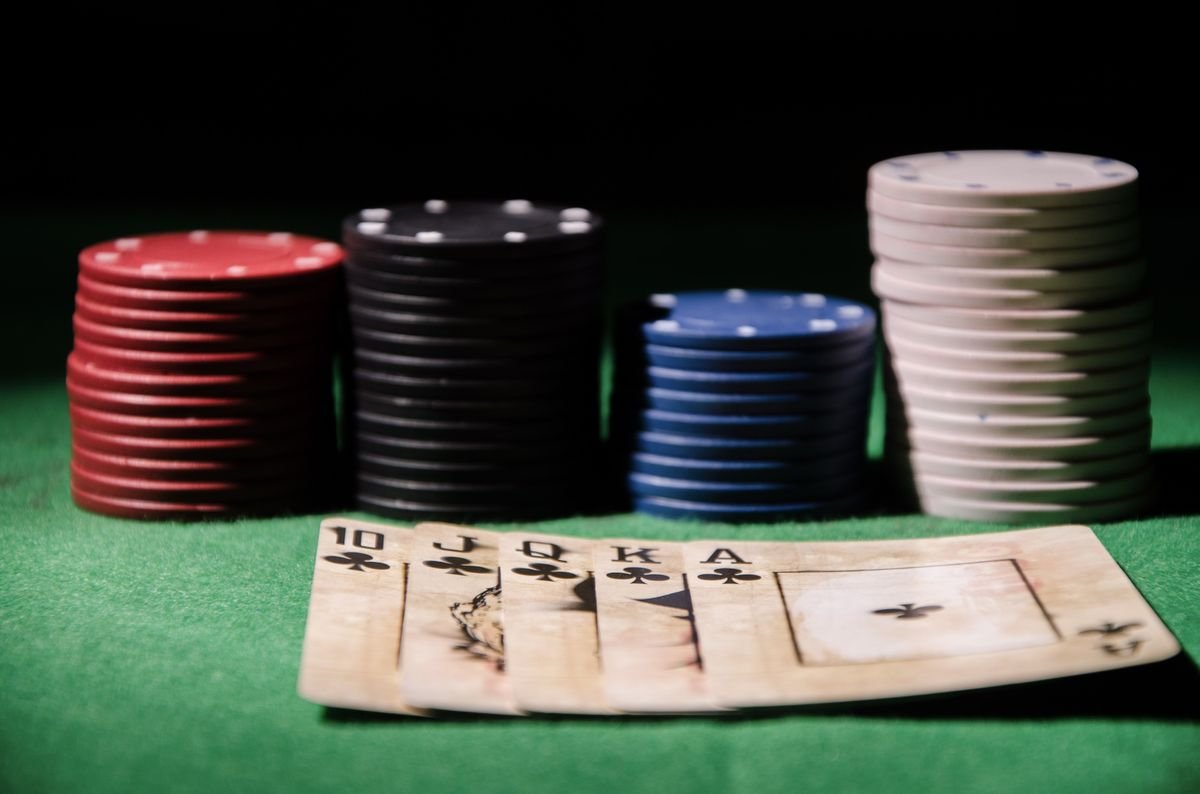
The weakest hand is high card — you have not made a pair or anything else, so your best card is all you have got. Next comes one pair, two cards of the same rank. Then two pair, then three of a kind, then a straight, which is five cards in sequence, like 5-6-7-8-9. Above a straight sits a flush, five cards of the same suit, and above that a full house, three of a kind plus a pair. Then four of a kind, then a straight flush, five cards in sequence all of the same suit. The strongest hand of all is the royal flush, an ace-high straight flush — ten, jack, queen, king, ace, all in the same suit. It is so rare that most players never see one in years of playing, so do not sit around waiting for it.
Two details catch beginners out. First, you can use any combination of your two hole cards and the five community cards to make your best five-card hand — you can use both of your cards, one of them, or, in rare cases, none of them, playing the board itself. Second, if two players hold the same kind of hand, the kickers decide it: if we both have a pair of kings, the player whose next-highest card is bigger wins. If you want the full mathematical breakdown of every hand and its odds, the Wizard of Odds Texas Hold’em guide lays it all out clearly. Learn these rankings cold before your first session, because every decision you make at the table depends on them. If you are still learning how to play texas holdem online, keep a rankings chart open beside you while you play — there is no shame in checking, and it beats guessing.
The Four Betting Rounds: Pre-Flop, Flop, Turn, and River
A hand of Texas Holdem has four betting rounds, and each one asks you a different question. The first round is the pre-flop. You have just seen your two hole cards, the blinds are in, and the player to the left of the big blind acts first. Your options are to call the big blind, raise it, or fold. This is the round where most of your money is won or lost over time, because the decision to play or fold a starting hand sets up everything that follows. A good rule for beginners is simple: if your hand is not worth playing, fold now, while it is still cheap.
The second round comes after the flop, when the first three community cards appear. Now you can see five of your seven cards, and your hand starts to take shape. The first player still in the hand to the left of the dealer button acts first, and now a fourth option appears: check, which means passing the action to the next player without betting, as long as nobody has bet before you. The third round is the turn, a single extra community card that can change everything — a card that completes your flush is wonderful, a card that pairs the board and might give someone a full house is not. The final round is the river, the last community card, after which the betting ends and the remaining players show their cards. Each round gives you more information and each round costs more to stay in, so the skill of the game is judging, round by round, whether your hand is still worth the price of seeing the next card.
Blinds and Positions: Why Your Seat Matters
When I started playing, I thought every seat at the table was the same. It took me a while to understand that where you sit is one of the biggest factors in poker, and it costs beginners more money than almost anything else. The blinds are the two forced bets that start every hand: the small blind, posted by the player directly left of the dealer button, and the big blind, posted by the next player along, usually twice the small blind. These bets exist so that there is always money in the pot to play for — without them, everyone would just fold until they got perfect cards.
Position means where you sit relative to the dealer button, and it matters because poker is a game of acting with incomplete information. The later you act in a betting round, the more you know: you have seen what everyone before you did. The best seats are the button itself and the seats just before it, called late position, because you act last and you get to see everyone else’s decisions first. The worst seats are the blinds and the seats just after them, called early position, because you have to decide first with the least information. That is why good players play far more hands from late position than from early position. When you are new, a simple rule will save you a lot of money: play tight from early position, only entering the pot with genuinely strong hands, and loosen up a little from late position, where you can see what everyone else does before you commit your chips.
Starting Hands: What to Play and What to Fold
Here is the honest truth about starting hands: most of them are not worth playing. You get two cards, and if you play every pair of cards you are dealt, you will lose money slowly and steadily, hand after hand. The best starting hands in Texas Holdem are the big pairs — aces, kings, queens, and jacks — followed by ace-king, ace-queen, and king-queen of the same suit. These are the hands that win pots. After that comes a second tier: smaller pairs, ace-jack, ace-ten, and suited connectors like 9-10 of hearts, two cards in sequence of the same suit that can make a straight or a flush.
What you should fold, especially from early position, is almost everything else: a king and a seven of different suits, a queen and a three, a nine and a four. These hands look playable when you are bored, and boredom is the real enemy at a poker table, but they lose money in the long run because they rarely make a strong hand and they often make a second-best hand that costs you a big pot. I learned this the hard way, calling bets with weak hands because folding felt like giving up. Folding is not giving up. Folding is the most profitable move in poker when your cards are bad, because every chip you do not lose is a chip you still have. If you want a simple starting rule, play roughly the top fifteen to twenty percent of hands, fold the rest, and do not let boredom talk you into anything else. It is a similar discipline to the one you need in other poker variants too — our guide on four card poker makes the same point about choosing your hands carefully.
How to Play Texas Holdem Online vs Live Poker
Once you know how to play texas holdem online at a basic level, you will notice it feels very different from the game you see in films or at a casino table. Online poker is fast — far faster than live poker. A live table deals roughly twenty-five to thirty hands an hour, because there is shuffling, dealing, counting chips, and people chatting. An online table can deal sixty or more hands an hour, because the software does everything instantly. That speed is a double-edged sword: you get more practice in less time, but you can also lose money twice as fast if you are not careful.
The other big difference is information. In a live game, you can watch people: how they handle their chips, how long they take to decide, whether they look nervous. Online, you cannot see anyone, so you have to read betting patterns instead — how much someone bets, how quickly they act, whether they always raise with strong hands. There are no physical tells online, and anyone who tells you otherwise is selling something. What online poker does give you is choice: dozens of tables at every stake level, day and night, with low minimums that a real casino would never offer. You can also take notes on opponents, review your hand history afterwards, and play at stakes so small that a mistake costs pennies rather than pounds. For a beginner, that is a genuine advantage. Start online, learn the game cheaply, and treat live poker as something to try later, once the decisions feel natural.
Cash Games vs Tournaments: Picking Your First Format
When you open a poker site for the first time, you will see two main ways to play: cash games and tournaments. They look similar — same cards, same rules — but they are different games in practice, and beginners should understand the difference before choosing. In a cash game, your chips are worth real money, and you can sit down or stand up whenever you like. If you lose your chips, you can buy more. If you win, you can leave with your profit straight away. The blinds stay the same all session, so the game does not get harder as time passes. This makes cash games the best place to learn, because you can play for half an hour, make a mistake, and walk away without it ending your night.
In a tournament, you pay a fixed entry fee and get a fixed stack of chips that have no cash value of their own. The blinds rise on a timer, so the pressure grows as the tournament goes on, and players are eliminated one by one until one person holds all the chips. You cannot leave and come back, and you cannot buy more chips once you are out, unless it is a rebuy tournament. Tournaments can be exciting, and a small entry fee can turn into a big prize, but they demand hours of your time and a different kind of patience: sometimes the right move is to fold for an hour straight and wait for the blinds to force other people into mistakes. For most people working out how to play texas holdem online, cash games are the friendlier first step. They let you learn at your own pace, leave whenever you want, and control exactly how much you risk. Tournaments can wait until the basics feel easy.
Common Beginner Mistakes (and How to Avoid Them)
The biggest mistake I made when I first learned the game was playing too many hands. I had waited for the flop, I had chips in front of me, and folding felt like wasting the opportunity. So I called with weak cards, hoped the flop would save me, and watched my chips disappear a little at a time. The flop will not save you often enough to make that profitable. If your starting hand is bad, fold it. The next hand is only seconds away online, and there is always another one coming.
The second mistake is chasing losses. You lose a big pot, you feel annoyed, and suddenly you are raising with hands you would normally fold, trying to win it all back at once. This is called tilt, and it is the single most expensive habit in poker. A loss is a loss, and the next hand does not owe you anything. The third mistake is overvaluing a decent hand: you make top pair with a weak kicker, someone bets big on the river, and you call because you cannot bear to fold a pair. Top pair is a good hand, but it is not a great one, and a big river bet usually means your opponent has something better. The fourth mistake is ignoring position — playing weak hands from early position, where you have to act first with the least information. The fifth mistake is bluffing too much. Bluffing looks exciting on television, but against beginners who call with anything, it is just a way of donating chips. Bluff rarely, and only when the story your betting tells actually makes sense. Finally, never play with money you need. If losing your session bankroll would hurt, the bankroll is too big.
Bankroll Basics: How Much Money Do You Actually Need?
Poker has a cruel feature that surprises beginners: you can play well and still lose. A weaker hand will sometimes beat a stronger one — your pair of aces will lose to a lucky straight now and then — and that is not a flaw in the game, it is the game. Because of that, you need a bankroll: money set aside for poker that you can afford to lose, kept separate from rent, bills, and food. The first rule I set myself was simple: decide the session bankroll before I open the poker site, and treat it as spent the moment I deposit it. If I lose it, the session is over.
How much should you bring to a cash game table? A common guideline is twenty to thirty buy-ins for the stake you play, where one buy-in is a full stack at that table. If you play at tables where a full buy-in is five pounds, that means a bankroll of one hundred to one hundred and fifty pounds. That sounds like a lot, and it is deliberately cautious — it exists so that a run of bad luck does not wipe you out. Within a single session, keep your risk small: never sit down with more than five percent of your total bankroll at one table. Set three numbers before every session and write them down: your session bankroll, your win target, and your loss limit. When you hit any one of them, stop. Walking away ahead is the only way to actually keep a win, and walking away at your loss limit is the only way to make sure you can play again tomorrow. That discipline is part of how to play texas holdem online sustainably, rather than treating every session like a lottery ticket.
How to Pick a First Table or Site Safely
Choosing where to play matters as much as how you play, and it is worth ten minutes of checking before you deposit anything. Start with licensing. A legitimate poker site is licensed and regulated by a recognised authority in its jurisdiction, and it will say so clearly, usually in the footer of its website, with a licence number you can verify. If you cannot find any licensing information, do not deposit there. Next, look for independent auditing of the card shuffling software — reputable sites have their random number generators tested by outside auditors, and they publish that information. Read recent reviews from real players, and pay attention to complaints about withdrawals: a site that pays out slowly, or invents reasons not to pay, is a site to avoid whatever its bonuses look like.
Once the site itself checks out, pick the right table. Look for a low-stakes cash table with a small buy-in, and check the lobby statistics before you sit down: the average pot size and the percentage of players who see the flop tell you how loose or tight the table is. A table where most players see every flop is a loose table, which is good for a beginner with strong hands, because people will pay you off. Avoid tables full of players with huge stacks and aggressive statistics until you have more experience. Check the rake too — the small fee the site takes from each pot — because high rake eats into your winnings at low stakes. Start at the lowest stakes the site offers, even if it feels too small. The point of your first sessions is learning, not winning big, and the cheapest classroom is the best one.
A Sensible First-Session Plan
Here is the first-session plan I would give anyone learning the game. It is a way to learn poker, enjoy it, and walk away with your bankroll mostly intact. Pick a licensed site, deposit only what you are happy to lose, and sit at the lowest-stakes cash table you can find. Give yourself sixty to ninety minutes and set a timer — when it goes off, stop, whatever your balance says.
Spend your first half hour playing tight: only the strong starting hands, and fold everything else without a second thought. Watch how the betting rounds work, watch how the button moves, watch how often people bet and how much. When you do get a strong hand, bet it confidently rather than checking and hoping someone else does the work. When the flop misses you completely and someone bets, fold — do not pay to chase a hand that probably is not coming. Keep a simple note of hands that confused you, so you can think about them afterwards instead of trying to solve them in the moment. If you lose your session bankroll before the timer goes off, stop anyway. If you double it, consider stopping early and banking the win. The test of a good first session is not whether you won money. It is whether you understood what happened at the table, made decisions you could explain afterwards, and still have chips left to play again tomorrow. If you can say yes to all three, you have done it right, and you now know how to play texas holdem online well enough to keep learning.
Frequently Asked Questions
Is it hard to learn how to play texas holdem online?
No — the rules take about ten minutes to understand, and you can be playing a real hand within half an hour. The part that takes longer is learning the decisions: which hands to play, when to fold, and how to manage your bankroll.
Can you win real money playing Texas Holdem online?
Yes, you can win real money at low-stakes cash games, and many players do. But poker is not a reliable income: the cards do not always cooperate, and in the long run only disciplined players who study the game come out ahead. Treat it as entertainment with the chance of a win, not as a way to pay your bills.
What is the best starting hand in Texas Holdem?
A pair of aces, known as pocket aces, is the best starting hand. It wins more often than any other two cards before the flop. Even so, it is not a guarantee — a pair of aces still loses roughly one hand in five against a single opponent, so never bet as if the pot is already yours.
Do I need to download software to play Texas Holdem online?
Usually not. Most licensed poker sites offer a browser version that runs straight from the website, and many also have mobile apps. Downloadable software is optional on most sites, so start with the browser version and only install anything if you prefer the way it plays.
Is online Texas Holdem rigged?
No, not on licensed and regulated sites, where the card dealing software is tested by independent auditors and the results are random. What feels rigged is usually just variance — bad beats happen in real poker too, and online you simply play far more hands per hour, so you see them more often. Stick to licensed sites and avoid unregulated ones.
If you take one thing from this guide on how to play texas holdem online, let it be this: play tight, respect position, set your limits before you sit down, and treat the game as a skill you build slowly rather than a shortcut to quick money. The cards will still be there tomorrow, and the best sessions are the ones you walk away from having learned something.
Gamble responsibly. 18+ only.
Author

hamzayounus355@gmail.com
Related Posts

What Is a Push in Blackjack? Tie Rules, Examples and Strategy, Explained
- 0
- 2,994 words
The first time I ever saw a push, I thought the dealer had made a mistake. I was sitting at a small...
Read out all
What Is a 3 Bet in Poker? Meaning, Sizing and Strategy, Explained
- 0
- 2,970 words
The first time someone re-raised me before the flop, I had no idea what had just happened. I was playing a friendly...
Read out all
What Is a Poker Kicker? Rules, Examples and Strategy, Explained
- 0
- 3,085 words
What Is a Poker Kicker? Rules, Examples and Strategy, Explained The first time I lost a pot I was sure I had...
Read out all
What Is a Craps Horn Bet? Payouts, Odds and Rules, Explained
- 0
- 3,036 words
What Is a Craps Horn Bet? Payouts, Odds and Rules, Explained The first time I heard someone at a craps table shout...
Read out all
How to Play Online Poker for Real Money: A Beginner’s Guide, Explained
- 0
- 3,123 words
How to Play Online Poker for Real Money: A Beginner’s Guide, Explained I still remember the night I first typed how to...
Read out all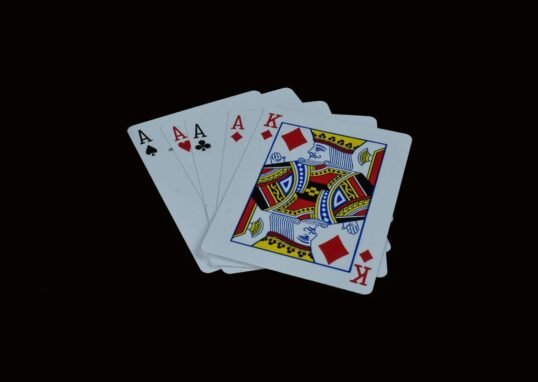
How to Play 5 Card Draw Poker: Rules, Draws and Strategy, Explained
- 1
- 3,088 words
How to Play 5 Card Draw Poker: Rules, Draws and Strategy, Explained The first time someone asked me how to play 5...
Read out all
2 comments