
- 0
- 2,098 words
Learning how to play pai gow poker for beginners is honestly the smartest first move a new table player can make. My first casino night, I stood near the blackjack tables feeling like every player there was about to judge my existence — decisions flying in seconds, zero patience for confusion. Then I wandered past the pai gow poker table. The dealer was laughing with the players, a guy openly asked how to arrange his cards, and nobody batted an eye. That’s this game in a nutshell: slow, forgiving, and genuinely welcoming to people who have no idea what they’re doing yet.
Table of Contents
How to Play Pai Gow Poker for Beginners: The Core Idea
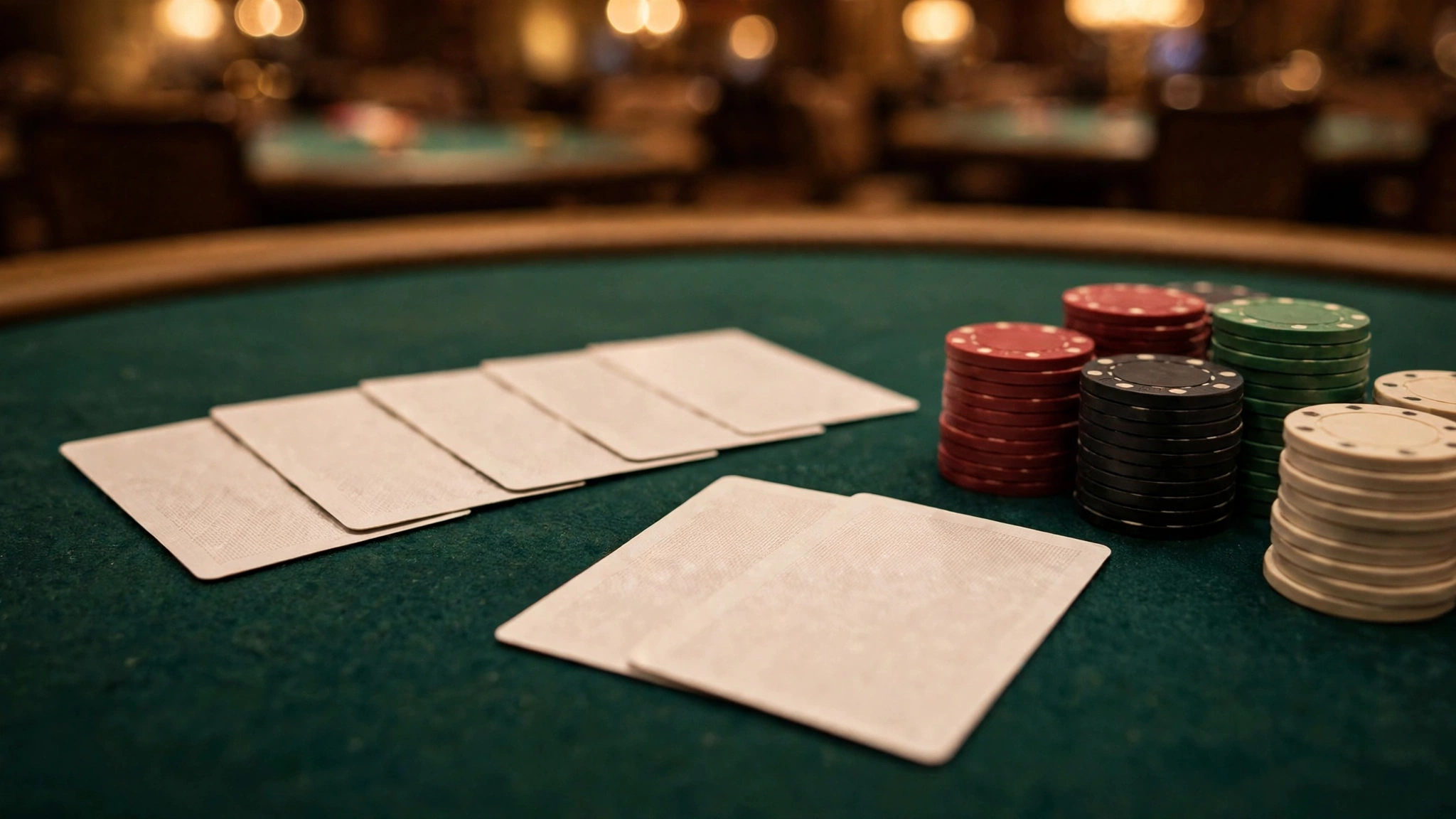
Here’s the whole game in one paragraph, and once it clicks, everything else is just polish. You get seven cards. You split them into two hands: a five-card “high hand” and a two-card “low hand.” The five-card hand must be stronger than the two-card hand. Both of your hands are then compared against the dealer’s two hands. Win both, you win. Win one and lose one, it’s a push — a tie, bet returned. Lose both, the dealer takes your bet. That’s it. If you’re wondering whether learning how to play pai gow poker for beginners is worth your evening, that one paragraph tells you how low the barrier is.
What Pai Gow Poker Actually Is (and Why It Loves Beginners)
The game was born in the mid-1980s when a California casino owner mashed up the ancient Chinese domino game of pai gow with American poker. The result is something almost unheard of in a casino: a slow game with a small house edge where nobody rushes you.
The Goal: Beat the Dealer Twice, Not Once
This is where beginners stumble, so let’s be blunt: you are not trying to make the best poker hand at the table. You’re trying to beat the dealer’s two hands with your two hands, and both of yours must win. Two mini-contests run side by side.
The classic rookie error is stuffing every good card into the five-card hand and leaving the two-card hand with garbage. A monster five-card hand plus a feeble two-card hand still loses the bet. The real skill is balance — spreading your strength so both hands can fight.
How the Cards Are Dealt
You place your bet first. Then the dealer gives every player seven cards face down — most places deal straight through these days, online especially.
You pick up your seven cards and arrange them however you like. Nobody touches your hand while you’re setting it, and there’s no clock running. If you feel stuck, just tell the dealer to set your hand “house way” and they’ll arrange it per the casino’s written rules. There’s no shame in it.
Setting Your Two Hands: The High Hand, the Low Hand, and “House Way”
Let’s work through a real example. You’re dealt: A♠, K♥, Q♣, J♦, 9♠, 9♥, 2♦.
A balanced setup: five-card hand of A♠, K♥, 9♠, 9♥, 2♦ (nines with ace-king kickers) and a two-card hand of Q♣, J♦ (queen-high). That’s solid, correct play.
Two golden rules:
- The five-card hand must outrank the two-card hand. Two-card hands are ranked simply: pairs beat non-pairs, and among non-pairs it’s just the highest card. So a pair of threes beats ace-king in the low hand — which surprises everyone, because that’s not how regular poker works. A pair of anything in the two-card slot is strong.
- “House way” is your safety net. Every casino has a standardized setting method written down — always split aces and kings, keep small pairs together. Say “house way, please” and the dealer sets your cards for you. Anyone learning how to play pai gow poker for beginners should use this until setting hands feels natural.
One more rule: if you accidentally make the two-card hand stronger than the five-card hand, that’s a “foul” — automatic loss of the hand. Big hand in the five-card slot, little hand in the two-card slot. The dealer will catch it, but knowing it yourself saves embarrassment.
The Showdown: Win, Push, or Lose
Once every hand is set, the dealer reveals their seven cards, sets them by house way (dealers have no choice — it’s house way every single time), and compares hand by hand.
- Both your hands beat both of the dealer’s — you win even money, minus a 5% commission the casino takes on winning hands.
- One wins, one loses — a push. Your bet comes back untouched. No commission, no loss.
- Both lose — the dealer takes your bet.
- An exact tie on either hand — the dealer wins ties. Your two-card ace-queen against their two-card ace-queen goes to the house. This tie advantage is a genuine chunk of the house edge, and it’s exactly why balancing both hands matters.
About that 5% commission: win a $20 bet and you get your $20 back plus $19 — the casino keeps a dollar. It sounds steep until you remember you only win outright about 28–30% of the time and push constantly.
The Joker: The Weirdest and Most Useful Card in the Deck
One of the first things to learn about how to play pai gow poker for beginners is the joker’s real role: it isn’t fully wild like you might hope. It’s a “bug” — semi-wild, with exactly two jobs:
- It completes straights and flushes. Four to a straight plus the joker is a straight. Same for a flush.
- Otherwise, it’s an ace. If it can’t finish anything, it’s just an ace.
So joker plus a king in your two-card hand is ace-king — the strongest possible two-card holding. And yes, five aces (four aces plus the joker) is a real hand that beats a royal flush, though you’ll likely never see it.
The beginner mistake is underusing it — parking it in the five-card hand when it would do more work as the ace in your two-card hand. Always check both slots before committing it.
The Banking Option: Playing on the Casino’s Side
This is the signature twist that keeps players coming back once they’ve learned how to play pai gow poker for beginners. At most tables, players are offered the “bank” in rotation. Accept, and you play the dealer’s role for that round: your hands are compared against every other player, and you win all ties instead of losing them. That flips part of the house edge onto your side.
The catch: you cover all the other players’ bets from your own stack, so you need a healthy bankroll to bank. And you must still set your hand house way — the bank gets no creative freedom. Plenty of beginners pass the bank because it feels like a big responsibility, but mathematically it’s one of the best moves in the casino: banking roughly halves the house edge. If your bankroll can handle it, bank at least sometimes. Passing every time is fine too — nobody judges.
Common Beginner Mistakes (I Made Most of These)
Let me save you the tuition I paid while learning how to play pai gow poker for beginners:
- Cramming everything into the five-card hand. Mistake number one, every time. A pair of kings up top with trash below loses to a balanced dealer setup more often than you’d expect.
- Not knowing a pair beats ace-high in the two-card hand. This cost me real money on my second night. I held king-queen down low, felt great, and the dealer flipped a pair of fours. I still remember that sinking feeling.
- Treating the joker as fully wild. You can’t conjure a second king for kings full of aces. Straights, flushes, or an ace — that’s the entire menu.
- Playing too fast and jacking up bets. The game’s whole advantage is its slow burn. Beginners who double bets after a couple of wins throw away the best thing pai gow offers: low cost per hour.
- Being too embarrassed to ask the dealer. Asking for house way isn’t a confession of ignorance — it’s the smart play until you know the strategy cold. The dealer is literally there to help.
Basic Strategy Tips That Actually Matter
No 40-page chart needed to master how to play pai gow poker for beginners. A few habits get you most of the way:
Split pairs wisely. General rule: keep small pairs (sixes and below) together in the five-card hand, and split bigger pairs to strengthen the two-card hand. Pair of aces? Split them almost always — an ace down low is the nuts there, and the other ace still beefs up your five-card hand.
Don’t break straights and flushes lightly. Seven cards containing a complete straight or flush with no pairs usually stays together. The exception is when you also hold a pair — then weigh whether strengthening the two-card hand is worth the tradeoff.
Bank when you can afford it. The tie-winning advantage is real, and if your bankroll covers the table’s action comfortably, banking is the single highest-value decision in the game.
Flat-bet and let the game work. Because pushes are so frequent, the temptation is to bet bigger “since you won’t lose much.” Don’t. Keep the same bet every hand and let the low volatility do its job. If you want to go deeper on the math, the Wizard of Odds pai gow poker page is the gold standard — their strategy breakdown goes far beyond what fits here.
And if you enjoy slow, low-pressure games, learning how to play keno for beginners is a fun next step — even simpler than this and just as kind to your bankroll.
Conclusion
That’s how to play pai gow poker for beginners, start to finish — and it’s a game I wish someone had pointed me toward on my very first casino night. Seven cards, two hands, one rule about which hand must be stronger, and a pace that lets you breathe between decisions. Use house way until you’re comfortable, respect the two-card hand as much as the five-card one, and take the bank when your bankroll allows. Do that and you’ll sit at the table relaxed, unhurried, and having a genuinely good time. That’s the real prize anyway.
Frequently Asked Questions
What is the house edge in pai gow poker?
It’s roughly 2.5% to 2.8% with basic strategy when you don’t bank — excellent for a table game. Bank whenever possible and the edge drops to around 1.4%, making it one of the fairest bets on the casino floor.
Is pai gow poker good for beginners?
Arguably the best table game a beginner can start with. The pace is slow, pushes are extremely common so your money lasts, and you can have the dealer set your hand house way so you’re never punished for not knowing strategy.
What does a “push” mean in pai gow poker?
A push is when you win one of your two hands and lose the other against the dealer. It’s a tie — your bet returns untouched, no winnings and no loss. P
ushes happen in about 40% of all hands.
Can you be the banker in pai gow poker?
Yes — at most live casinos the bank is offered to players in rotation, and you can accept or pass. As banker you win all ties against the other players, a real mathematical edge, but you must cover every other player’s bet, so you need a solid bankroll.
Does the joker count as wild in pai gow poker?
Only partially. The joker is semi-wild: it completes straights and flushes, and in any other spot it counts as an ace. It can’t substitute for just any card the way a full wild card could.
Gamble responsibly. 18+ only.
Author

hamzayounus355@gmail.com
Related Posts

Casino Etiquette for Beginners: The Unwritten Rules Nobody Tells You
- 0
- 2,079 words
If casino etiquette for beginners sounds like something only high rollers need, I get it — that’s what I thought walking into...
Read out all
Teen Patti Rules for Beginners: The Card Game Every Desi Household Knows (and How to Actually Win)
- 0
- 2,416 words
The first time I sat down at a teen patti table, it was Diwali night at a friend’s house, and I lost...
Read out all
Casino Soft 17 Rule Explained: The Dealer Habit That Quietly Costs You Money
- 0
- 2,440 words
I still remember the night I nearly corrected a blackjack dealer. She was showing ace-six — seventeen, plain as day — and...
Read out all
Provably Fair Gambling Explained: The Crypto Trick That Finally Let Me Check the Math Myself
- 0
- 2,372 words
I will never forget the first time I lost a big crash-game bet and could not stop wondering whether the game had...
Read out all
How to Play Keno for Beginners: The Slow Game I Actually Enjoy
- 1
- 2,282 words
The first time I played keno, I was half asleep in a casino lounge at 1am, waiting for a friend who’d vanished...
Read out all
How to Spot a Fake Online Casino Before It Eats Your Deposit
- 2
- 1,679 word
I still remember the first site that nearly got me. Polished homepage, huge bonus, live chat agent calling me “friend” within ten...
Read out all